
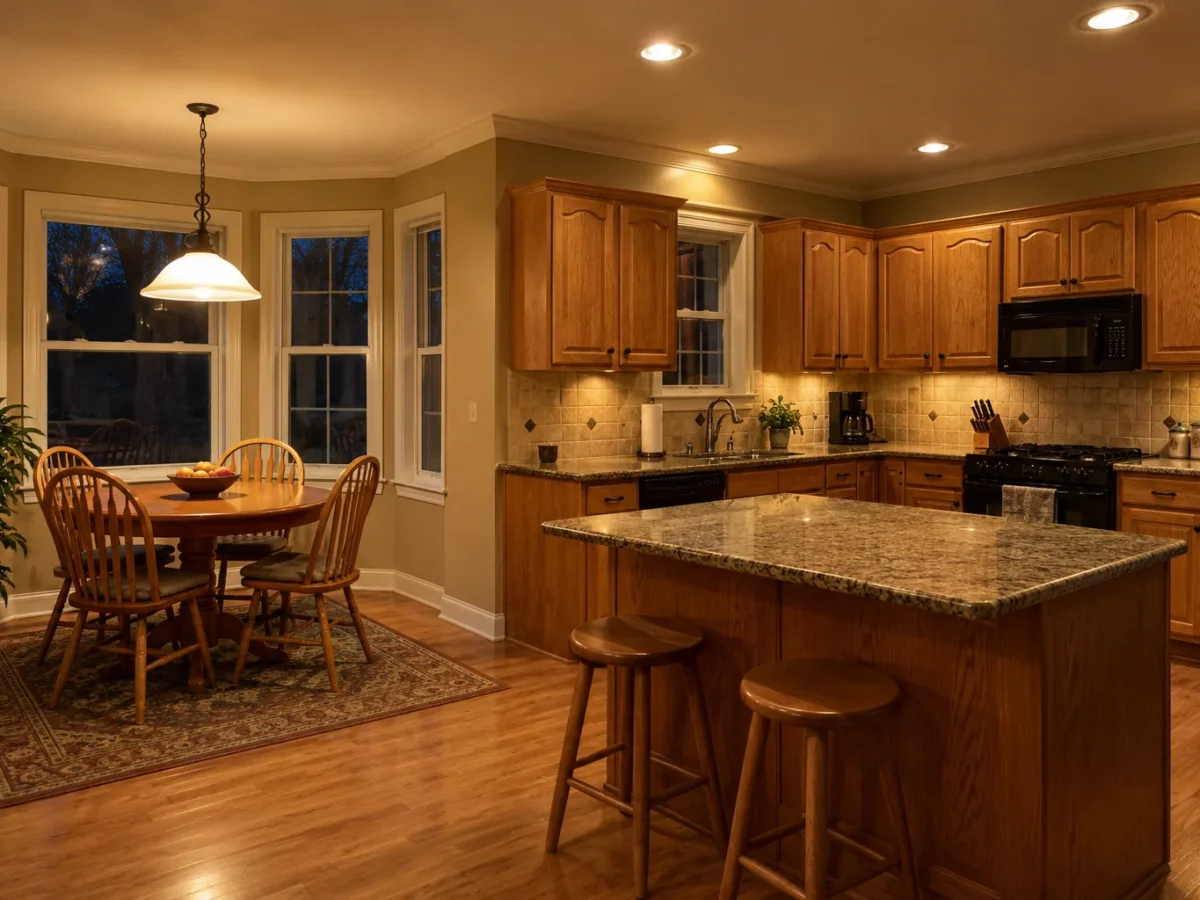
Older halogen pot lights can still illuminate a room, yet repeated lamp failures, high operating heat, discoloured trims or an uneven collection of replacements may make the ceiling feel dated. Modern LEDs can reduce energy use and offer different light quality, but conversion is not one universal swap. The existing housing, lamp type, trim, wiring, control, insulation and product instructions shape the options. An old or failed light is a symptom to evaluate, not proof that every recessed can must be ripped out.
Many Milton homes have had several rounds of changes: original recessed housings, later LED lamps, a dimmer chosen for halogen, and a slim fixture added during a kitchen renovation. The result may contain warm and cool colours, mixed beam shapes and inconsistent minimum brightness. A coordinated plan begins by documenting what is already there, deciding how the room should work and separating necessary electrical repair from optional design improvements.
What does the existing ceiling contain?
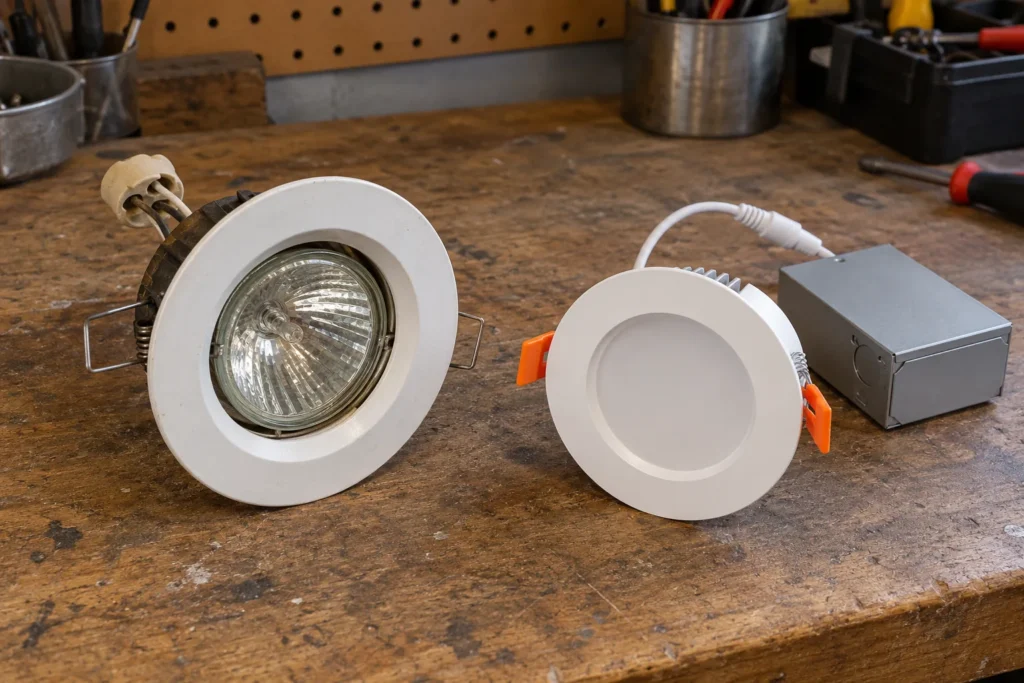
A traditional recessed assembly may consist of a housing in the ceiling, a lamp and a trim. Other older systems use low-voltage lamps and transformers. Newer systems may have an integrated LED module and driver. From the room, all may look like “pot lights,” but the replacement routes differ. A nominal four-inch opening or a similar white trim is not enough information to establish compatibility.
The label and product instructions can identify the housing and permitted lamp or retrofit options. Access, insulation contact, ceiling construction and thermal conditions also matter. A slim canless product is a different arrangement and should not be assumed to be a plug-in substitute for a conventional housing. A qualified assessment should determine whether an appropriate approved LED lamp, compatible retrofit kit or complete fixture replacement fits the installed conditions.
If a trim is yellowed, loose or damaged, a new lamp alone may not improve the appearance. If old housings are sound and an approved retrofit fits, removing every can may add needless ceiling work. If several components are failing or the desired layout changes substantially, keeping every existing position may be a false economy. LED pot-light upgrades explores these choices as a service.
Heat and older halogen light
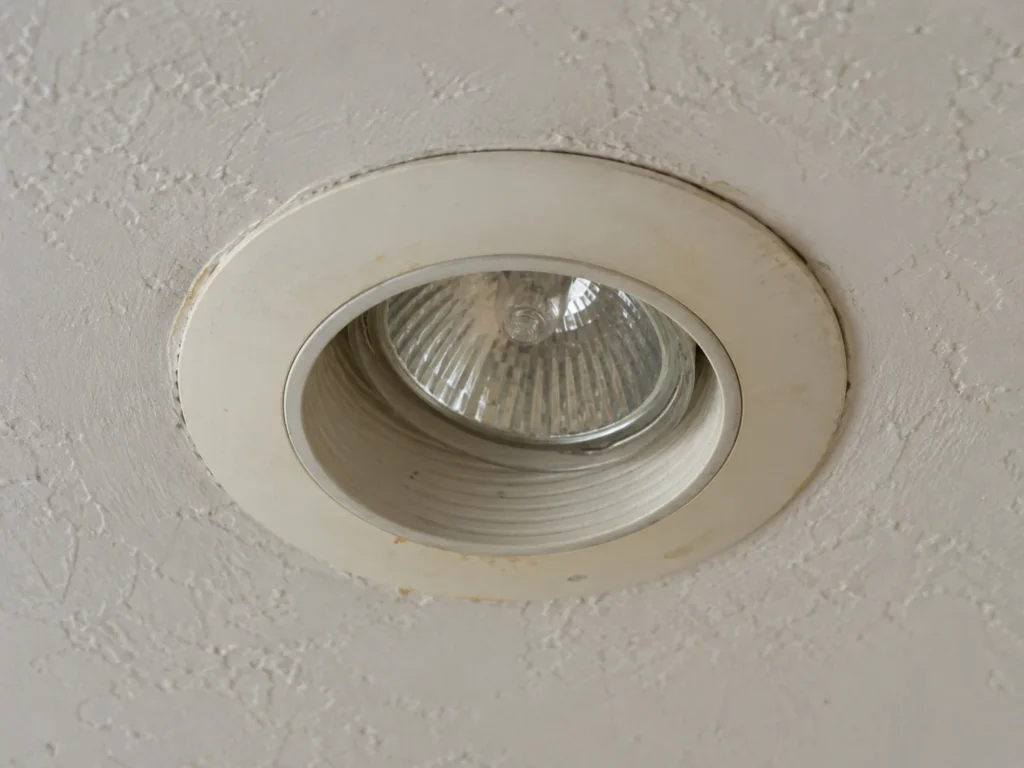
Halogen lighting operates differently from LED and typically releases much more heat at the lamp. Heat around a light can be expected within its intended design, but scorched material, smoke, burning odour or an unusually hot fitting is a safety concern. Stop using suspect equipment and obtain prompt qualified help. Do not pull a hot lamp or fixture from the ceiling to inspect it. Whether an existing recessed housing is suitable around insulation depends on its rating and installation, not an assumption based on age.
Moving to LED may reduce lighting energy use and change the heat profile, but it does not make product instructions or existing ceiling conditions irrelevant. A retrofit assembly still needs to be approved for the specific arrangement and installed as intended. Mixed old and new parts can have thermal, electrical or mechanical limits that are not obvious from appearance. The same caution applies to unbranded imported lamps whose online descriptions make broad claims without recognized Ontario product approval.
Older halogen lighting also tends to have a distinct warm tone and smooth dimming behaviour. A harsh, narrow LED retrofit could save power while making the room less pleasant. Evaluate the light on useful surfaces and from normal eye positions, not only the wattage. Pot-light glare and mismatched colour explain the common visual tradeoffs.
Dimmer and transformer compatibility
A dimmer selected years ago for incandescent or halogen lamps may not control modern LED drivers smoothly. Potential symptoms include flicker, buzz, limited range, pop-on and drop-out. Some low-voltage older systems add transformer compatibility to the question. The exact lamps, drivers, control and number of fixtures should be identified before choosing a replacement. A package saying “dimmable LED” does not guarantee compatibility with an existing control.
If an upgrade changes only some lights on one dimmer, the mixed loads may behave differently. A whole room can look acceptable at full output but awkward at its evening settings. A plan can set a consistent group of products and a suitable control, or separate zones where the room uses light differently. LED dimmer problems covers the symptoms in depth, while dimmer installation addresses the control service.
Smart controls are an option, but they should be chosen for actual use rather than automatically attached to an LED upgrade. Consider whether people want a simple wall dimmer, a schedule or several scenes. The existing switch arrangement and product requirements can change the electrical scope, so a control proposal needs to name the equipment and explain how it will operate manually.
Keep or change the original layout?
Older recessed rows may have been placed to form a tidy ceiling grid. That does not ensure useful light on kitchen counters, living-room walls, artwork or basement work areas. Replacing every lamp in the same opening restores operation and can improve appearance, yet the room may remain dark or glary in the same places. Ask which surfaces need light before committing to a one-for-one conversion.
In a kitchen, ceiling light may need to work with pendants and under-cabinet task lighting. In a family room, glare from a television line might be better addressed with different beam distribution or lighting zones. In a basement, bulkheads and low ceilings can make a standard grid especially uneven. Pot-light layout and design explains why fixture position follows room use, while room still dark considers missing light on tasks and walls.
There may be reasons to keep the existing openings: finished plaster or drywall, attractive symmetry and an adequate layout. There may also be reasons to move or add lights. The ceiling structure, joists, ductwork, insulation and available routing affect both approaches. A written quote should state access and repair assumptions rather than promise that a layout change will be invisible. Consider future servicing at high or difficult ceilings as well.
Scope the upgrade in a way you can compare
Count the existing fixtures and record which operate, which are noisy or intermittent and whether colours already differ. Share any model information, photographs of the ceiling and controls, and the room’s approximate dimensions and height. An assessment can sort the installation into components that can remain, products that should be replaced and design changes the owner actually wants.
An estimate should identify the precise fixtures or retrofit assemblies, target colour temperature and beam, compatible controls, number and position of units, access limitations, potential drywall or painting boundaries, testing and electrical notification responsibility. If the existing housings are retained, it should explain the approved relationship of new components to those housings. If they are removed, it should explain why and what ceiling work follows. Pot-light cost describes why a price per lamp rarely captures the whole project.
After installation, view the room at full and low settings. Check visual consistency from adjacent rooms and whether work surfaces receive enough light. A conversion that appears tidy during the day can show mismatched colour or flicker at night. Retain product details and ESA documentation applicable to the work for future maintenance.
Ontario electrical requirements
The Electrical Safety Authority says a person or company hired to perform electrical work in an Ontario home must be a Licensed Electrical Contractor. ESA says almost all electrical work requires a Notification of Work filed by the person doing the work before starting. Its narrow owner-occupied single-dwelling replacement exception for certain luminaires or switches expressly excludes recessed lighting, so an old pot-light conversion should not be casually called notification-free. The ESA review process varies by project; when the work passes, ESA issues a Certificate of Acceptance to the person who filed. ESA electrical requirements explains the process.
Electrical products used in Ontario require an approval mark or label recognized by ESA. Approval for one component or a superficial fit does not establish that the combined retrofit is suitable. The approved lighting products guide helps frame product questions. Ask for the actual Licensed Electrical Contractor and notification arrangement in the proposed scope.
Questions homeowners ask
Can I put LED lamps in existing halogen pot lights?
Sometimes an appropriate approved lamp or retrofit can work with the existing housing, but model, thermal conditions, trim and dimmer compatibility must be checked. A physical fit alone does not establish suitability. Other installations may warrant a complete replacement or a different layout.
Do old recessed housings always have to come out?
No. Some can be retained with compatible approved products. Others have limitations or a layout that no longer serves the room. Determine the actual housing and project goal before choosing demolition or conversion.
Is an LED upgrade only about energy savings?
No. It can also improve consistency, beam control and lighting zones, but a poorly chosen product can create glare, colour mismatch or control problems. The desired room experience should guide the product and layout as much as energy use.
Describe the existing system
Use contact to share the room, number of recessed lights, current lamp or housing model if known, dimmer type, failures and the result you want. A lighting repair may solve a focused fault, or a coordinated LED upgrade may better address a ceiling full of inconsistent products. The choice should follow the installed conditions and the way you use the room.