
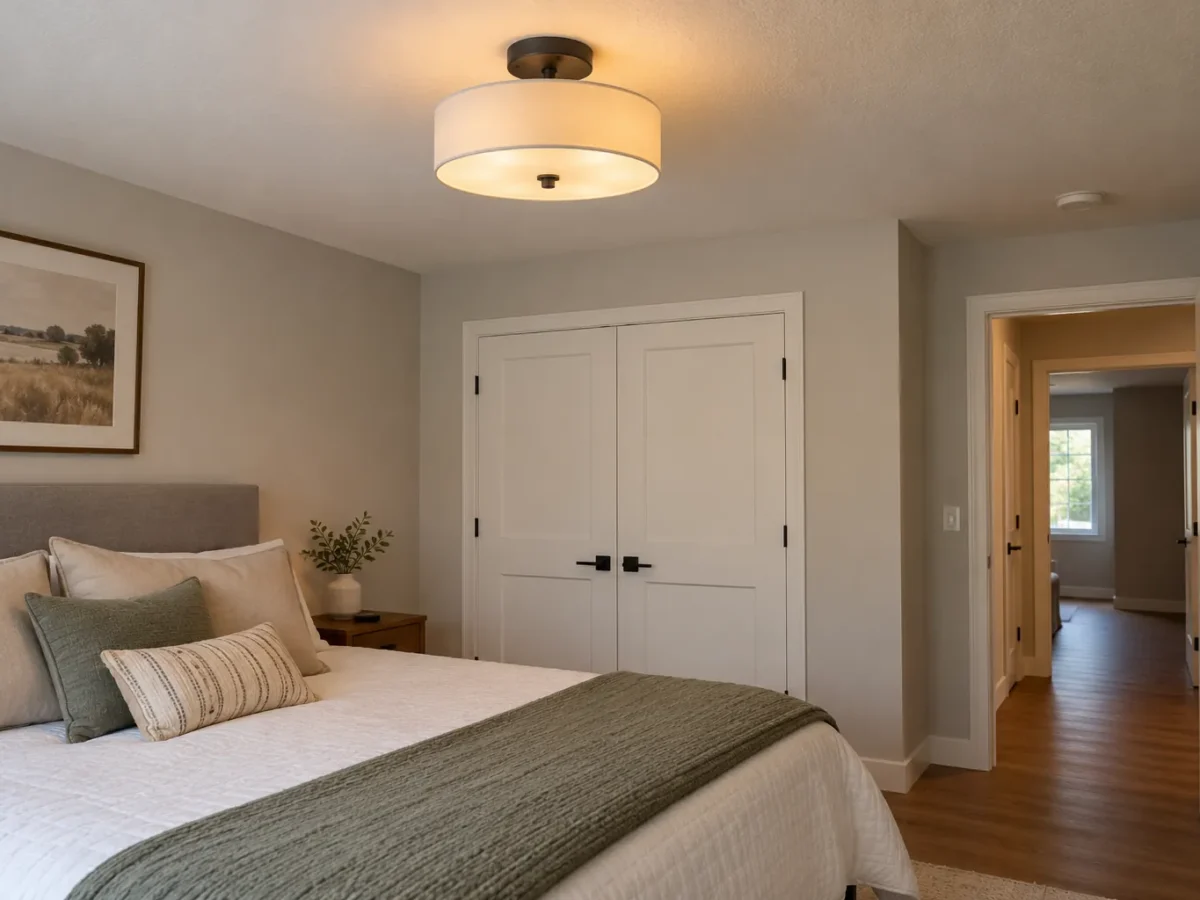
A new light fixture can change how a room looks, but the finish and silhouette are only part of the decision. It has to light the relevant surface, fit the ceiling height and mount correctly at the available location. Replacing a tired flush mount in an existing box differs from adding a wall sconce where there is no electrical point. In Milton homes, finished ceilings, room proportions, furniture and existing switching all shape the scope. Choosing the fixture and planning its placement together prevents a visually appealing purchase from becoming an awkward installation.
Flush mounts and low ceilings
A flush mount can preserve headroom in a bedroom, hall, laundry room or other lower space. Its diffuser and output determine whether the room receives even general light or an uncomfortable bright spot. Check the physical diameter against the room and any nearby doors or cabinetry. A very small fitting can look stranded on a broad ceiling, while a very deep diffuser can feel bulky at a low height. The location of the existing electrical box may not be the room’s visual centre after a renovation. If a moved location is desired, the route for new wiring and ceiling repair must be planned as part of the job rather than assumed to be covered by a fixture swap.
Semi-flush and decorative ceiling fittings
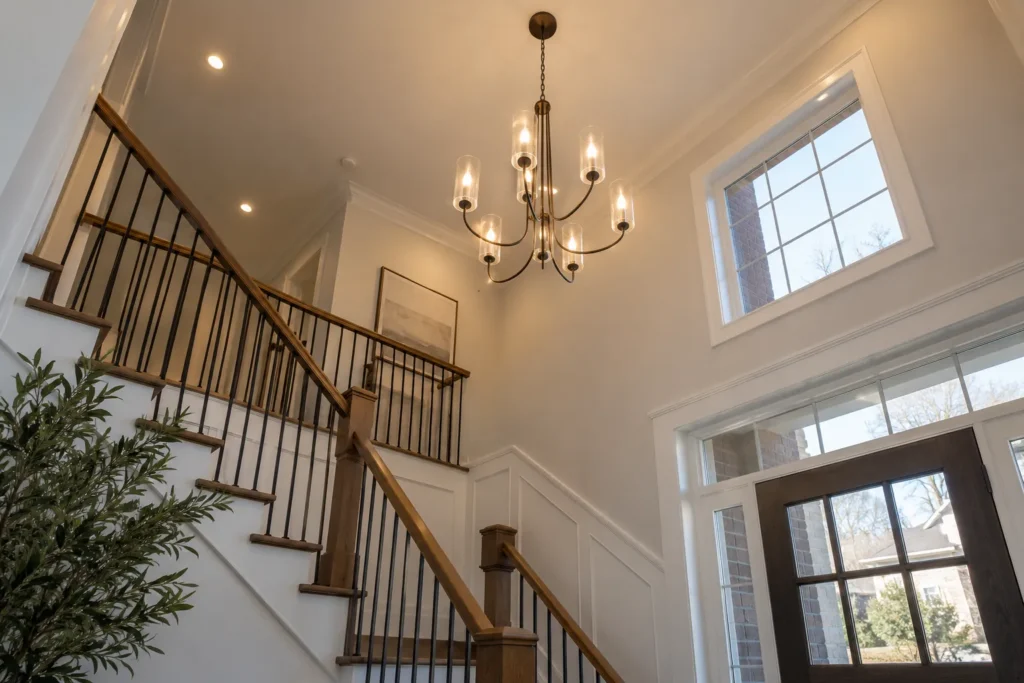
A semi-flush fitting can create more visual presence and sometimes distribute light differently from a tight ceiling mount. Measure its drop in relation to circulation, furniture, the ceiling plane and nearby architectural details. In a dining area, the table and fixture should relate to each other; in a foyer, the view from the entrance and upper level may matter. Glass shades, exposed lamps and metal finishes change glare and maintenance. Consider how the fitting looks when off as well as where its beam lands when on. A decorative fixture may be one layer in the room, with interior pot lights or lamps providing other layers.
Wall sconces and vertical light
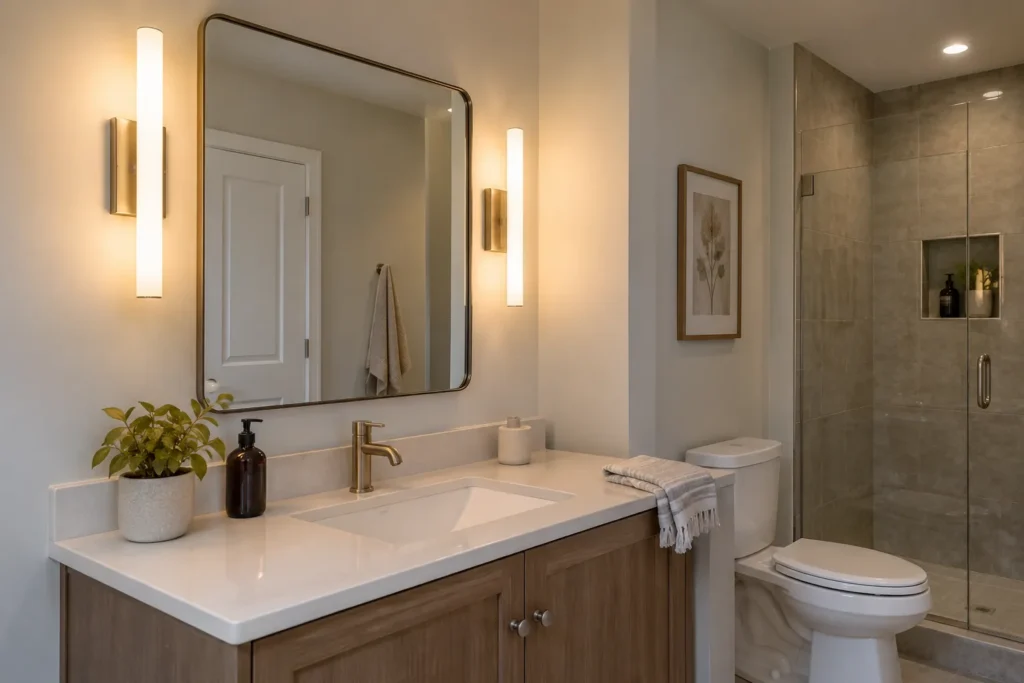
Wall fixtures can help illuminate faces, artworks, a hallway or a bedside reading area. Their mounting height and position have to respond to the actual task, furniture and sightline. A pair of sconces beside a mirror serves a different purpose from two decorative fittings framing an entry. Where a new wall point is required, wall construction, framing, insulation and existing services affect access and repair. A wall box must suit the chosen fixture and support arrangement. Do not assume a light can simply be attached where the decorative drawing puts it. Review switch access from the way the room is entered and used, especially when sconces complement overhead lighting.
Replacement versus new locations
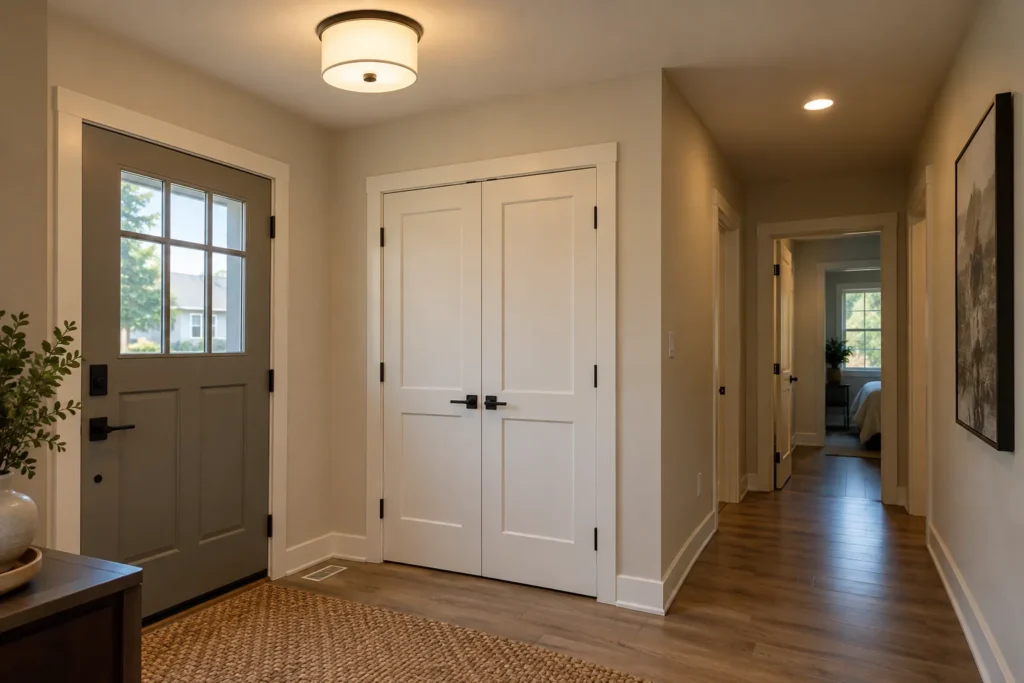
Replacing a fixture at an existing suitable electrical box may be relatively contained. Adding a new point can involve cable routing, a new box, switching changes and repair to finished surfaces. Even a replacement needs confirmation of mounting support, box condition, fixture weight and compatibility with the existing circuit and control. An older box may sit off centre or be unsuitable for the proposed load or mounting hardware. A new location should be marked against the furniture layout, not just a ceiling midpoint. Photos of the current fixture and the proposed new one are useful for early planning, but access and hidden conditions still need on-site verification.
Support is separate from appearance
A decorative ceiling plate can hide the box but cannot make an inadequate mounting arrangement safe. Fixture weight, the manufacturer’s mounting method and the structure behind the finish determine support. This is especially relevant for substantial pendants and chandeliers, but a smaller fixture can still need the correct box and fasteners. A ceiling fan or a fixture with moving parts has different support considerations from a stationary flush mount. Do not infer structural suitability from the fact that the old light remained in place. If the new fixture is heavier or has a different mounting footprint, include support assessment in the scope before installation day.
Scale and hanging clearance
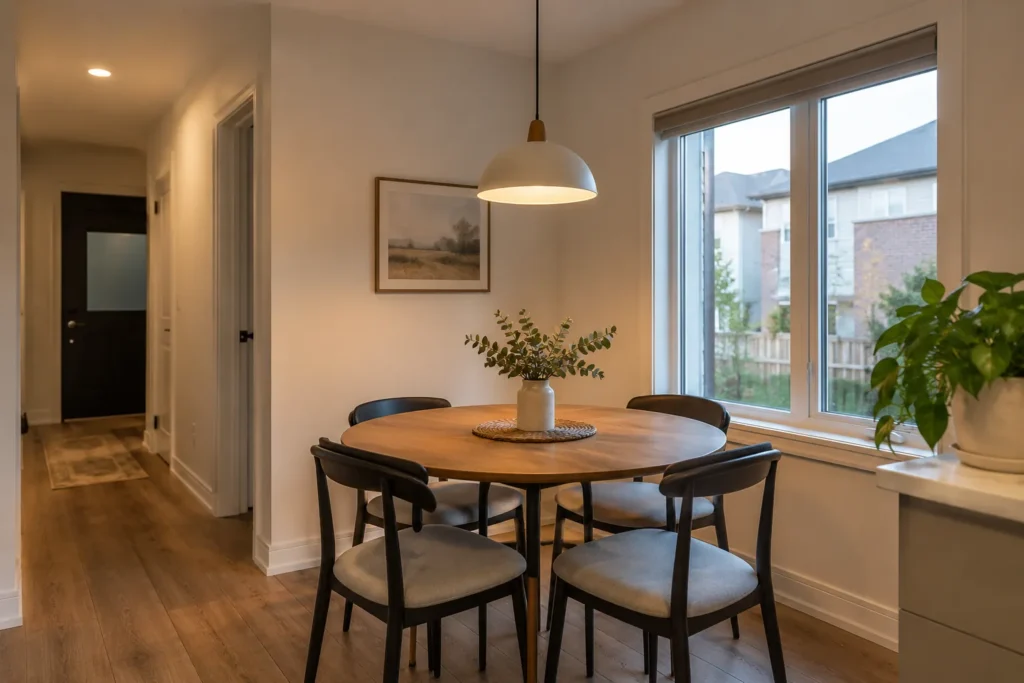
The right size depends on room width, ceiling height, table or counter dimensions and how close people pass beneath the fitting. A fixture may look modest in a catalogue and dominate a normal Milton dining room once unpacked. Hanging height is a relationship between the light, the surface below and the surrounding views; one fixed measurement cannot work across every room. Check sightlines while seated and standing, including the view from adjacent open rooms. Consider whether doors, cabinet fronts or a future taller piece of furniture will conflict. For a more specific discussion of grouped island fittings, see pendant lighting.
Light quality and controls
A good fixture can still disappoint with the wrong light source. Output, beam direction, shade transmission, colour temperature and dimming behaviour all affect the result. An opaque shade may direct almost all light downward, while clear glass can expose a lamp and cause glare. If the new fitting uses integrated LED components, check their service and control characteristics before purchasing. Where a dimmer is desired, select the lamp or driver and control as a compatible combination rather than assuming an existing incandescent dimmer will work. Separate switches can keep a decorative fixture useful without forcing it to carry the whole room’s ambient lighting. See smart lighting and dimmers.
Access and assembly
Some fittings arrive partly assembled and require careful handling, while others are straightforward at a reachable ceiling. Tall stairwells, vaulted rooms and heavy multi-part fittings change the access plan. The fixture’s packaging dimensions, components and mounting instructions can affect labour and the equipment needed. The work area also needs enough space to protect furnishings and assemble parts without damage. If a new fixture will occupy a point formerly used by a different shape, plan for any paint outline or unpainted ceiling revealed after removal. The high-ceiling fixture page discusses access and future maintenance at tall locations.
Scope and estimate considerations
Useful quote information includes room photos, ceiling height, existing and proposed fixture models, approximate weight, the desired position and whether a dimmer or new switch is requested. State whether the fixture is already purchased and whether assembly is needed. Price depends on support, box and wiring conditions, access, new cable routes, surface repair, controls and disposal or removal of the old fitting. Clarify who supplies lamps, canopy hardware and approved components, and who handles painting or patching. A request for “one fixture” can describe very different scopes depending on whether the electrical point exists and is suitable.
Ontario electrical requirements
Electrical work for hire in Ontario must be done by a Licensed Electrical Contractor. The person doing the work handles required ESA notification of work and applicable review. Electrical products used in Ontario need approval with a recognized Canadian certification or field-evaluation mark; fixture instructions and location suitability also matter. This page does not establish the condition of any particular existing box or circuit. For more on product selection and process, see the approved electrical products guide and Ontario electrical requirements guide.
Frequently asked questions
Can a new fixture use my current ceiling box?
Possibly, but the box, support, mounting method, condition and fixture weight need review. The old fitting’s presence is not proof that a heavier new one can be supported. A different canopy may also expose a paint outline or require a location adjustment. Share fixture specifications and clear photos, then confirm the actual conditions before the scope is finalized.
Does replacing a light require ceiling repair?
Some replacements fit the existing point neatly. Others uncover old paint, a larger opening or damage hidden by a former canopy. Moving the fixture or adding a new location is more likely to require access and finishing. Ask whether patching and painting are included or handled separately, especially in an open room where a ceiling repair will be prominent.
Can a chandelier or pendant replace a flush mount?
The desired drop, scale, support, box and ceiling height must all work together. A light that fits electrically may still obstruct circulation or look wrong over the furniture. For a substantial decorative fixture, start with chandelier installation; for island and grouped fittings, see pendant lighting.
Should I buy the fixture before asking for an estimate?
You can choose a style first, but retain the full product specifications and return flexibility until location, mounting support and controls are assessed. The dimensions and weight are especially important. If the light is an integrated LED model, review serviceability and dimming details as well as appearance.
To discuss a fixture in Milton, send a room photo and the fixture specifications. The aim is a fitting that is properly supported, comfortable to use and proportionate to its setting.