
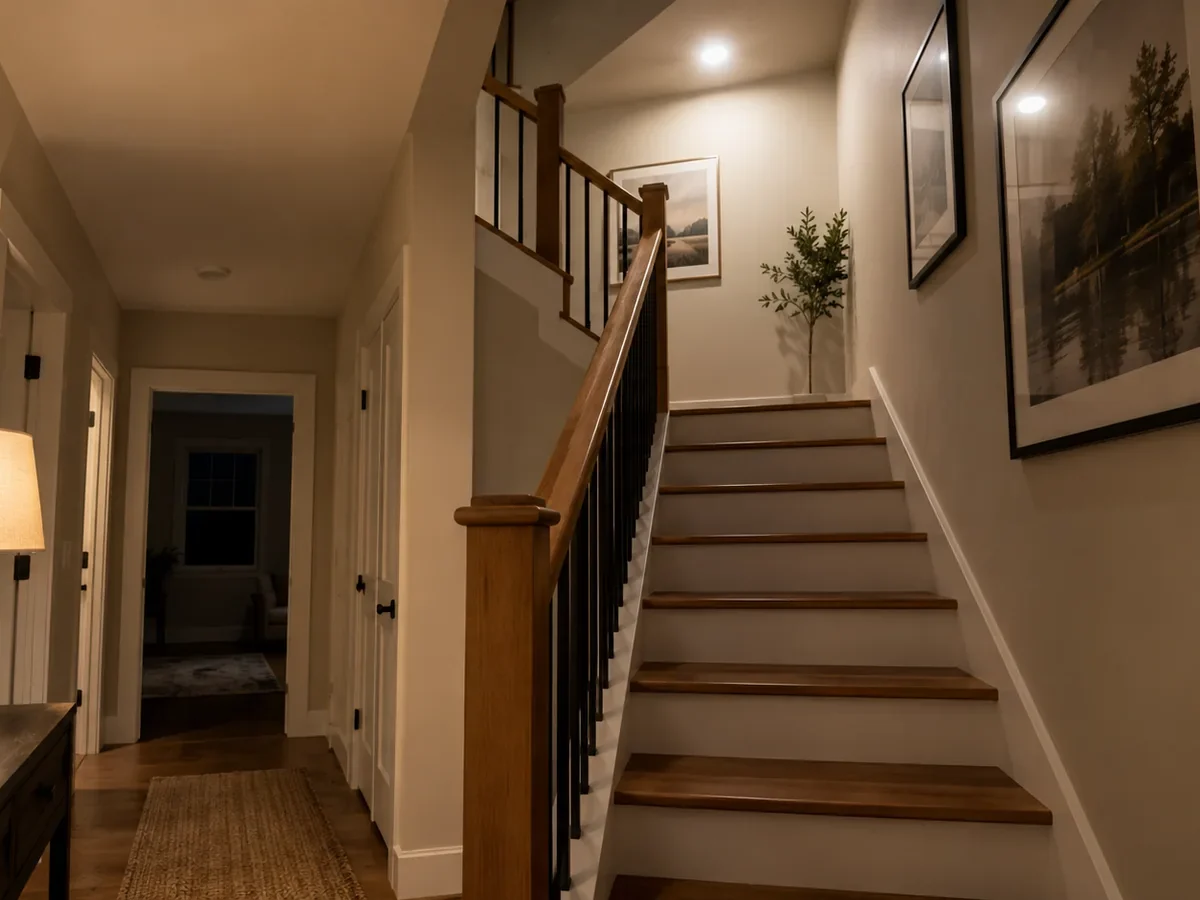
Pot lights can make a room feel harsh even when the total amount of light is useful. A downlight may sit in the sightline from a sofa, reflect in a television, strike a glossy island surface or expose its bright lens from a bed. “Too bright” is a real experience, but the visible symptom does not confirm that the fixture’s output alone is the cause. Position, beam, trim depth, ceiling height, room finishes and control zones all influence what your eyes see.
In a Milton living room, a high-output row facing the television may distract at night while leaving wall artwork flat. In a kitchen, a light above the middle of the island may bounce off polished stone. In a bedroom, a fixture comfortable from the doorway may shine directly into someone’s eyes when lying down. A good remedy begins at the normal viewing positions, not at the ceiling drawing alone.
Identify the uncomfortable view
Tell the difference between looking into a bright source and seeing light reflected from a surface. Sit on the sofa with the television on and off; stand at the kitchen counter; lie on the bed; walk the stair and hallway at night. These ordinary viewpoints reveal whether the lens itself is visible or whether the problem is the light falling on a screen, table, mirror or wall. Observe how it changes with dimming or a separate pendant. No electrical component needs to be opened to make these notes.
Glare can be concentrated in one fixture or appear across an entire row. A single problematic unit may have a different beam or trim from its neighbours. A whole group that feels harsh can reflect the chosen output and control arrangement. A new LED upgrade may look much brighter than the older lamps it replaced even when the aperture and spacing were retained. None of these observations can prove a wiring fault; if output itself flickers or cuts out, see flickering lights separately.
Output and beam need to suit the room
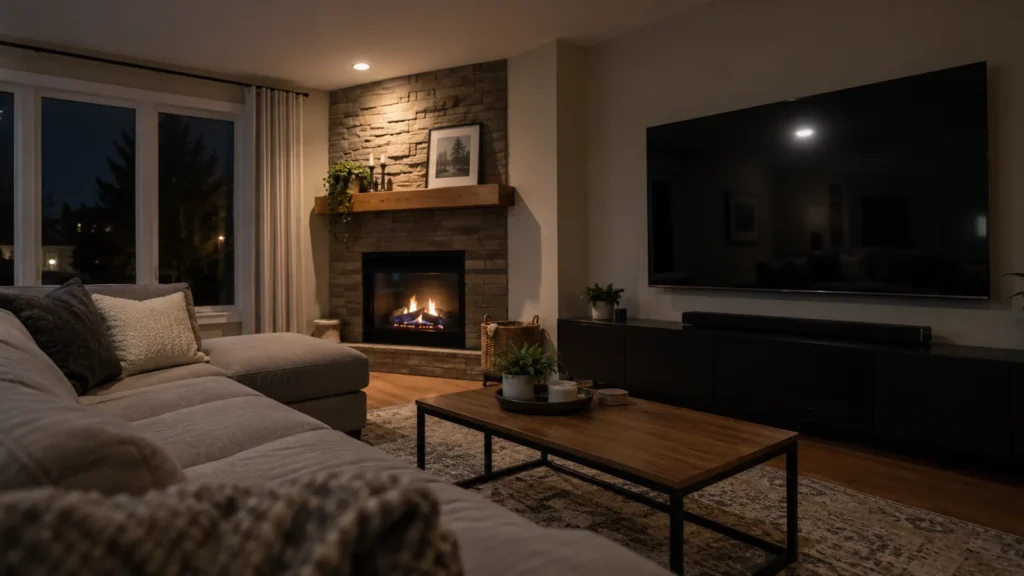
Lumens describe the light a product emits, but they do not describe precisely where it goes or how comfortable the source appears. Two fixtures with similar output can feel different because one has a broad diffused lens and the other concentrates light in a narrow beam. A recessed source set deeper in the trim may look less direct from some sightlines. Directional fittings can highlight a wall or feature rather than pouring all of their output onto the floor. Product details and actual comparisons matter more than a promise that one numerical rating is universally comfortable.
A low ceiling puts a bright source closer to occupants and shortens the distance for light to spread. A high ceiling changes the balance: more output or a tighter beam may be needed to reach the floor, but a badly aimed source can still glare across a two-storey room. Vaulted surfaces introduce viewing angles that a flat-ceiling sketch may miss. High-ceiling pot lights and basement pot lights address these different conditions.
Dark finishes may make a bright fixture appear more intense by contrast. A light floor may bounce that light around, while a glossy black TV presents a sharp reflection. This is why the remedy can involve softer distribution, a change in position or a separately lit wall rather than simply choosing less output everywhere. A room that becomes comfortable only when all fixtures are dimmed may then become too dark at its work surfaces.
Placement and sightlines
The centre of the room is not automatically the best line for pot lights. A layout should consider seating, television angle, fireplace, dining table, worktop, mirrors and the line of travel. In a living area, lights that skim a feature wall may give depth while keeping direct reflection away from the screen. In a kitchen, placing useful light toward the counter run can reduce body shadows without flooding the open walkway. In a bathroom, vanity lighting can illuminate a face more evenly than harsh downlight near the mirror.
There are limits to what can be changed in an existing finished ceiling. Joists, ductwork, insulation, roof conditions and available wiring routes affect relocation. An estimate should distinguish using better-suited approved fixtures in present openings from moving fixture positions or adding another lighting layer. Do not promise a ceiling will need no access or repair before those conditions are reviewed. Pot-light layout and design explains the planning sequence.
Under-cabinet light, a pendant, a wall light or a table lamp can sometimes make the room more comfortable because the central downlights no longer need to do every task. A brighter room with multiple lower-intensity sources may feel easier on the eyes than a room with a small number of intense ceiling spots. For connected rooms, separate zones let residents keep a kitchen task area active while softening a lounge.
What dimming can and cannot solve
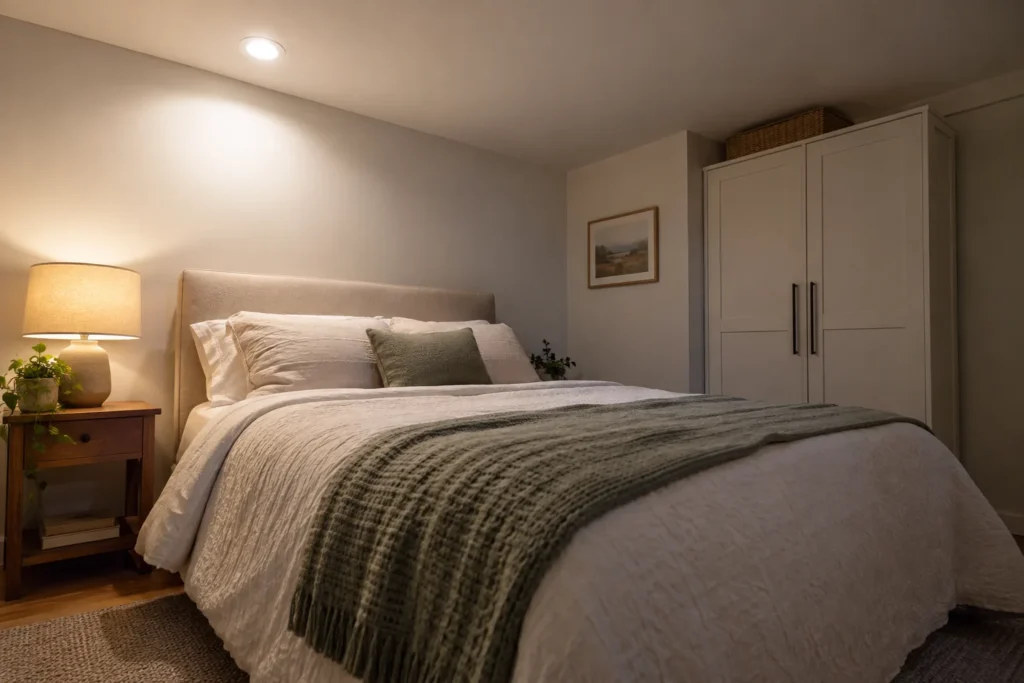
A compatible dimmer provides flexibility for evening use and screen viewing. It can lower the intensity of an otherwise useful row and allow scenes for different activities. But dimming every fixture together cannot repair an exposed lens in a direct sightline or deliver missing light to a dark counter. The fixture and LED driver must also work with the chosen control; an incompatible combination may flicker, buzz or drop out. See LED dimmer problems for those symptoms.
If an existing control has separate circuits or zones, test how the room feels using those normal settings. A family room may be comfortable with perimeter accent lighting on and the centre row low. If there is only one switch, adding zones may require more electrical scope than simply replacing a dimmer. A written proposal should explain the intended scene and what control work is actually included.
Evaluate an upgrade without creating new problems
Review the installed fixture model, lens, beam, trim, colour temperature and measured or stated output as available. Compare replacements with neighbouring lights and the room’s decorative fixtures. A different Kelvin setting can make the new lights feel stark even if measured brightness is similar. Mismatched colour temperature covers consistency across the room.
When selecting a product, its Ontario-recognized approval mark and suitability for the installation matter alongside appearance. A bathroom or exterior position can require product suitability that an attractive interior fitting does not provide. If changing wiring, controls or recessed fixtures, electrical requirements should be part of the scope. ESA says a business hired to perform electrical work in a home must be a Licensed Electrical Contractor; almost all such work requires a Notification of Work filed by the person doing the work, subject to scope-specific exceptions. ESA reviews notifiable work and issues a Certificate of Acceptance after it passes. See ESA requirements and approved products.
Questions homeowners ask
Is glare just a sign of too many pot lights?
No. Even one poorly placed or unshielded source can be uncomfortable, and a well-zoned room may use several lower-intensity fixtures effectively. Fixture optics, viewing position, reflective surfaces and controls all play a role. Counting holes alone does not diagnose glare.
Can I keep my existing ceiling openings?
Sometimes a product with different optics or trim can improve comfort in the existing positions. The existing housing and electrical installation determine compatible choices. If the position itself causes a reflection, using the same opening may only reduce, not eliminate, the issue. A site-specific assessment can compare the tradeoffs.
Why are the pot lights fine by day and harsh at night?
Daylight changes contrast and your eyes adapt to different ambient levels. A fixture that blends into a bright daytime room can dominate an otherwise dim evening room. Zones and smooth dimming may help, provided the source’s placement and beam also suit the room.
Describe the uncomfortable angle
Send a room photo from the sofa, counter or bed and explain when glare is strongest through contact. Include ceiling height, fixture type and control arrangement. A layout review can consider output, optics and layers together so the space remains useful without shining into the places where people look.