
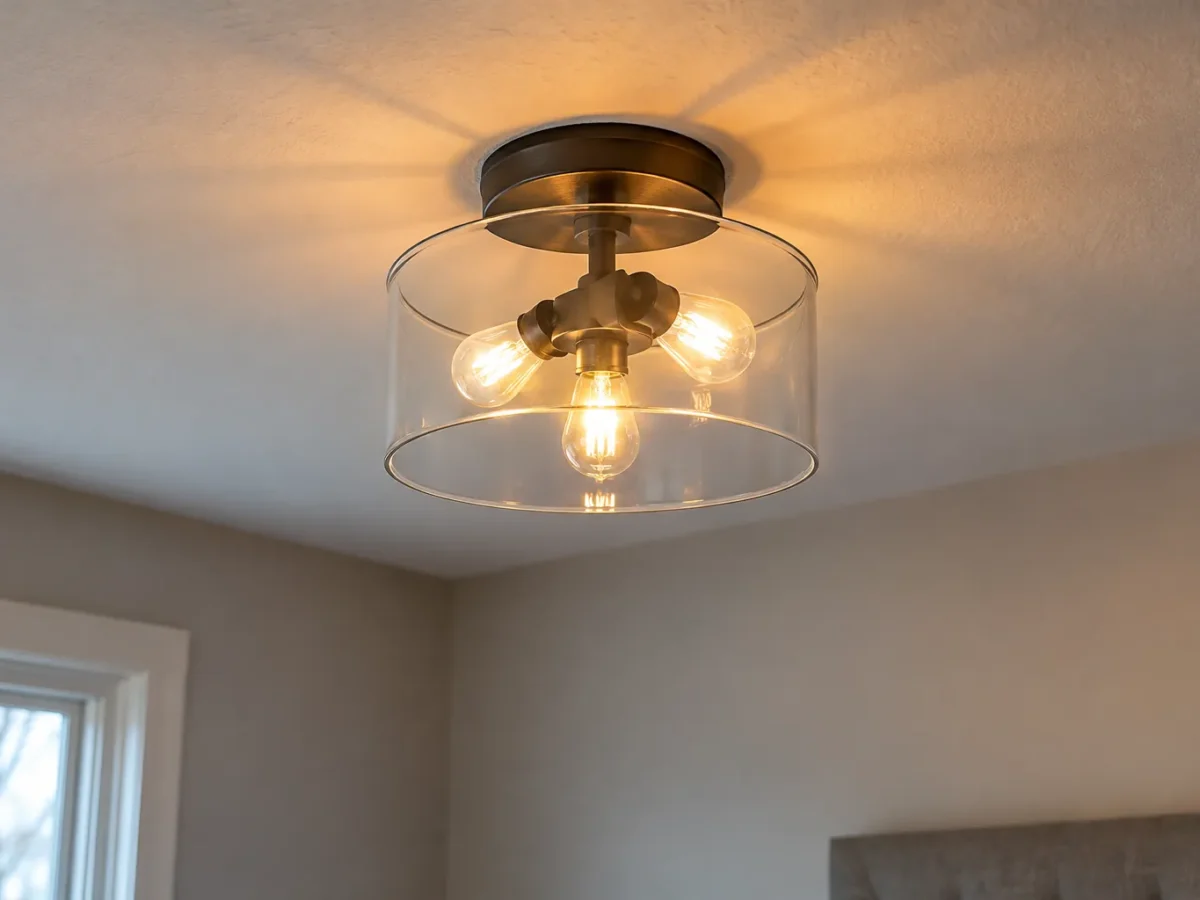
A dark fixture does not identify its own cause. It may have a failed lamp, a driver that has stopped operating, an incompatible control, a problem at a connection or an issue elsewhere on the circuit. The same symptom can call for a small component change or a broader investigation. The sensible first step is to describe what happens, where it happens and when it began. Diagnose the fault before replacing parts at random. For lighting repairs in Milton, that approach helps avoid buying a new decorative fitting when the real issue lies in the control or supply.
The pattern of a flicker matters
Flicker in one light after a lamp change points in a different direction from flicker across several fixtures on the same circuit. Does it occur only at a low dimmer setting, whenever another appliance starts, after the light warms up or unpredictably throughout the day? Those observations help narrow the review. A brief video may be more useful than a verbal description, especially for intermittent behaviour. Avoid repeatedly testing a fixture that shows visible heat damage, odour or sparking; arrange appropriate professional attention. For a group of new LED fixtures, review product and control compatibility alongside the installation rather than assuming every visible symptom is a bad bulb.
Lights that fail or stop intermittently

An integrated LED fixture may have a serviceable driver, a replaceable module or a design that calls for replacing the complete unit. Older recessed fixtures may use removable lamps and trims. The exact product matters, and the visible trim may hide the relevant model information. Intermittent operation can involve heat, driver behaviour, controls or electrical connections. A light that comes back after cooling is not necessarily safe to ignore. The surrounding ceiling, insulation conditions and manufacturer instructions may be relevant for recessed equipment. Our LED pot light upgrades page discusses options when several ageing fixtures create an uneven appearance or repeated failures.
Buzzing at the fixture or switch
Buzzing needs a location and a pattern. Is it heard at a wall dimmer, an LED lamp, a remote driver or a decorative fixture? Does the sound change as the lighting level moves? Some combinations of dimmers and LED drivers are noisy even though they turn on, while another sound can signal a different fault. The age of the control and the exact lamp or fixture type help with diagnosis. A repair should follow an examination of the load and installation, not a guess based on the nearest audible part. If a recently purchased fixture buzzes from day one, retain its model and order information for compatibility and warranty discussions with the product supplier.
Dimmer and smart-control problems
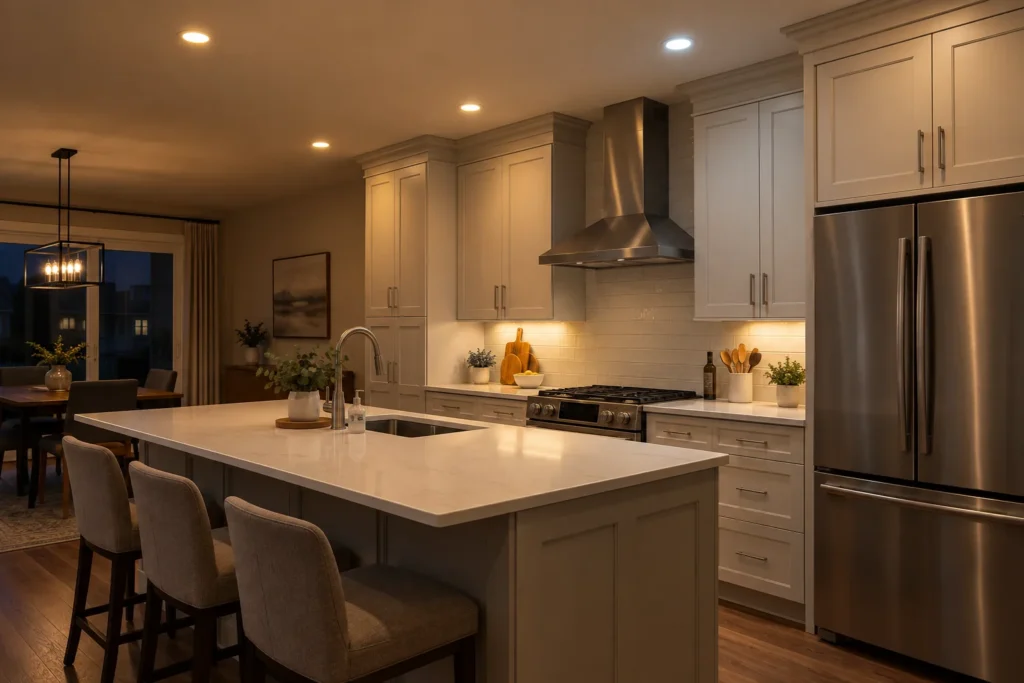
LED dimming can expose incompatibility through fluttering, abrupt drop-off, a narrow usable range or lights that remain faintly on when switched off. Smart controls may add network and configuration questions, but wiring arrangement and load still matter. If only remote commands fail while the wall control works, that is a different symptom from all lights losing power. Make a note of firmware or product changes only if they coincide with the issue; do not reset a whole system without documenting the current behaviour. The smart lighting and dimmers page explains planning for manual wall control, multi-way operation and compatible LED loads.
Mismatched replacement lamps and modules
A fixture may function but leave a room looking patchy after one unit is replaced. Differences in colour temperature, colour rendering, lumen output, beam spread and trim appearance can become obvious across a ceiling. Product generations also change, so a nominally similar lamp is not always a visual match. Where exact replacement is unavailable, a coordinated group upgrade may produce a better result than a series of isolated substitutions. First establish whether the existing housings and wiring are suitable for the proposed products. Replacement does not automatically mean tearing out every old recessed housing; the actual equipment and available approved options determine the scope.
Decorative fixture issues
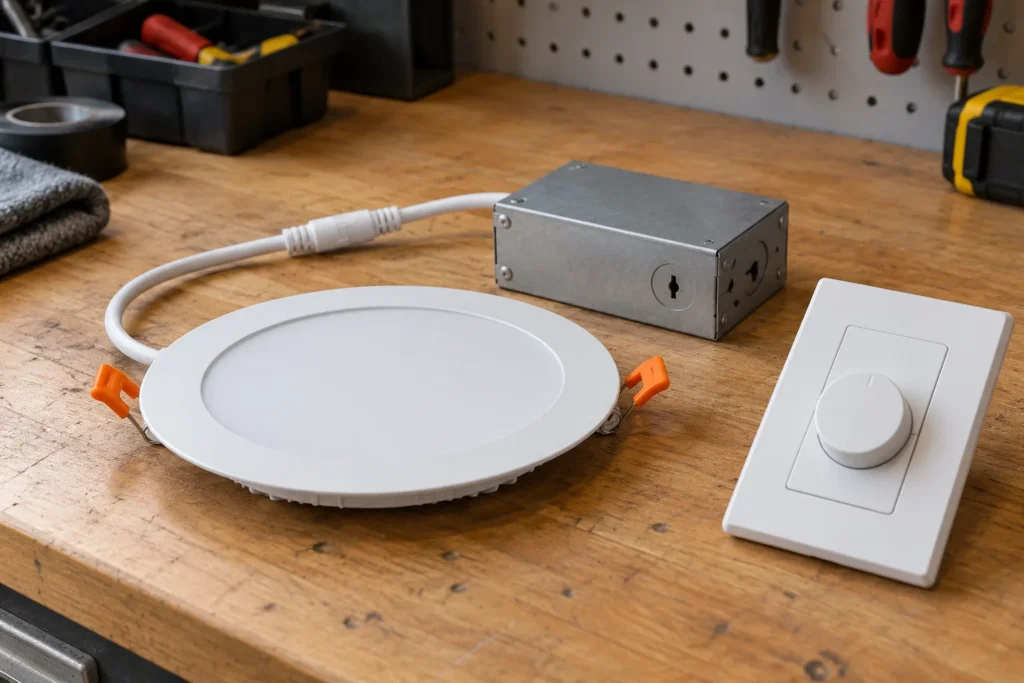
A chandelier that flickers, a pendant that cuts out or a wall sconce that fails can involve the lamp, socket, internal fixture parts, control or electrical supply. Physical movement, a loose canopy or a fixture hanging out of level introduces a separate support concern. It is useful to record whether the issue began when the fixture was installed, after a lamp replacement or after work elsewhere in the room. A heavy fixture needs an appropriate mounting arrangement independent of the lighting fault. Our light fixture installation page covers replacement locations, box conditions and support when a fixture change becomes the best option.
When repair makes more sense than replacement
If a quality fixture has an obtainable approved component, sound support and a finish the owner wants to keep, a targeted repair may be worthwhile. Repair is less attractive when parts are unavailable, several modules have failed, mismatched colour is unavoidable or the fixture is unsuitable for its environment. Consider the total cost of diagnosis, parts, access and future service, not only the price of a new lamp. A difficult high-ceiling location may make reliability and maintenance access especially important. Do not buy a replacement fixture solely because the existing one went dark; confirm whether the fault is in the fixture before committing to a new style.
Finished ceilings and access
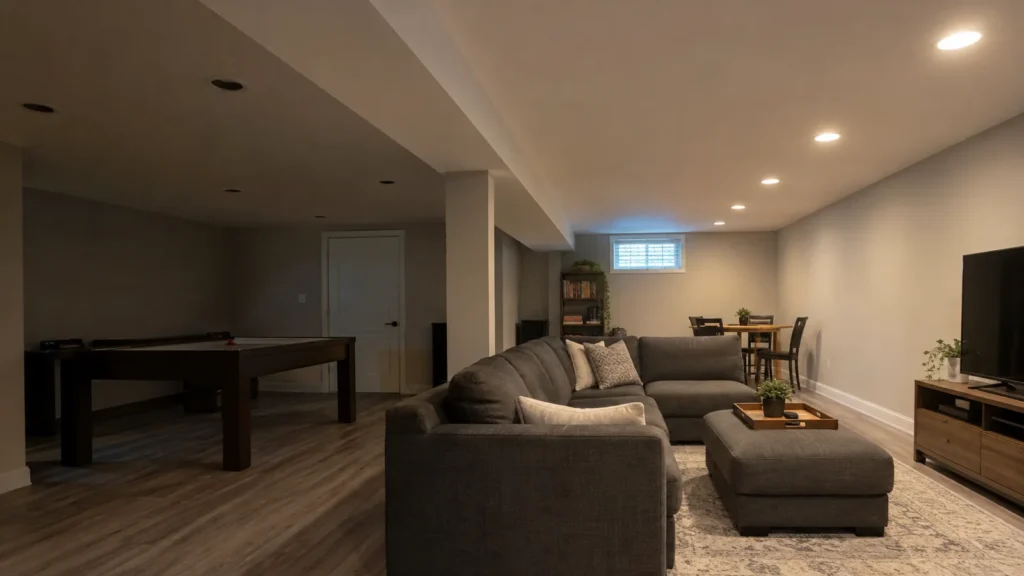
Recessed lights often sit in finished ceilings with joists, insulation, ducts or other services nearby. The path to an affected driver or junction point may determine how much access is required. Some fixtures are designed for front-side service, but that cannot be assumed for every product. A ceiling stain, displaced insulation or water exposure changes the assessment. In a basement, bulkheads and mechanical runs can make adjacent fixtures very different jobs. Ask how openings, patching, painting and adjacent finishes are handled in the quoted scope. If multiple fixtures are being upgraded, a coordinated plan can minimize repeated disturbance while improving the overall layout.
What to record before requesting service
Identify the affected rooms and fixtures, how many lights share a switch, whether a dimmer is present and how the symptom changes with brightness. Note any recent lamp, fixture, switch or renovation work. Photos of fixture labels, the visible condition and the control face can help narrow the likely parts, while a short video can capture intermittent flicker. If a breaker repeatedly trips, a fixture is hot or a burning smell is present, stop using the affected lighting and seek prompt qualified assessment. Do not open equipment or experiment with wiring to collect information. A clear symptom history saves time without asking a homeowner to perform an electrical diagnosis.
Scope, cost and Ontario requirements
An estimate for troubleshooting depends on access, the number of affected points, how intermittent the fault is, product identification and whether repair parts are available. Diagnosis may reveal work beyond the original symptom, so agree how findings and any change in scope will be communicated. In Ontario, electrical work for hire must be done by a Licensed Electrical Contractor, and the person doing the work handles ESA notification of work and applicable review. Approved products and manufacturer instructions matter when a lamp, control, driver or complete fixture is selected. See the Ontario electrical requirements guide for process context. No fixed online price can reliably distinguish a failed lamp from a hidden circuit problem.
Frequently asked questions
Why do my pot lights flicker only when dimmed?
An LED lamp or driver may not be compatible with the installed dimmer, the load may sit outside the useful range, or another fault may be present. The exact combination and wiring must be reviewed. Record the dimmer setting where flicker starts and whether every light in the group behaves alike. Replacing all lamps or changing the switch at random can add cost without resolving the cause.
Can an integrated LED pot light be repaired?
Some designs have replaceable drivers or modules; others are replaced as complete fixtures. Availability, approval, product age and access all influence the practical choice. The visible trim does not always identify the hidden components. If many fixtures of one model are failing, it may be more sensible to assess the group together for consistent output and colour.
Is one buzzing light an emergency?
The cause cannot be judged from sound alone. A persistent buzz, especially with heat, smell, flicker or intermittent operation, deserves prompt professional evaluation. Note where the sound originates and whether dimming changes it, then avoid using the affected lighting if it shows signs of overheating or damage. Do not remove covers or try electrical repairs to investigate.
Should every fixture be changed to match one failed unit?
Not automatically. A matching approved replacement may be available, or the difference may be small in a separated zone. In a prominent row of recessed lights, inconsistent colour and output can be conspicuous. Evaluate compatible replacement options, product availability and the condition of the remaining fixtures before deciding on a group upgrade.
Describe the lighting symptom and its pattern to discuss a repair assessment in Milton. Photos and model details are helpful; an accurate diagnosis determines the next step.