
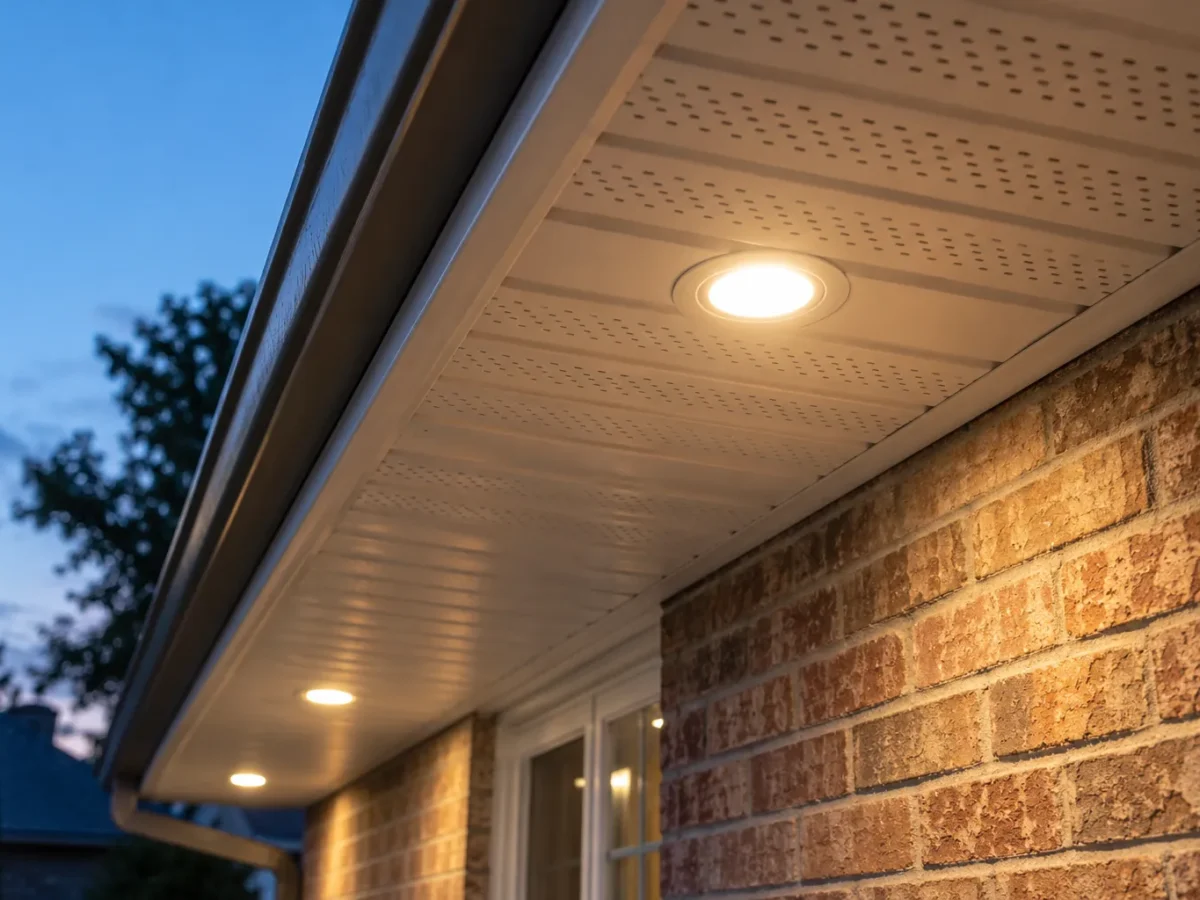
The nominal four-inch or six-inch label primarily describes a fixture size category. It does not tell you how bright the room will be. Modern integrated LED models vary widely in output and beam even within the same diameter. A six-inch fixture can have a softer appearance than a particular four-inch product; a four-inch fixture can have more useful output than an older large can. Choose the actual approved model for the room and compare its optical specifications, visible appearance and fit. Do not purchase a ceiling grid based on aperture diameter alone.
Separate physical size from lighting performance
The opening and visible trim influence how a fixture appears against the ceiling. A larger trim has more visual presence, particularly in a small room or low ceiling. A smaller aperture can recede, though its comfort depends on the emitter position and optical design. “Four-inch” does not guarantee one exact cutout dimension or one appearance across brands. Confirm the manufacturer’s cutout instructions and the exact product before any opening is made. A replacement must also address the existing hole and assembly, rather than assume one nominal size will cover another.
Brightness is better discussed through rated lumen output and the resulting light on the surfaces. Beam angle and diffuser determine how that light is distributed. Colour temperature and dimming affect how people experience it. Ask to see a product sheet, not just a size. If one six-inch model looks too intense over a sofa, the issue may be output, glare control or placement rather than diameter. The quantity guide shows how these variables work together.
Read the room's scale
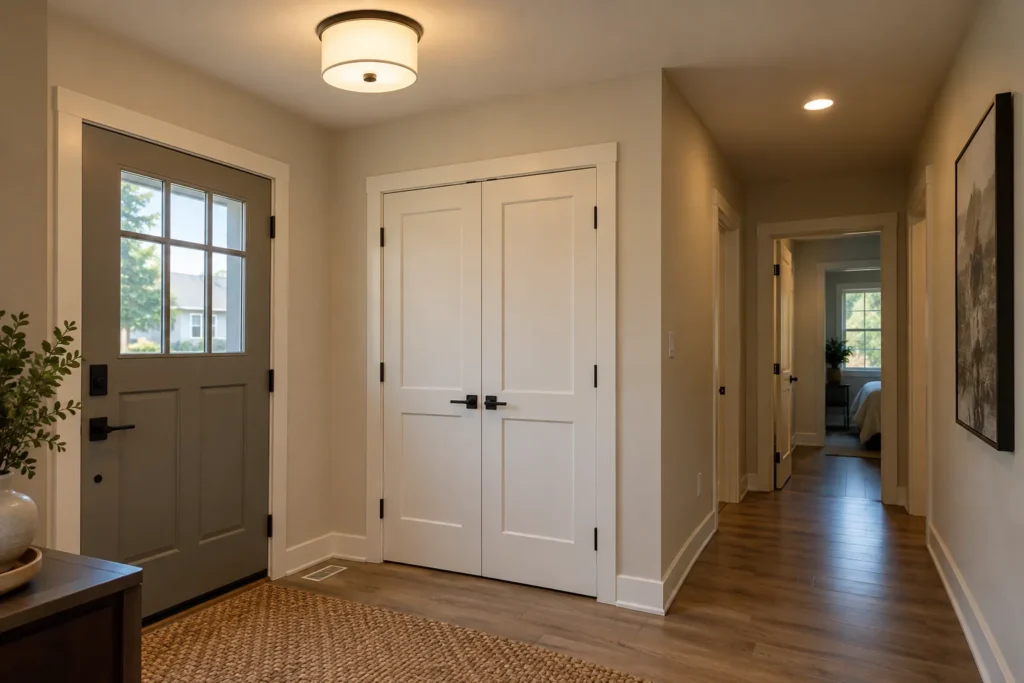
A compact hallway, bedroom or kitchen perimeter can visually accommodate a smaller aperture without making the ceiling feel crowded. A larger open room may suit either size, depending on fixture count, spacing and the intended visual rhythm. A large diameter is not automatically required for a large room. Architectural features, ceiling height and the number of visible fixtures can matter more than square footage. View the planned layout from the doorway and seated positions as well as from directly below.
In a high-ceiling foyer, a larger apparent opening may feel proportionate, but usable light at the floor or focal wall is still the critical measure. A high-output product with appropriate beam control could be more important than the nominal diameter. Access for installation and future servicing also enters the decision. Our high-ceiling pot-light service treats this as a distinct installation context rather than scaling up an ordinary room recipe.
Beam and glare can reverse expectations
A four-inch fixture with a deep, controlled aperture may direct light neatly onto a counter. Another four-inch wafer with an exposed diffuser might spread light broadly and remain visible from across a low-ceiling room. A six-inch fixture can likewise be designed for broad, soft coverage or a more focused effect. Size alone cannot predict glare. Compare the fixture in a lit room at a viewing angle similar to the actual seating position. Staring at the illuminated product in your hand is a poor test.
Beam overlap affects spacing. A narrower, directional product may need a different arrangement from a broad-beam product even if both have the same diameter and nominal lumens. The goal is enough light on the task and a comfortable transition between fixtures, without an unnecessarily bright line of ceiling circles. The spacing and layout guide addresses walls, cabinets and screen reflections, which are often more consequential than the aperture label.
Kitchen and living-room comparisons
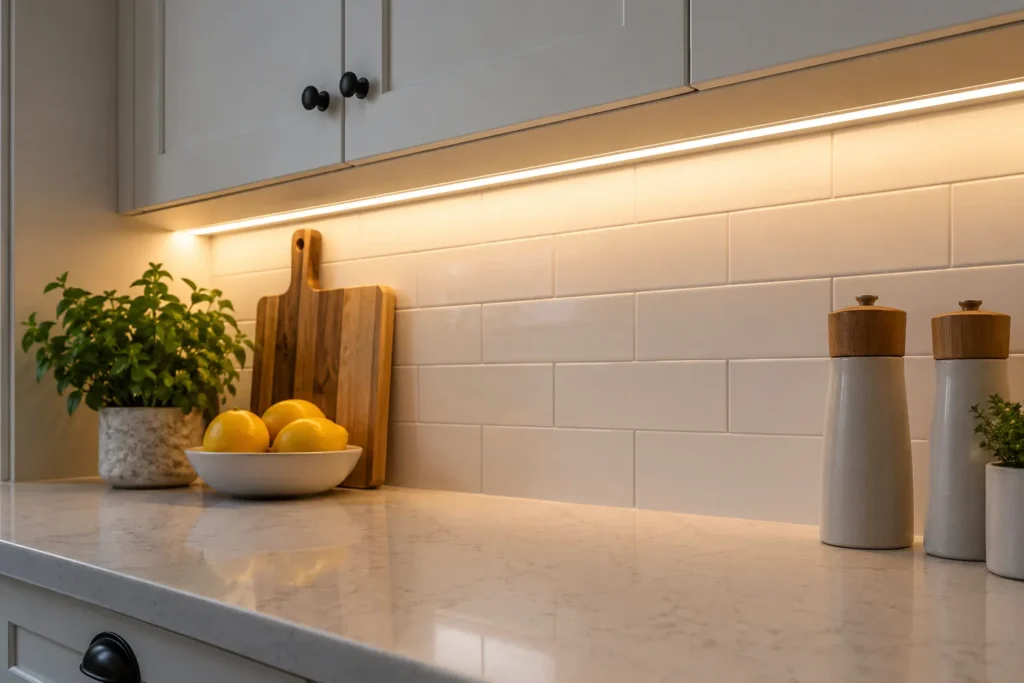
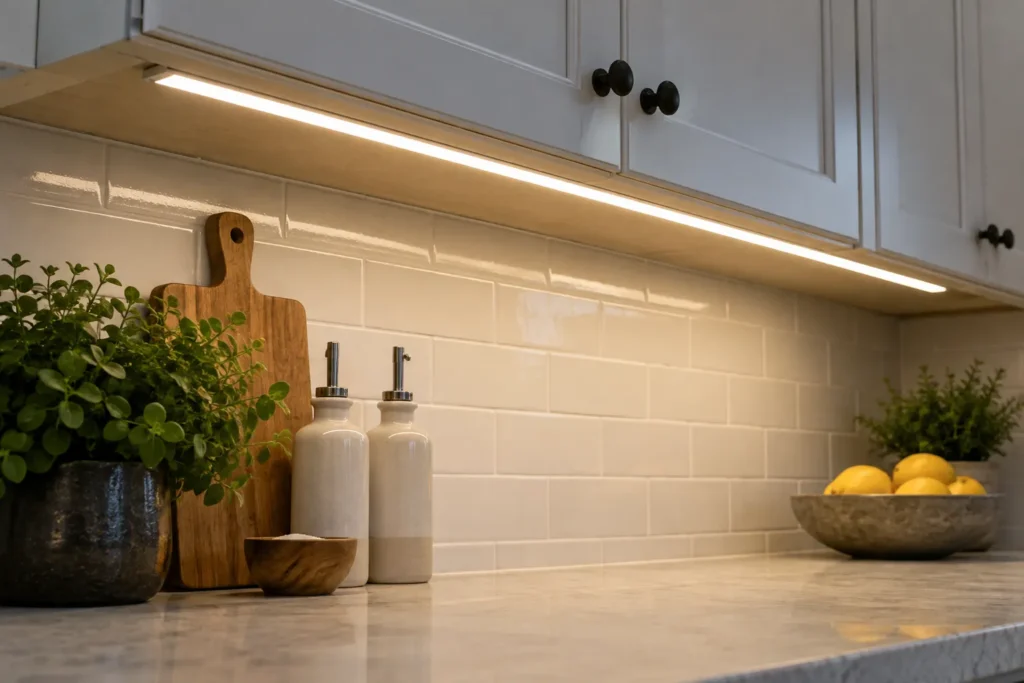
For a kitchen, look first at work surfaces. A small fixture positioned to serve a counter may outperform a larger fixture placed in a neat central row behind the cook. Under-cabinet lighting can carry direct task work, allowing recessed lights to support circulation and general illumination. An island pendant adds another layer. The ceiling fixture size can then be chosen for appearance and performance within that plan. Read kitchen lighting layers before selecting a full kitchen package.
In a living room, excessive output directed into a television or above a habitual seat can make the space uncomfortable. A slightly larger aperture with better shielding might be preferable to a small bright disc, or vice versa depending on products. Think about the amount of visible ceiling hardware and the way walls and furniture are lit. Controls can reduce intensity in the evening, but they cannot relocate a reflection on a screen.
Retrofit and existing opening constraints
An existing six-inch can presents a different renovation question from a new four-inch installation. Some approved products are designed for particular retrofit applications, but compatibility with the existing housing, wiring, trim and instructions must be verified. Merely choosing a small trim will not repair an oversized opening. The ceiling finish, a possible patch and the desired long-term service access belong in the proposal. In other homes, a new fixture position may be better than preserving a poorly located old hole, though that changes drywall scope.
The slim versus traditional recessed guide addresses construction types that can be found in both size classes. Joist depth, insulation, ducts and driver location may constrain product choice. A product that fits on paper still must be suitable for the actual ceiling assembly and installed in accordance with its instructions. Do not equate “thin” with permission to place it anywhere.
Cost and product quality
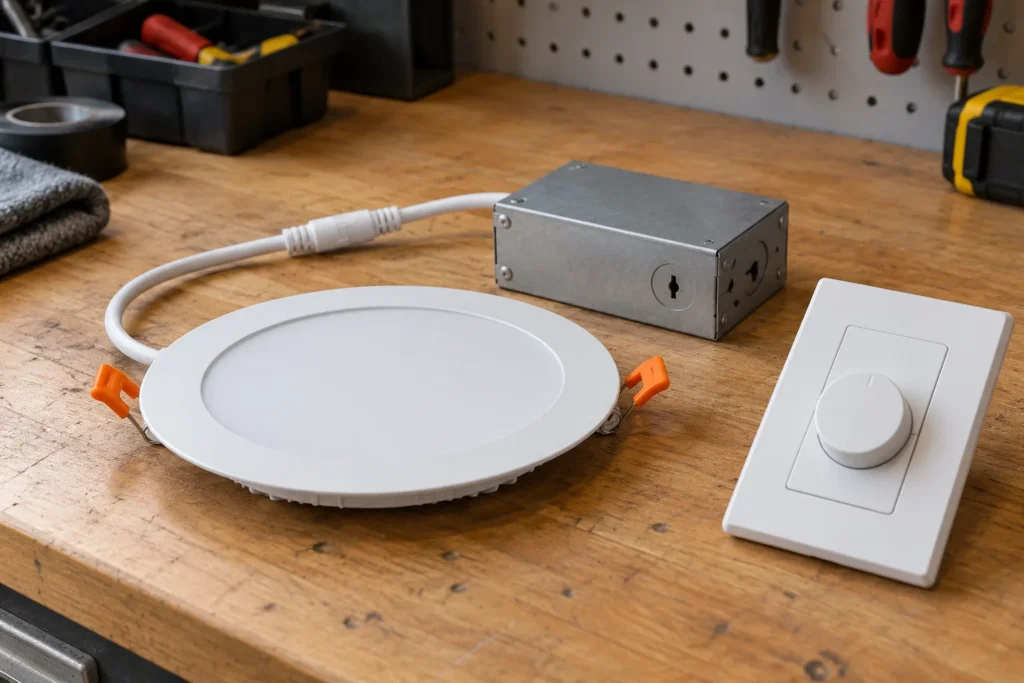
Comparing two quotes by diameter is incomplete. The exact fixtures can differ in output, optics, colour consistency, trim durability, dimming performance and approved application. Access, routing, control work and ceiling repair often move total project cost more than a small change in aperture. Ask whether the quote identifies manufacturer and model, cutout size, required accessories and dimmer. The cost guide gives a scope-based comparison rather than a misleading price per light.
Check the Ontario-recognized approval mark on the product and verify its intended location and assembly. ESA’s recognized marks page is a current reference. A marketing listing may mix Canadian and non-Canadian variants under one photo, so the installed unit and accompanying instructions matter. This applies equally to an inexpensive and a premium fixture.
Consider maintenance before selecting an opening
An integrated fixture may eventually need a matching replacement, while a system with a replaceable lamp or compatible trim has a different maintenance path. Ask what is accessible from below and whether the manufacturer offers replacement components. A fixture installed in a difficult high ceiling or above built-in cabinetry deserves extra attention to service access. Keep the model and colour setting in your home records. The opening size should be chosen with the complete product and practical future maintenance in mind, rather than as a visual decision alone. A replacement that does not match adjacent lights can be conspicuous even when its diameter is nominally identical.
Make a fixture-specific decision
Ask for at least one candidate model in each size if visual scale is the unresolved question. Compare them at similar useful output and beam, then judge trim appearance, glare from ordinary positions and ceiling fit. If the sizes are tied, choose the product whose optics, controls and installation requirements fit the room better. Record the model before finalizing layout; substituting a different fixture later may change spacing or opening dimensions.
Are 6-inch pot lights always brighter?
No. Output and distribution are model specifications, not guaranteed by diameter. Compare lumens, beam and performance at the actual surfaces.
Do 4-inch lights need to be spaced more closely?
Not necessarily. Some small fixtures have broad distribution and strong output, while others are intentionally focused. The chosen model and ceiling height determine an appropriate layout.
Can I put a 4-inch fixture in a 6-inch opening?
That depends on a compatible, approved product or a properly repaired ceiling. Do not assume the trim will cover the opening or that a casual adapter is suitable. Have the existing assembly assessed. For a room-specific plan, contact Milton Pot Lights.