
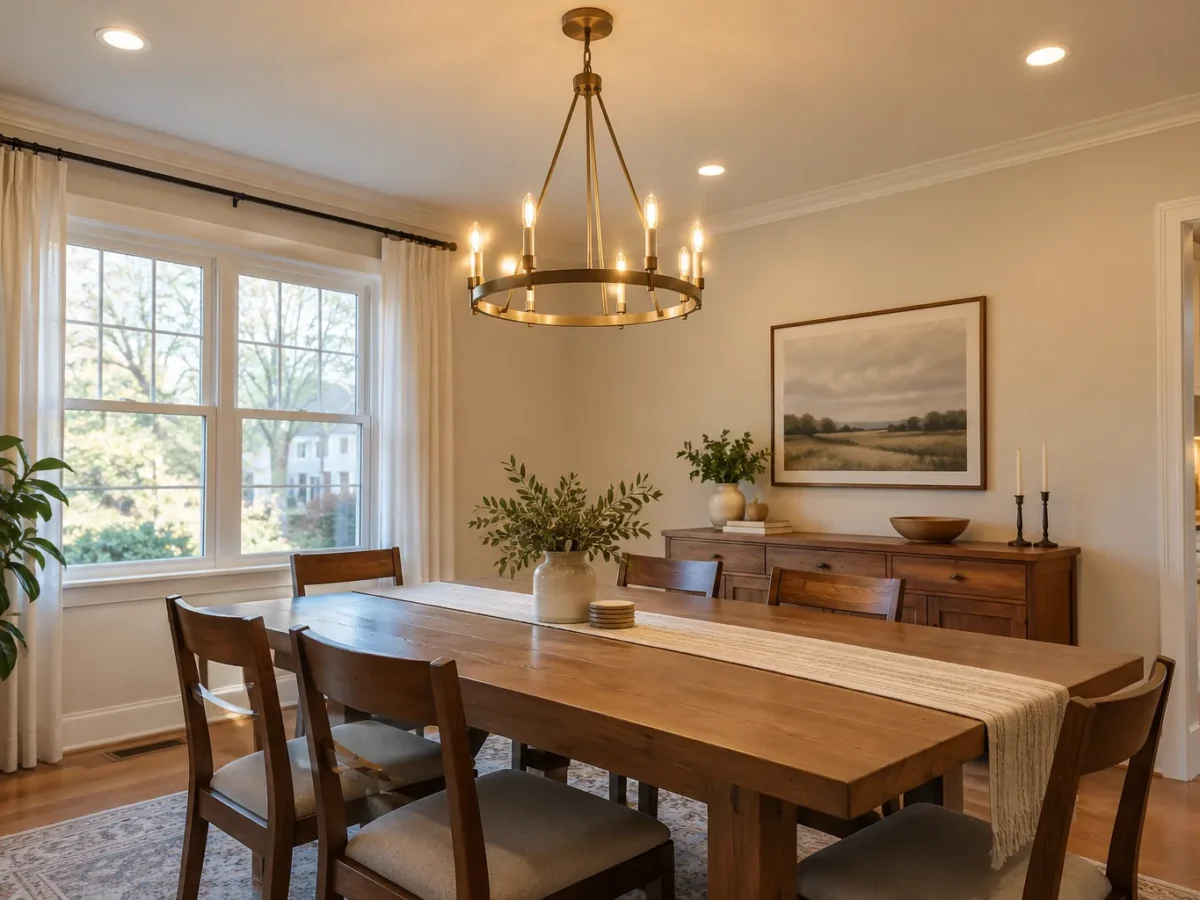
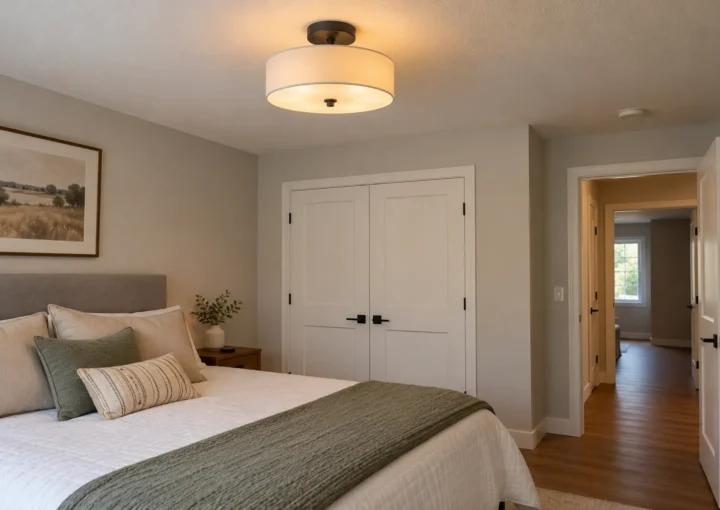
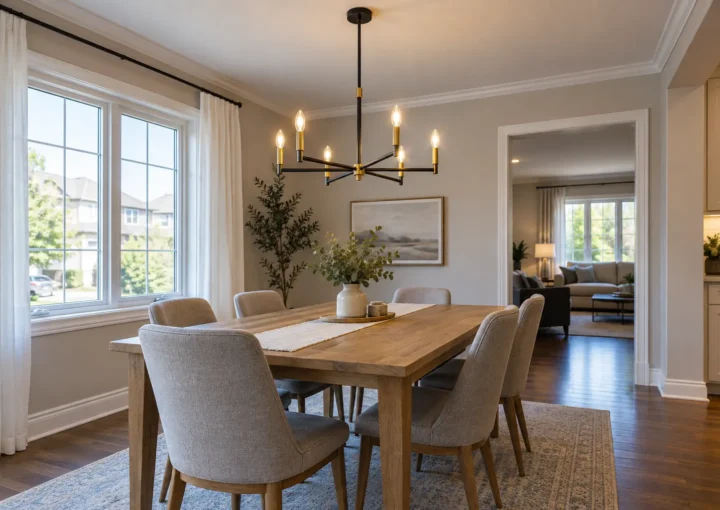
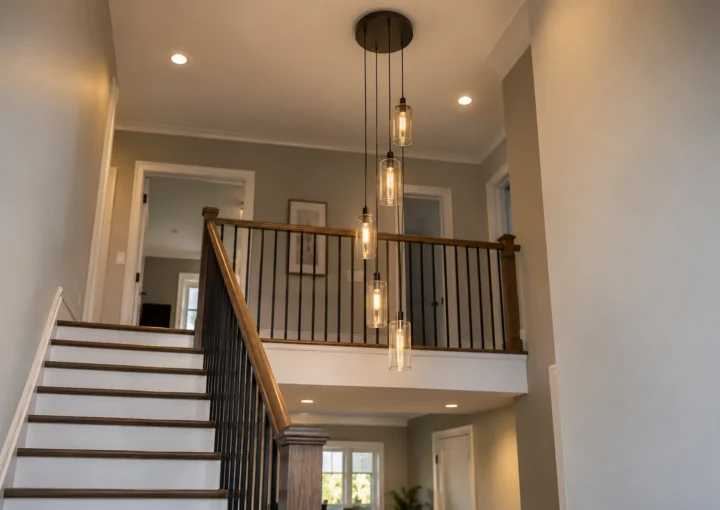
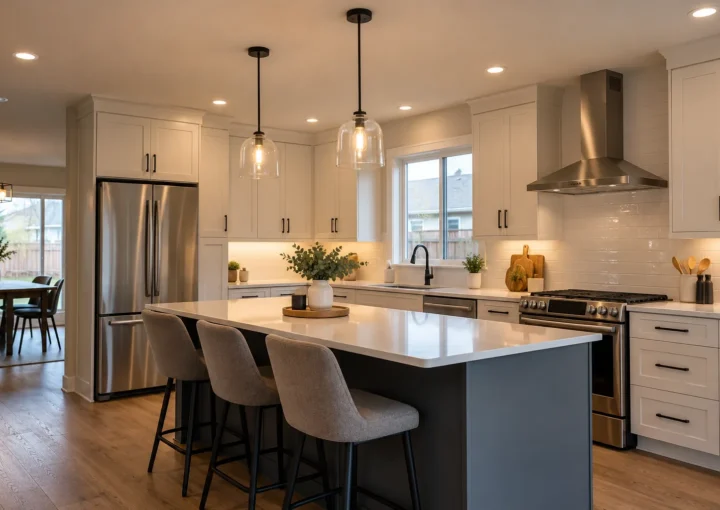
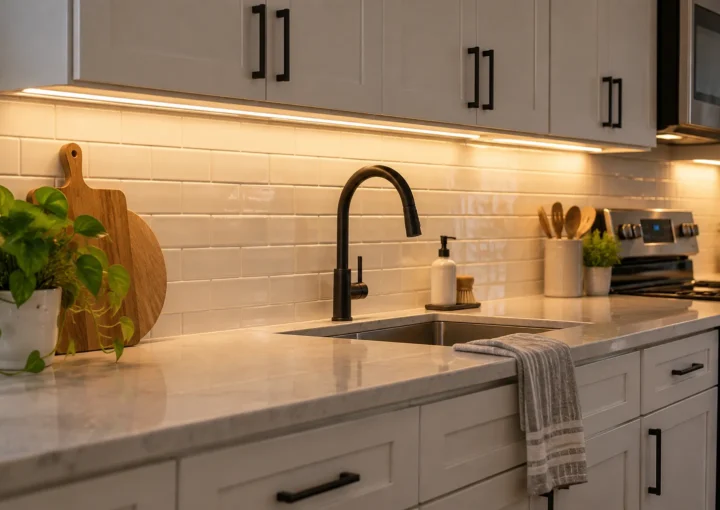
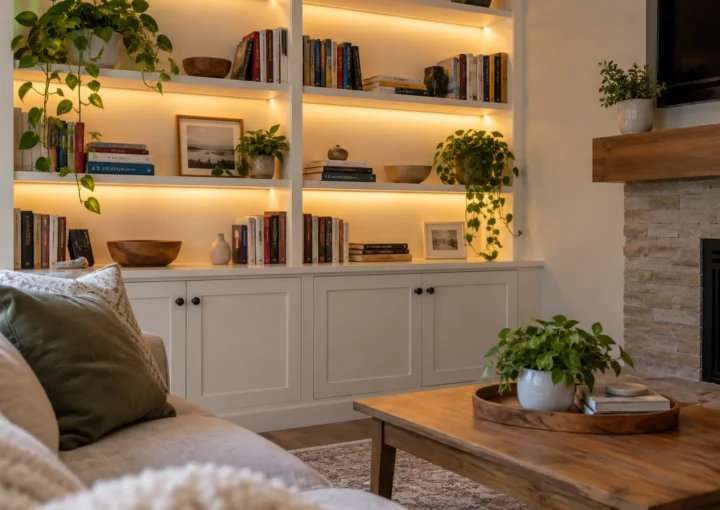
A complete room often needs more than recessed light. Ceiling and wall fixtures, pendants, chandeliers, under-cabinet lighting and controlled LED accents each solve a different part of the lighting plan.
Give each light a job
General light lets people navigate a space; task light makes work surfaces usable; accent light gives walls, cabinetry or artwork depth; decorative fixtures add a visible focal point. These layers can overlap, but they should not be confused. A chandelier above a dining table does not automatically light the perimeter, and a row of downlights cannot always replace the character or targeted function of a pendant.
Fixture installation also has physical requirements: support, mounting surface, ceiling height, electrical box and wiring condition, reach, product weight and compatibility with the proposed controls. A high foyer fixture requires a different access and future-maintenance discussion from a flush mount in an ordinary bedroom.
Find the right fixture service
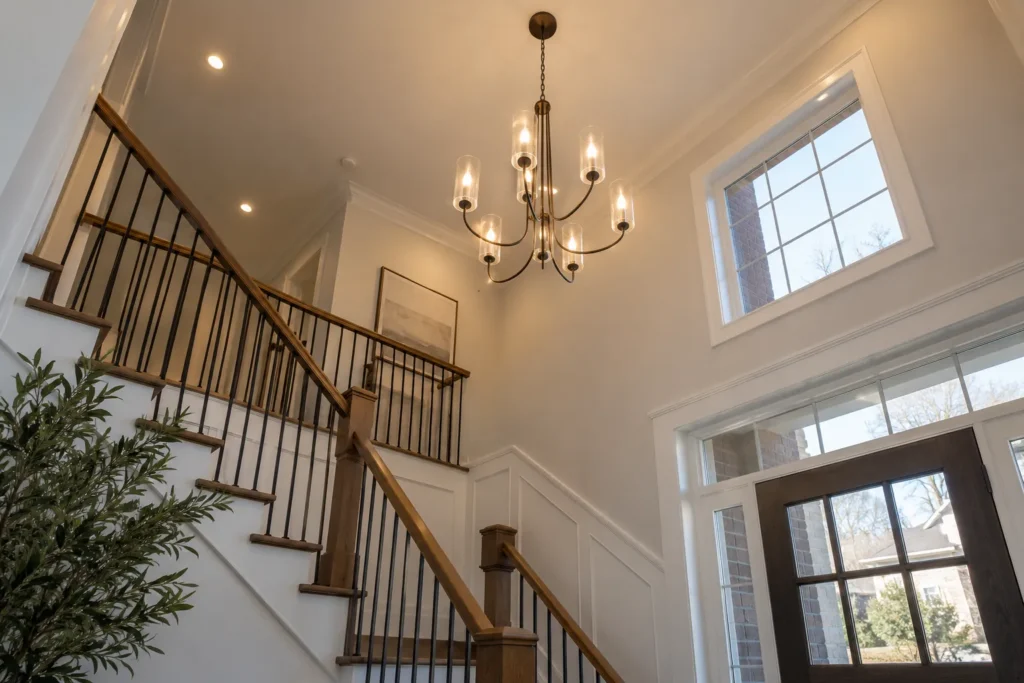
Light fixture installation covers ceiling and wall-mounted fittings, replacements and the existing mounting conditions that need review.
Chandelier installation focuses on the visual scale, position, drop and support of a decorative fixture over dining spaces, stairwells or foyers.
High-ceiling fixture installation isolates tall and vaulted conditions, access equipment, placement and servicing. It does not substitute for a plan for recessed high-ceiling pot lights.
Pendant lighting considers islands, tables and counters, including visual spacing, hanging height and the work light beneath.
Under-cabinet lighting brings useful light to food preparation where ceiling downlights may be blocked by the person standing at the counter.
LED strip and accent lighting explores coves, shelves, millwork and architectural lines with attention to the diffuser, driver, access and control.
Before buying a fixture
Save the specification sheet, dimensions, weight, installation instructions and any dimming information. Confirm the electrical product has a recognized approval mark for Ontario and the proposed application. For bathrooms and outdoor locations, suitability must match actual moisture exposure. A decorative picture of a fixture cannot establish its safety approval or whether it can be mounted to the existing box.
It helps to decide where the light should land and what the fitting should look like from the normal viewing positions. In a kitchen, compare a pendant’s beam with the island task; in a living room, compare the fixture with screen glare and lamps. If you are combining fixtures with pot lights, place the decorative elements first and use recessed light to fill the remaining jobs.
Frequently asked questions
Is a high ceiling the same as a chandelier installation?
No. Height affects access and servicing for many fixture types, while a chandelier adds its own scale, load, hanging and assembly considerations.
Do under-cabinet LEDs replace kitchen pot lights?
They solve the counter task especially well. General circulation and island or table lighting can still need separate layers.
Can existing fixtures simply be swapped?
Sometimes, but the condition and suitability of the box, support, wiring and new fitting must be checked first.
Sconces and general fittings
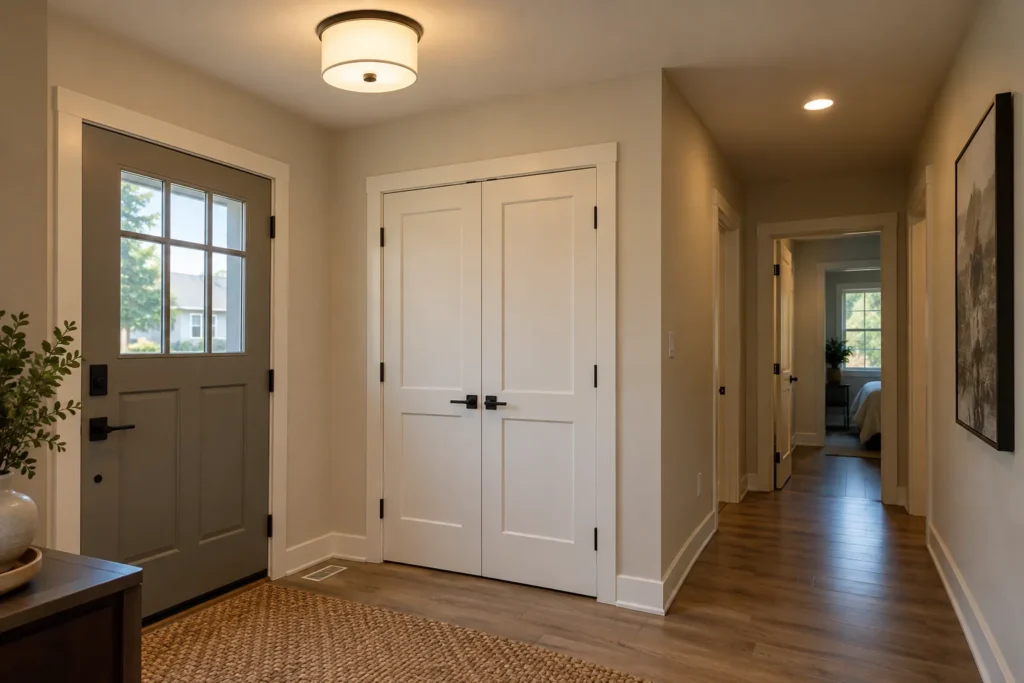
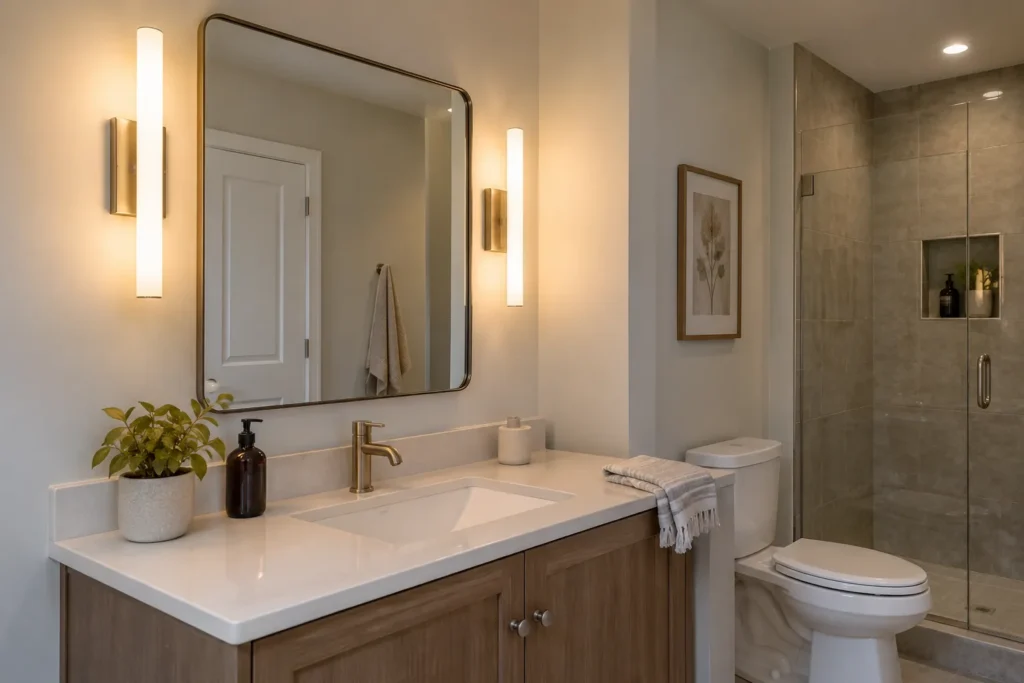
A room may call for wall sconces, flush mounts or semi-flush fixtures rather than another recessed-light row. Wall light can give a passage depth and support a bedside task; a flush fixture can provide simple general illumination where a pendant would hang too low. The right product depends on mounting location, existing box and support, the surface below and the view from normal positions. A replacement fitting is not necessarily suitable simply because its canopy hides the old opening.
Hanging height and sightlines
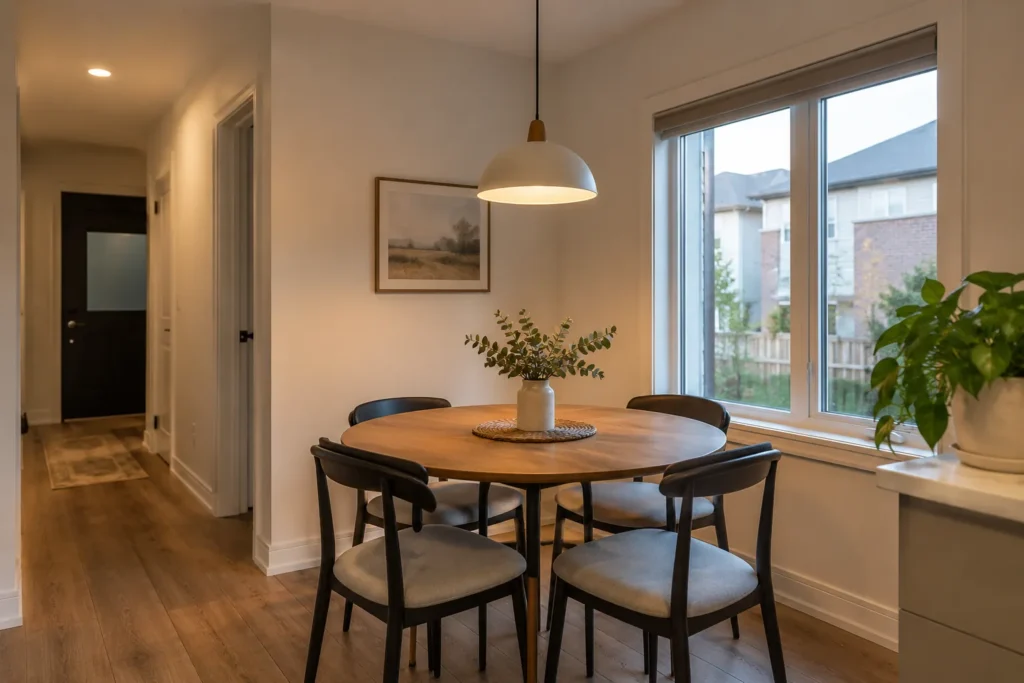
Pendant and chandelier positions should be discussed in relation to the table or island and to people moving or looking across the room. A dramatic foyer fixture also needs to be viewed from upstairs, below and through the entry. Fixed rules of thumb are a starting reference, not a substitute for actual dimensions, fixture scale and the user’s preference. Adjustable hanging hardware can help, but its range and installation instructions must be checked before planning a final drop.
The room after installation
Consider how a fixture will be cleaned, how lamps or modules can be replaced and what access will be needed several years later. This matters most in tall spaces and above stairs. In a kitchen, ask whether pendants will block a view or conflict with cabinet doors. For strip lighting, ask where a driver can remain accessible. A beautiful first photograph is only one moment in the fixture’s life; maintenance and usable controls are part of the design.
Start with the focal point
A dining chandelier or kitchen pendant is usually more visible than a pot light, so its scale and position can set the composition of the room. Consider the table or island below, not only the centre of the ceiling. A fixture should provide an appropriate amount and distribution of light for that surface and leave comfortable sightlines across the room. Decorative impact is meaningful, but so are cleaning, lamp replacement and the way the fitting behaves when dimmed.
Support is part of the scope
Replacing a light fitting is not simply a matter of whether the new canopy covers the old paint mark. The electrical box, mounting surface, support, weight, wiring condition and product instructions must be assessed. A heavier chandelier may require different support; a tall foyer complicates access and future maintenance. A fixture sold online may have beautiful imagery but still need its Canadian approval mark and suitability checked. Share the complete specification sheet before installation is scheduled.
Kitchen task layers
Pendants can mark the island and give attractive downward light, yet may create uneven coverage if their beam is too narrow or they are spaced around the ceiling rather than the actual work surface. Under-cabinet lighting addresses the shadowed counter beneath upper cabinets. Pot lights can provide general light and support at the sink, circulation path or cabinet fronts. These three layers may be switched separately so a quick evening visit does not require full cooking brightness.
Accent light with restraint
LED strips can reveal shelf contents, define a cove or wash a textured feature, but bare emitters in the direct sightline often look spotty. Diffusion, mounting position, driver access and colour consistency determine whether the detail feels intentional. A concealed driver still needs an appropriate accessible location under the product’s instructions. Accent lighting works best when the architectural surface is worth highlighting and the light can be controlled independently from general lighting.
Controls and visual consistency
Mixing decorative fixtures with recessed sources requires attention to colour temperature, dimming behavior and relative brightness. Two products both labelled 3000K can still appear different because of their light distribution and colour characteristics. Check the actual products under the room’s finishes when possible. A control plan should remain intuitive at the wall and provide separate zones for tasks, decorative light and softer ambience. Compatible LED drivers and dimmers matter more than a long feature list.
Prepare the fixture information
Bring product links, weight, dimensions, hanging adjustment, installation instructions and intended location. Explain whether a new box location is required, whether the ceiling is finished, and what other lighting will share the room. A picture of the installed look is helpful, but it cannot answer whether the current box supports the fixture or whether a dimmer will behave correctly. Those conditions are evaluated as part of an accurate scope.