
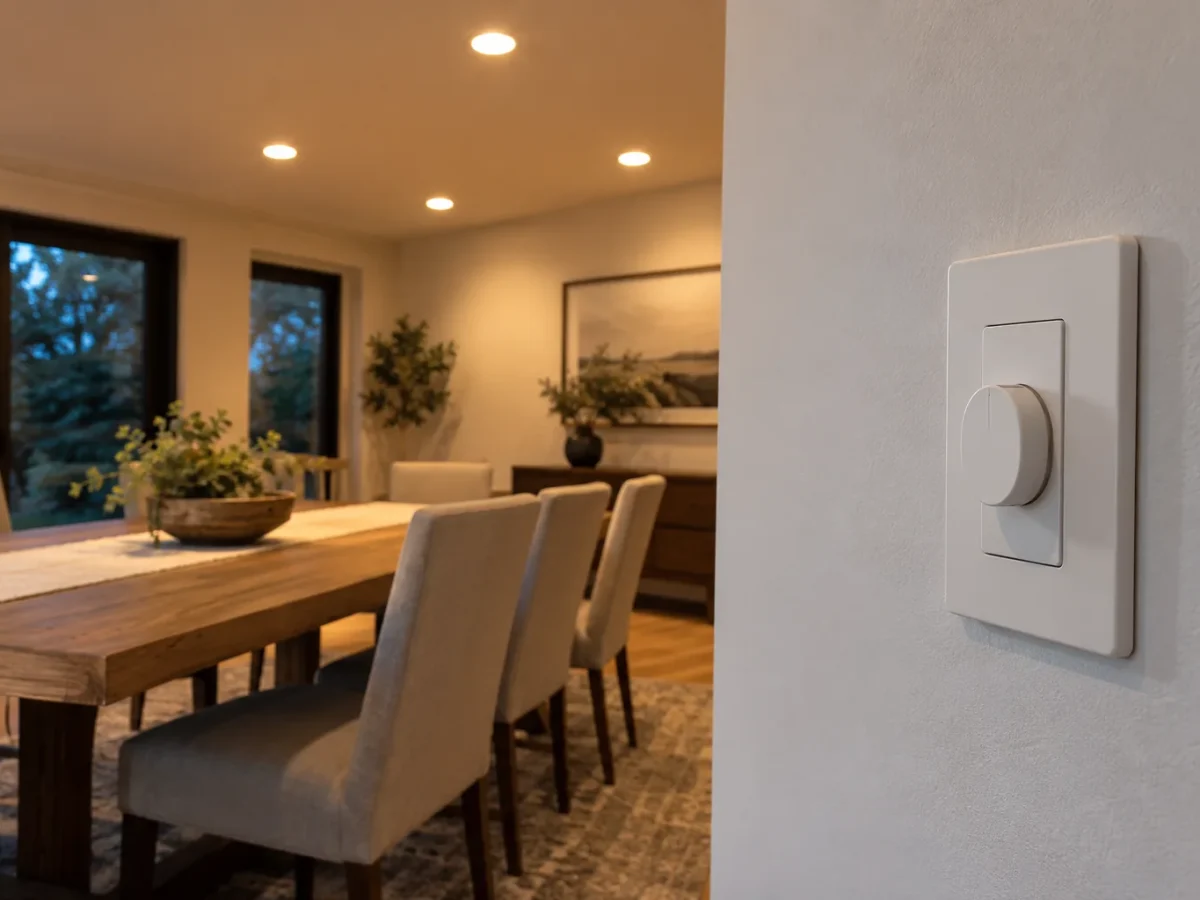
A low hum near a wall dimmer is different from a sharp buzz above a table, and both differ from a crackle accompanied by heat or a burning smell. The place, intensity and timing of a noise help describe the issue, but sound alone cannot confirm its electrical cause. Do not open the dimmer box or pull a recessed fixture down to identify the source. A qualified inspection is the right route for an electrical connection or product concern.
In a Milton home, the issue may appear after a change to LED pot lights even though the previous halogen lamps were quiet. It may occur only at half brightness, only when a fan operates or only after lights have been on for some time. If the noise is new, getting louder, accompanied by flicker or linked to warmth, stop using the affected control and arrange an assessment. If there is smoke, sparking or a burning odour, treat it as urgent and avoid touching the equipment.
Start with where and when the sound occurs
Stand in the room and listen from a normal distance without removing any covers. Is the buzz mainly at the switch, one light, a bank of pot lights or an adjacent fixture? Does it stop when the lighting is off? Does it vary as the dimmer moves through its normal range? Note whether one or several groups share the same control and whether the noise began after a lamp, LED module, transformer, driver or dimmer was changed.
Some electrical and electronic lighting components can make audible sound under certain operating conditions. That does not mean every buzz is normal or safe, and the room acoustics can exaggerate a small noise. A quiet bedroom at night makes a hum more noticeable than a busy kitchen at midday. The practical question is whether the sound is acceptable, stable and consistent with the manufacturer’s product expectations, as well as whether the installation itself is sound. A room recording may help communicate the symptom but cannot establish safety.
An isolated buzz at one slim LED light suggests a different path of investigation from a control that buzzes with every light on the run. The former may focus on product and driver characteristics; the latter raises load, dimmer compatibility or installed circuit questions. There can be overlap, which is why changing one component at random often disappoints.
Product and control categories worth assessing
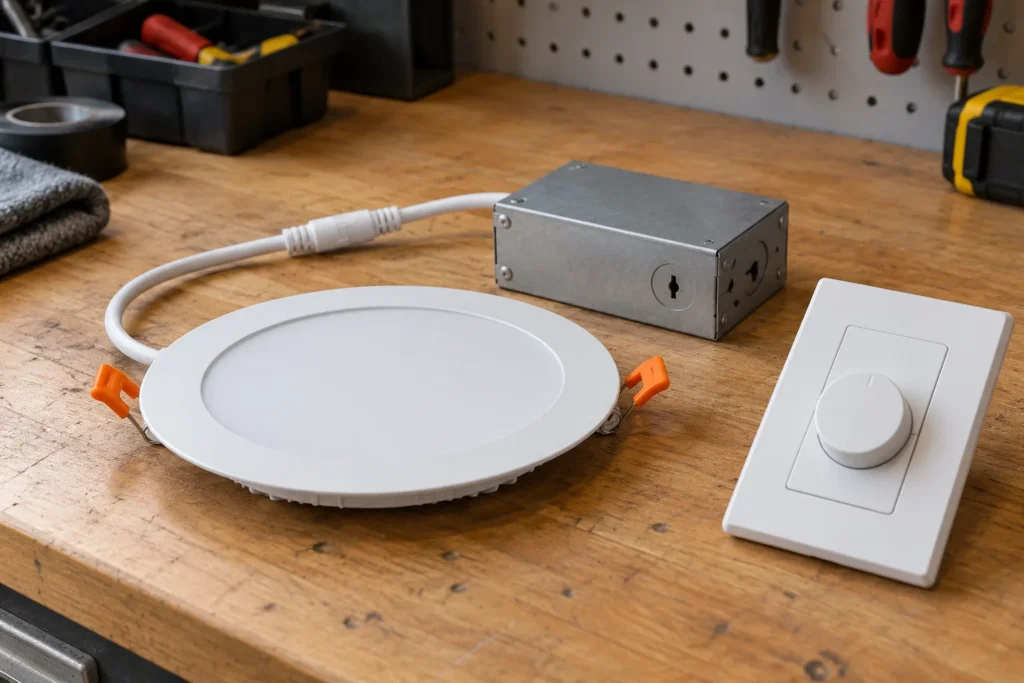
LED driver or transformer behaviour
An LED pot light uses an electronic driver to provide the light source with the power it needs. Some installations use a remote driver in an accessible location; others have components integral to a fitting. Older low-voltage lighting may have a transformer and a different lamp and dimming arrangement. Audible noise can come from these parts, yet a similar sound can be transmitted by the ceiling or fixture. Model identification matters before a replacement is selected.
The driver and recessed fixture should be treated as a system. Swapping to a part that appears physically compatible but is not approved for that product can create a different problem. For a discontinued series, a coordinated LED pot-light upgrade may provide a better visual and control result than a series of unmatched repairs.
Dimmer/load interaction
Older dimmers often were selected for incandescent or halogen loads. An LED driver may need a specific dimming method, compatible control type, minimum and maximum loading, or adjustment within the manufacturer’s stated range. Noise that changes with brightness is a useful observation, not a diagnosis. The exact combination of fixtures, drivers and control can be checked against product documentation. LED dimmer compatibility problems covers low-end flutter, pop-on and drop-out as related symptoms.
Multiple control locations, mixed LED products or a smart controller add more compatibility considerations. A label saying “dimmable” on a lamp is not a guarantee of silent, smooth performance with every dimmer on the market. A proposed repair should specify what parts will be retained and what parts are to be matched or replaced.
Wiring and connection concerns
Noise can also accompany an electrical fault. An unusual crackle, clicking, heat or smell should not be dismissed as ordinary LED driver sound. A Licensed Electrical Contractor can evaluate connections and supply as appropriate to the symptoms. The sound source cannot be proven from a photograph, and probing a control or ceiling opening is outside homeowner observation. If other lights dim unexpectedly or circuits behave strangely, describe that broader pattern as well.
The room changes how a remedy feels
Eliminating a noise is the immediate aim, but the new product should still light the room well. A fixture with a different lens or deeper recess may reduce glare; a replacement driver or whole fixture may change minimum brightness or output. In a bedroom, low-level dimming and quiet operation matter more than maximum intensity alone. In a kitchen, usable light across counters should remain even when a control is updated. Pot-light layout and design explains why quantity and positions are only part of the experience.
The ceiling can also amplify sound. A high, hard-surfaced foyer and a compact home office may make a component equally audible for different reasons. A report of “the pot lights buzz” should therefore include which area is affected, where the sound seems loudest and whether it persists at full output. Avoid promising that one brand or any LED technology will be absolutely silent in every configuration.
A useful assessment and written scope
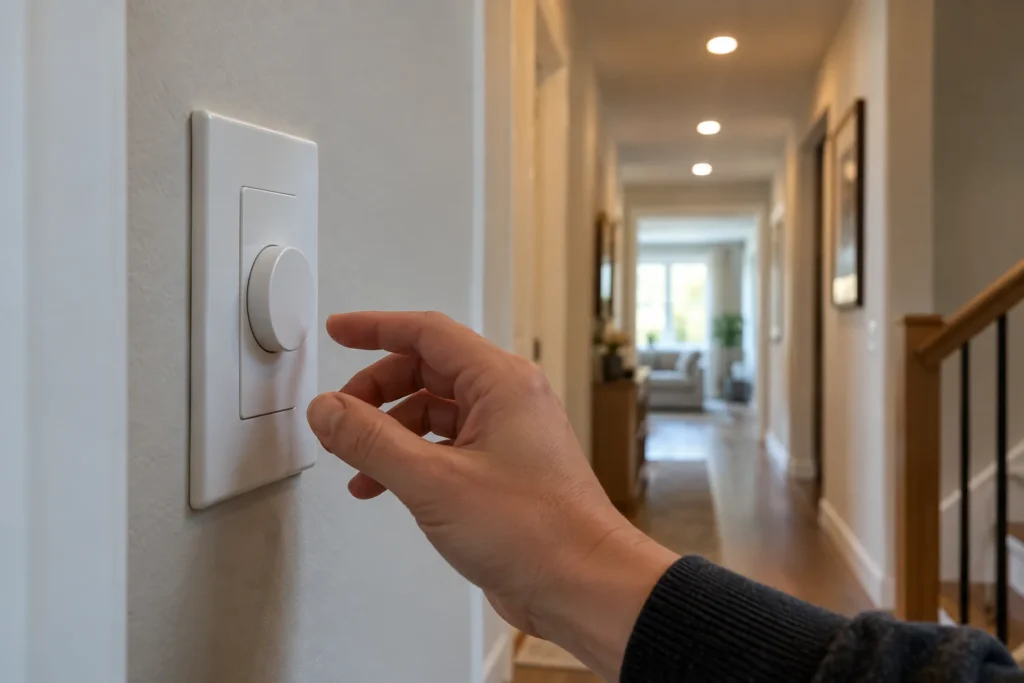
A focused assessment identifies the existing fixture and control models when possible, checks the number and type of connected loads, observes the sound at different normal settings and evaluates safety concerns. It then distinguishes a product remedy, a control compatibility remedy and any electrical repair. If a homeowner already has a proposed new dimmer or fixtures, share model numbers before purchase so their pairing can be checked.
The estimate should say whether the scope covers one control, one fixture or the whole group; whether a replacement will match neighbouring lights; and what ceiling access or finishing might be required. For an older recessed system, identify the existing housing rather than assuming every attractive LED insert is approved for it. For an exterior installation, confirm that the replacement is suitable for actual exposure rather than treating an indoor part as interchangeable. Soffit light problems addresses exterior conditions.
Ontario’s Electrical Safety Authority states that a business hired for electrical work in a home must be a Licensed Electrical Contractor. The person doing notifiable work files the Notification of Work with ESA; almost all electrical work requires one, although narrow scope-dependent exceptions exist. Recessed-lighting work should not be casually characterized as an exempt simple replacement. ESA reviews the installation and issues a Certificate of Acceptance after the work passes. Electrical products need recognized approval markings for Ontario use. See electrical requirements and approved products for more context.
Questions homeowners ask
Is a buzzing dimmer dangerous?
It depends on the actual sound and condition. Some combinations make a modest audible hum, but a new or increasing buzz, heat, odour, crackling, flicker or damage needs prompt attention. Do not treat the word “normal” as a substitute for examining the installed product and control.
Would a newer dimmer always solve it?
No. It may be the right solution after compatibility is established, but the sound might originate from a driver or another electrical issue. A newer control can have its own load and wiring requirements. The proposed dimmer needs to suit the actual LED products and control arrangement.
Can the noise be assessed without taking apart the whole ceiling?
Often the pattern and model information narrow the first steps. Some assessment may require access to equipment by a qualified person; the amount depends on the ceiling and where the issue appears. A finished ceiling is a planning condition, not a promise of zero openings.
Tell us what you hear
Send the room, whether the sound seems to come from a control or fixture, when it began and whether dimming changes it through the contact page. A short safe recording may help. Lighting repairs can address the symptom while keeping fixture appearance, output and control performance in view; if lights also flicker, compare flickering pot lights.