
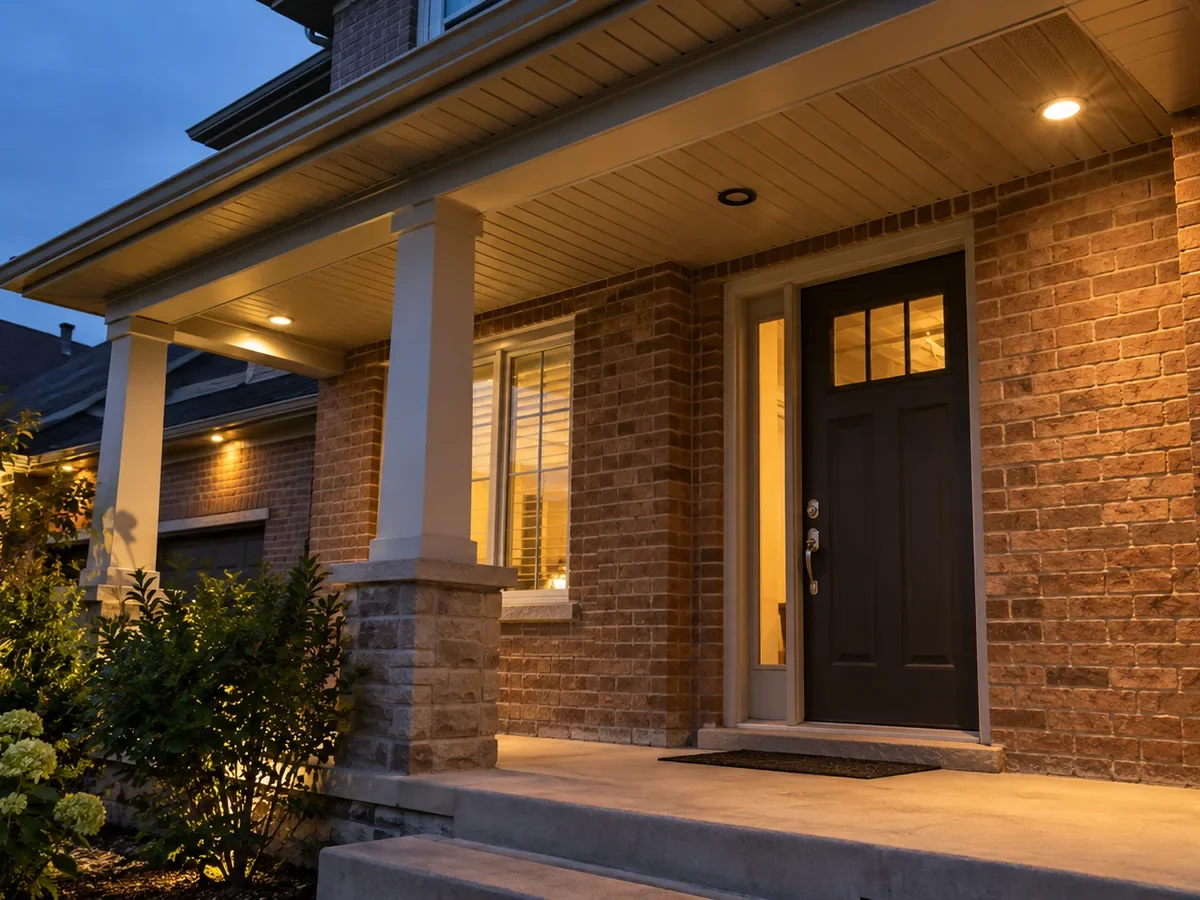
Exterior pot lights live in conditions unlike a dry living-room ceiling. A Milton roofline can see wind-driven rain, freeze and thaw cycles, summer heat, snow buildup near some details and seasonal changes to timers or photocells. A dark soffit fixture after a storm may appear to have an obvious cause, but timing does not prove that water entered the light. The visible symptom does not establish the electrical cause. A careful assessment considers the fixture, its rating, connections, controls, supply and actual exposure.
Do not remove a soffit fitting, reach into a wet opening or test exterior wiring. If a fitting is visibly wet, damaged, sparking, hot or accompanied by an odour, stop using the affected lighting and seek prompt qualified help. If the issue is limited to a light that will not turn on, record the pattern and conditions from a safe position. The more precisely the symptom is described, the easier it is to scope a repair without assuming the whole roofline needs replacement.
One dark point or an entire elevation?
One failed fixture among a row can suggest a local product, driver or connection issue, but that observation is not conclusive. Several lights on the same wall going out together raise questions about a shared control or supply path. If the front soffit works but the garage and porch do not, explain whether those sections have separate switches, timers, motion sensors or smart scenes. A failure after a control setting changes can look just like a failed fixture from the street.
An intermittent exterior group may behave normally during dry weather and act up after wind or rain. That correlation is important to report, but not enough to label any fitting “waterproof” or to diagnose moisture damage without inspecting the installation. Also note whether problems appear at dusk when a photocell operates, only during motion-sensor use, or after seasonal schedule changes. If other exterior or interior equipment behaves strangely, mention the broader pattern.
Timing can be misleading. A product already nearing the end of its service life may happen to fail during a storm. A timer’s clock can be wrong after a power interruption. A smart device can be offline even though the light fixtures themselves are sound. These possibilities are reasons to observe normal control behaviour, not reasons to bypass controls or handle electrical parts.
The location determines the suitable product
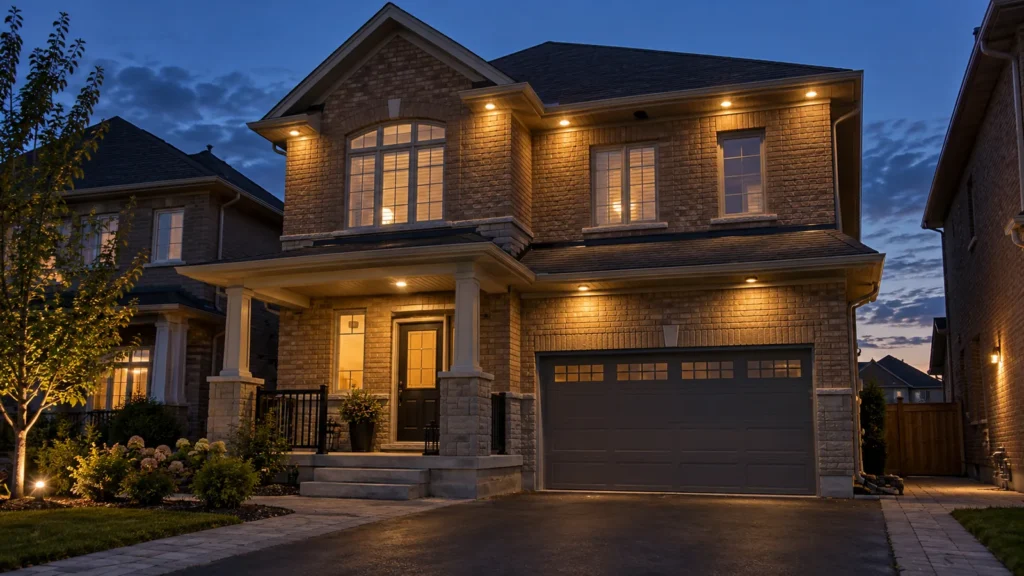
“Soffit” describes a building position, not one universal exposure level. A deep, sheltered porch, a narrow open eave, an underside near a driveway and an uncovered exterior fitting can face different moisture and temperature conditions. A replacement must be suitable for the actual installation and follow its product instructions. A fitting that looks identical to an indoor pot light is not automatically appropriate outdoors. Distinguish product approval for use in Ontario from location suitability: both questions need answers.
Look for the exact fixture and driver model in existing project paperwork or packaging if available. Do not rely on a retail listing’s generic “outdoor” headline alone. The product’s marking, specified damp or wet-location application where applicable, construction and installation instructions need review. The approved lighting products guide explains why a recognized approval mark matters. Exterior and soffit pot lights addresses fixture selection and layout for a new installation.
Water can sometimes affect a fitting or connection, but the repair must deal with the reason for exposure as well as any failed component. Replacing a visibly damaged unit with the same unsuitable product leaves the underlying issue. Conversely, replacing every light in the row because one is dark may be unnecessary if a compatible, approved repair is available. Assessment should guide that choice.
Drivers, connections and controls
Integrated LED soffit lights may have dedicated drivers whose location and access affect servicing. Older exterior recessed housings may use replaceable lamps and trims with different compatibility conditions. The fixture opening, construction details and instructions determine which replacement products suit the installation. Exact matching also affects the roofline’s appearance: one brighter or cooler fitting can stand out sharply after sunset.
Exterior controls include ordinary switches, timers, astronomical schedules, photocells, motion detectors and smart scenes. If a zone does not turn on at the expected time, it can be a control configuration issue, a product issue or an electrical problem. The time and conditions of failure help narrow the assessment. A control replacement must be compatible with the LED load and any multi-location arrangement; simply buying a unit with the same-looking faceplate is not enough.
Some homeowners use a single control for a long roofline and a porch. That can leave the whole front of the house dark when one control fails, or make the entry unnecessarily bright when only the porch needs light. A repair discussion may include separate zones or timing if the original arrangement never served daily use well. Do not convert a focused repair into a broad redesign without a clear homeowner goal.
Access and the written scope
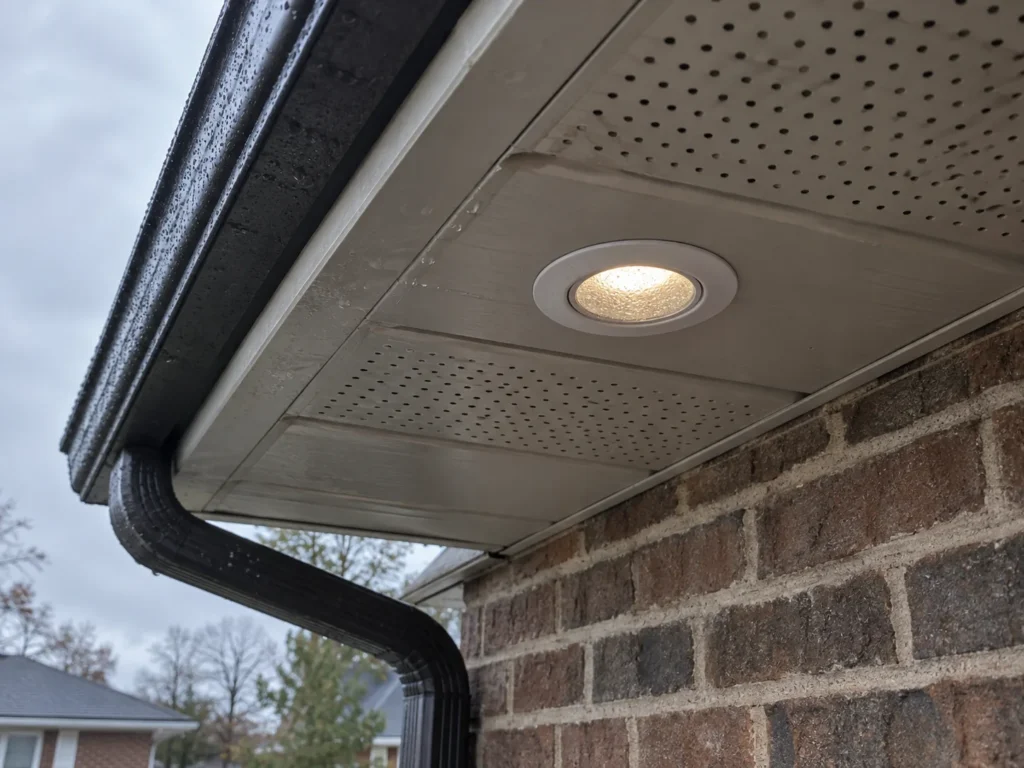
The second-storey soffit, steep grade, garden beds, porch roof and nearby obstructions influence safe access. A quote for a garage soffit at ground-floor height is not directly comparable with a high roofline or difficult side elevation. Identify the number of affected fittings, approximate height, access to the location and whether existing product models are known. Photos taken safely from the ground can show the pattern; they cannot reveal connections hidden above the soffit.
A proposed repair should say what assessment is included, which fittings or controls are being addressed, how replacements will match colour and beam, and how weather-exposed product suitability is established. State any access equipment, anticipated openings, finishing assumptions and control setup. After work, test the lights under normal control conditions and at dusk or an appropriate simulation where practical. A nighttime result matters because a roofline can look balanced by day yet glaring or patchy in use.
The scope should also consider where the light goes. Too much output can spill into a neighbour’s windows or wash out an entry; too little can make steps and doors hard to see. Fixing a dead row is an opportunity to check aiming, shielding, spacing and colour, but a repair should prioritize safe operation. Pot-light glare and mismatched colour address those related quality issues.
Ontario electrical and product requirements
The Electrical Safety Authority says that someone hired to perform electrical work in an Ontario home must be a Licensed Electrical Contractor. Almost all electrical work requires a Notification of Work; the person doing notifiable work files it before starting. An exterior recessed-lighting job should not be casually treated as an exempt simple fixture change. ESA’s review process depends on the work and risk, and a passed review results in a Certificate of Acceptance. A municipal building permit, if relevant to a broader project, is separate. See ESA electrical requirements.
ESA also requires electrical equipment used in Ontario to carry a recognized approval mark or label. Suitability for the actual exterior exposure must be checked as well. Weather resistance and electrical approval are not interchangeable concepts. If a product has only a component recognition mark, that may not mean the standalone finished fitting is approved for use. These checks matter especially with replacement drivers or imported LED kits.
Questions homeowners ask
Why did my soffit lights stop working after rain?
Moisture is one possible category, but the sequence alone does not prove it. A shared control, driver, connection or supply issue can produce a similar symptom. Note which fixtures failed, whether they recover and how controls respond, then request a qualified assessment without opening wet equipment.
Can one light be changed without replacing the whole row?
Often, if a suitable approved compatible product is available. Matching aperture, trim, beam, output and colour matters visually, and the product must suit its exposed location. If the old model is discontinued, discuss whether one replacement will be conspicuous before choosing a scope.
Should the lights stay on all night?
That is a use and control choice, not a universal installation rule. A porch may need predictable arrival lighting while roofline accents may use a timer, sensor or scene. Consider neighbours, glare and useful visibility; confirm how the chosen controls will work during ordinary evenings.
Describe the exterior pattern
Use contact to tell us which elevation is affected, the approximate height, whether one point or a group is dark, and how the controls operate. Mention weather-related timing and any visible damage. A focused lighting repair scope can restore the system with a suitable, coordinated result; new projects can start with exterior and soffit lighting.