
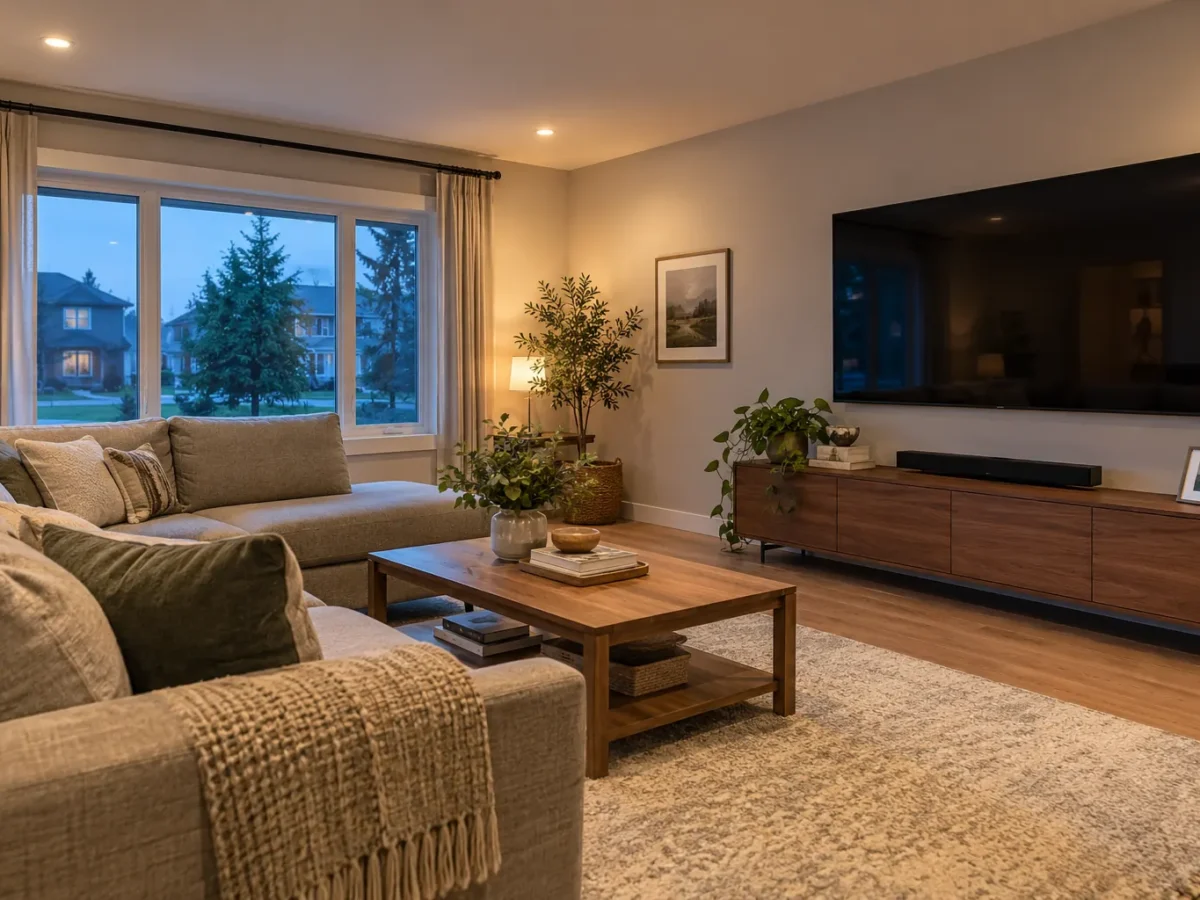
The honest answer to “How much will pot-light installation cost in Milton?” is that a responsible estimate depends on the room and the work hidden behind the ceiling. A single price per fixture cannot describe whether someone is replacing existing lights, routing new wiring through a finished ceiling, adding controls or reaching a tall foyer. It also says nothing about the fixture’s quality or where the light will land. You can still make pricing predictable enough to compare: define the lighting outcome, require written assumptions, and ask every bidder to describe the same categories of work.
Consider three jobs that sound identical in a phone call
Imagine three homeowners each asking for six LED pot lights. The first has an open ceiling in a renovation and wants one existing switching zone. The second has a fully finished main floor with an occupied bedroom above, wants two zones and expects painting to be complete afterward. The third wants exterior soffit lights along a high roofline, with dusk control and a product appropriate for exposure. Six is the only common number. The labour, materials, access, risk of finish repair and product specifications differ.
A unit quote can still be one line in a detailed proposal, but it should not substitute for a scope. The first homeowner needs trade coordination before drywall. The second needs a route and an explicit repair allowance. The third needs weather suitability, safe access and a night-view design that will not glare into windows. Calling any one of those the local “going rate per light” encourages an apples-to-oranges comparison. For the broader checklist, see our Milton pot-light cost guide.
First decide what you are buying
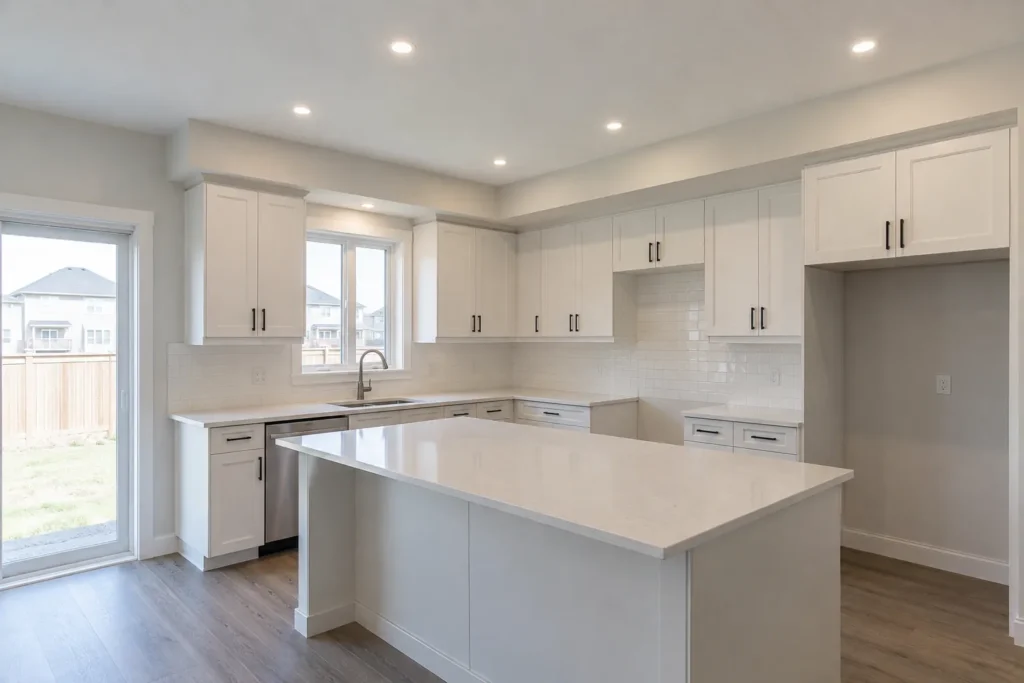
Count the surfaces, not just the fixtures: a food-preparation counter, a hallway turn, a fireplace wall or a basement play area. Is the aim general visibility, focused task light or an evening atmosphere? Existing pendants, lamps and under-cabinet lights might already serve part of that goal. A contractor who proposes ten identical discs in a perfect grid may be pricing more hardware than the room needs while missing the work surfaces. The how-many-pot-lights guide explains a result-based approach.
At an estimate visit, show the room in daily use. Point out where a person stands at a counter and where the sofa and TV will be. Share future cabinet or furniture plans. With that context, a fixture can be selected for output, beam and glare control before the count is fixed. One room may benefit from fewer more effective locations and another from a different mix of layers. The cheapest layout on paper is not necessarily the lowest-cost way to get useful light if it must later be corrected.
Which fixture is in the quotation?
“LED pot lights included” leaves too much open. Ask for the make and exact model, rated output, beam, nominal trim or aperture, colour temperature, approved application, driver arrangement and dimming details. A smaller 4-inch fixture is not inherently dimmer than a 6-inch model; a slim product is not automatically right for every insulated cavity. Product choice changes opening size, spacing, appearance, controls and sometimes service access. Compare the selected fixture against the intended room, not just another bidder’s total.
Ontario requires appropriate electrical product approval. ESA maintains a current list of recognized certification marks. Ask the installer to confirm the actual product and components are approved and suitable for the location. An indoor dry-location model may not fit a damp or exposed soffit. Our approved LED pot lights guide shows what to check. Avoid assuming that a marketplace “certified” graphic proves the delivered unit is the same model.
Finished ceiling versus renovation access
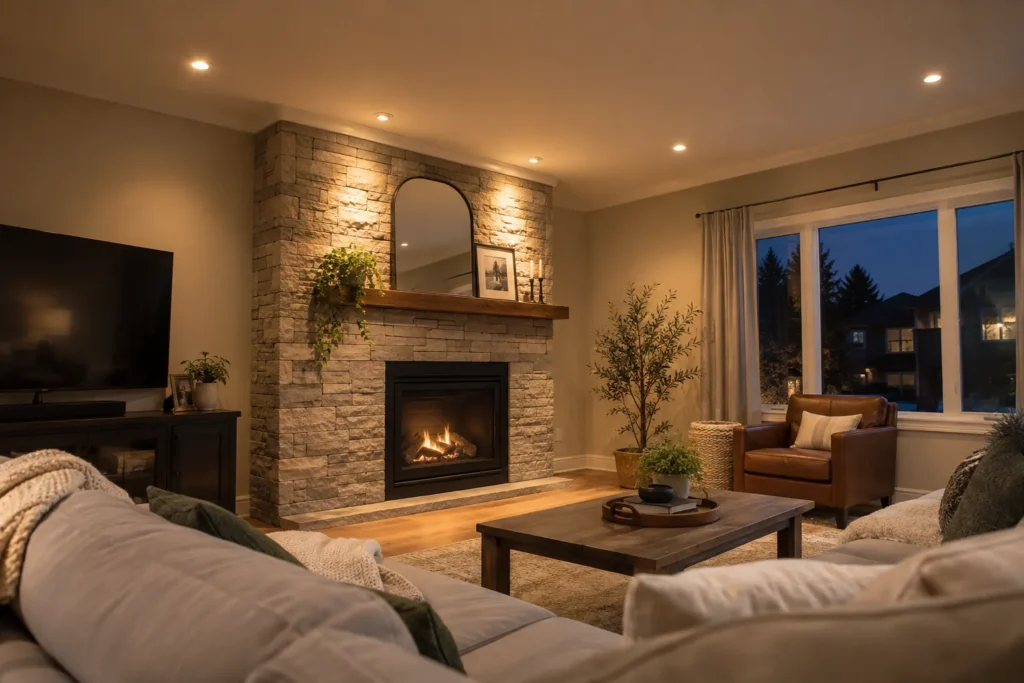
Open framing makes it easier to see joists and services and coordinate a route before finishes. A finished ceiling hides those conditions. Joists may cross the proposed row; ducts, plumbing or insulation may occupy the cavity. A thin canless module can solve a depth problem while leaving a wiring-route problem untouched. Work above a finished ceiling may need access openings and repair, and the number of openings cannot always be guaranteed before inspection. Our no-attic-access article explores a practical planning process.
Ask each contractor to state the access assumed in the quote. Is an attic hatch usable? Are there existing openings? Will the estimate change if a hidden obstruction is found? Who authorizes that change? A bid that silently assumes an easy route may look attractive until work begins. A bid with a clear contingency and repair description gives you something more valuable than a deceptively precise unit number.
New electrical scope and controls
Adding new locations may involve wiring and changes at a switch or circuit. A second control zone can let the kitchen perimeter work independently of island pendants or let living-room wall lighting remain on while the TV area dims. That flexibility has value but should be priced explicitly. The quote should identify new switches, dimmers, plates, control models and which fixtures operate together. If smart controls are proposed, clarify the expected app and physical-switch behaviour.
An LED fixture marked “dimmable” may flicker or buzz with an unsuitable control. The driver, dimmer and number of lights need an appropriate combination. Existing wiring and multi-way switching can affect selection. Ask how compatibility will be checked and tested, not merely whether a dimmer appears on the invoice. See LED dimmer compatibility for the planning details. Do not attempt a wiring workaround to salvage a mismatched product purchase.
Finishes are a separate line of work
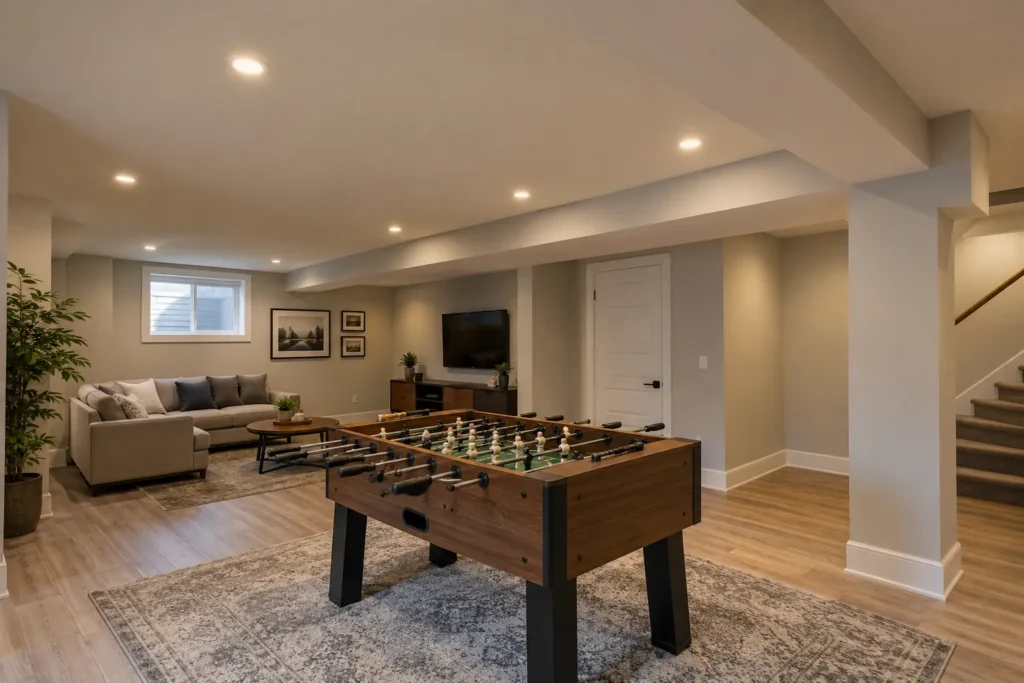
Pot-light installation can leave clean openings for the fixtures while still requiring access holes elsewhere. A drywall patch does not automatically include sanding, matching a ceiling texture and repainting a full plane. Ask whether the lighting proposal includes finish repair and, if so, to what standard. If another contractor is completing a renovation, identify exactly when they will repair and paint after electrical review. This avoids paying twice or discovering a visible patch after the lighting is functional.
Occupied homes add preparation concerns: moving furniture, protecting floors, dust containment and access to the room. A tall entry may need special equipment. A condominium or commercial space may have restrictions on work hours and approvals from a property manager. These facts belong in the conversation early. They are not a justification for a vague surprise charge; they are reasons to write a precise scope.
ESA and municipal questions belong in the scope
ESA says almost all Ontario electrical work requires a Notification of Work, and if a Licensed Electrical Contractor is hired, that contractor files it. After the work has been reviewed and passed, ESA issues a Certificate of Acceptance to the filer. Ask how any required notification, review and documentation are handled in the estimate. ESA’s official notification and inspection page is the current reference; our ESA guide explains the terminology.
Do not confuse an ESA electrical notification with a Town of Milton building permit. A larger renovation may raise municipal questions, but the approval systems are separate. A line labelled “permit” should identify what it covers. If a bidder asks you to file an electrical notification for work they will do, note that ESA says the person doing the electrical work files it. Ask for the actual electrical contractor’s ECRA/ESA licence information rather than relying on an unsupported badge.
How to compare two real quotations
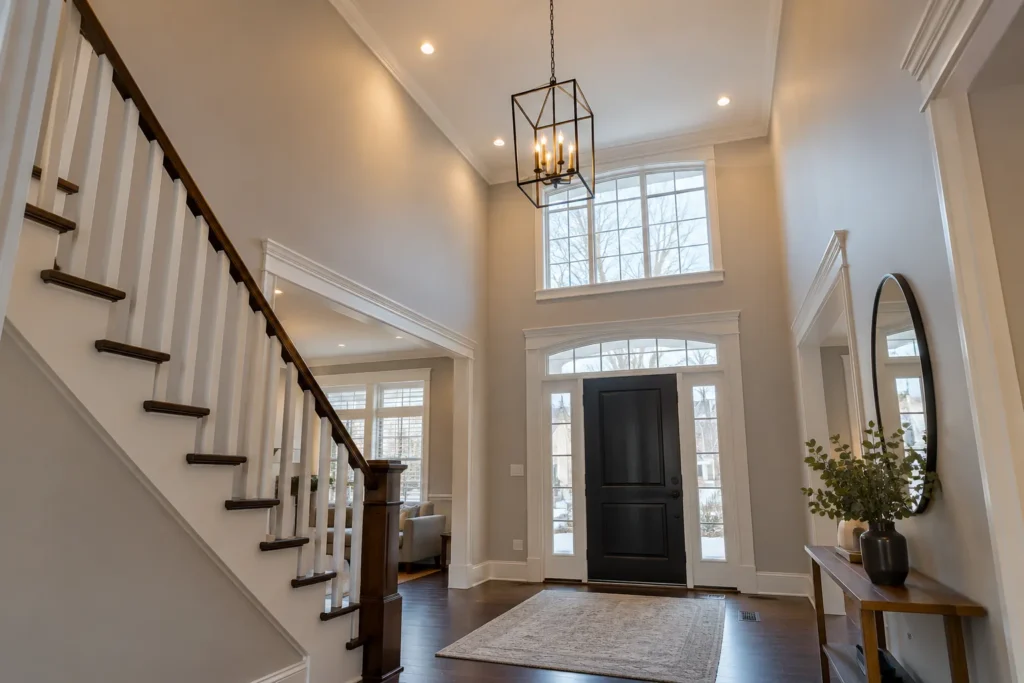
Send each bidder the same room photos, rough dimensions, ceiling height, intended tasks, existing fixtures, preferred controls and finish expectations. Ask them to identify proposed locations and product models; tell them whether another trade will handle drywall and painting. A useful written comparison records the fixture system, wiring, switching, access assumptions, product approval, notification responsibilities, finish work, exclusions and tax treatment. When specifications differ, ask why one product or layout serves the room better.
Look for assumptions that might cause a change order. “Existing wiring usable” and “clear cavity above every proposed light” are meaningful assumptions; each should be tested as far as feasible before work proceeds. The quotation should state how an unexpected obstruction or defective existing condition will be handled. A low total with undefined access and repair is not the same offer as a higher total with those tasks included. You cannot compare value by reading only the final number.
Should you use an online price range?
An online price range can be a rough conversation starter if its date, location, fixture and installation assumptions are clear. Without them it is easily misleading. A homeowner may compare an open-ceiling replacement in another market with a finished-ceiling new installation in Milton and expect the same result. Avoid making a budget decision from a number that omits dimmers, access or finish repair. Prices change, and a site-specific scope is a more dependable basis for a Milton quote than an unsupported market rate.
Budget by decisions you can control. Clarify which rooms are the priority, whether a renovation will expose the ceiling, which fixtures and controls are worthwhile, and who handles finishes. If the initial scope exceeds your budget, ask whether the design can be staged without compromising the final lighting plan. Wiring and future locations should be discussed before ceilings are closed. Do not simply remove random fixtures from a carefully planned layer and assume the same visual balance remains.
Five questions to ask before accepting a proposal
Ask what each fixture contributes to the room, exactly which models are supplied, how concealed obstructions will be handled, what ceiling finish will look like at completion, and who manages the applicable ESA process. Also ask to see the switch grouping in words or on a sketch. These questions are practical even if you do not know electrical terminology. A contractor should be able to explain the result without reducing it to a price per hole.
Does a lower number of pot lights always mean a cheaper job?
No. A different wiring route, fixture model, control or repair scope can make a smaller count more involved. The goal is the most useful lighting scope for the room, then a transparent price for that scope.
Is an estimate possible from photos alone?
Photos can help create an initial discussion and identify obvious conditions. Concealed wiring, joists, insulation and access may still require an on-site assessment before a firm scope can be agreed.
What should I send with an inquiry?
Send a full-room photograph, a ceiling photograph, approximate dimensions and height, existing switch and light locations, the surfaces you want brighter, and any upcoming renovation or painting schedule. Request an estimate with those details so the proposal can describe the actual Milton room.
Share the space, current lighting and the result you want.
Request a Lighting Quote