
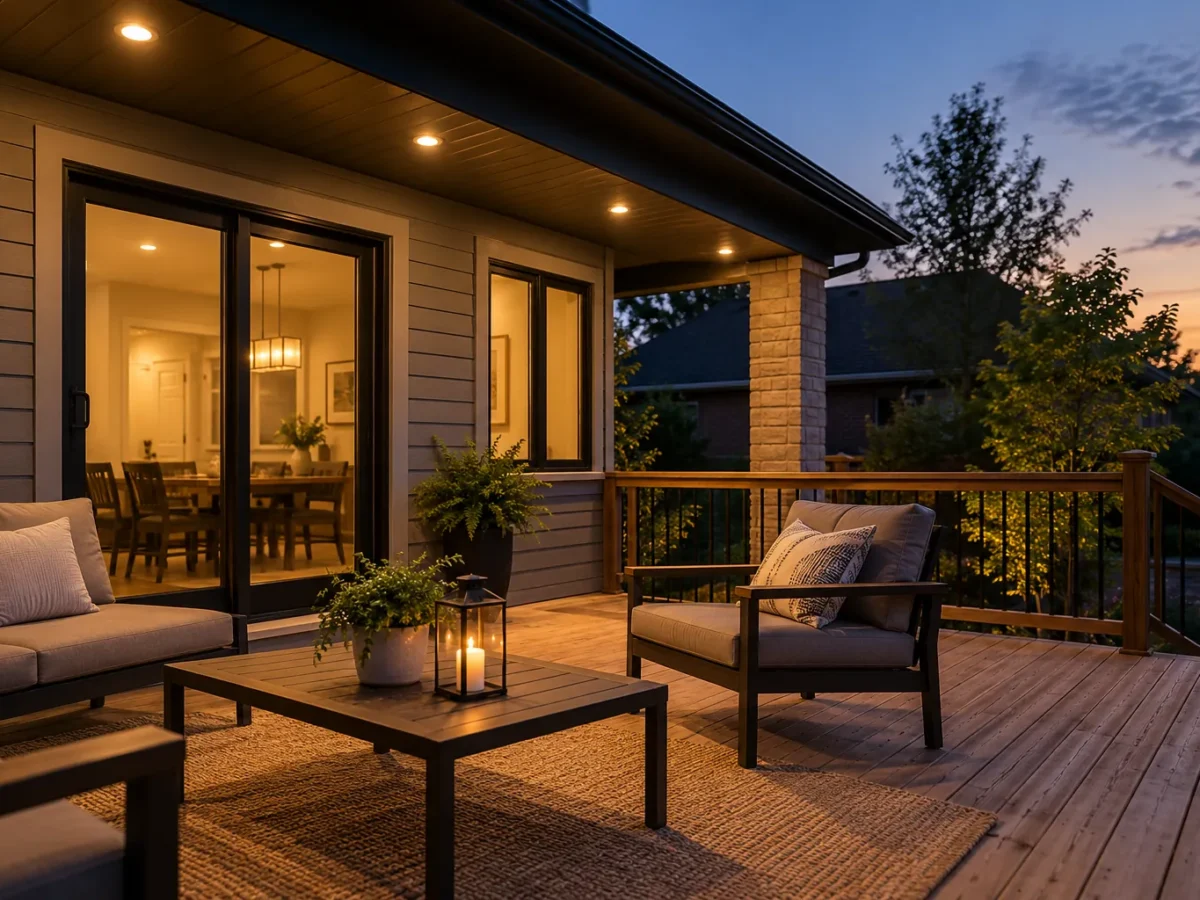
The best exterior lighting plan is visible in the spaces people use, not as a row of dazzling dots under the roof. A soffit line can help define a Milton home’s entrance and paths, but equal spacing around every eave may create bright spots, light trespass and a washed-out façade. Plan what needs to be seen: steps, a front door, a driveway edge, a side-yard route or an outdoor gathering area. Then select suitable fixtures, positions, beam and controls for those jobs.
Walk the property after dark
Start at the sidewalk and follow the ordinary arrival route. Notice what existing porch, garage, landscape and street lighting already does. Mark places where a change of level or a turn is hard to read, and places where a new fixture could shine toward a bedroom window. Look back at the house from across the street and from neighbouring sight lines. A roofline drawing alone cannot show the experience of approaching the door or looking out from a room.
Daytime context matters as well. Soffit depth, roof geometry, downspouts, windows, garage projection and landscaping affect where a fixture can be placed and what it illuminates. A recessed light under an upper-storey eave may land mostly on a wall rather than the walkway below. A low porch ceiling presents different glare than a high roofline. Take photos by day and note where existing lights appear harsh at night. This makes an estimate far more specific than “one every few feet.”
Prioritize the entry and steps
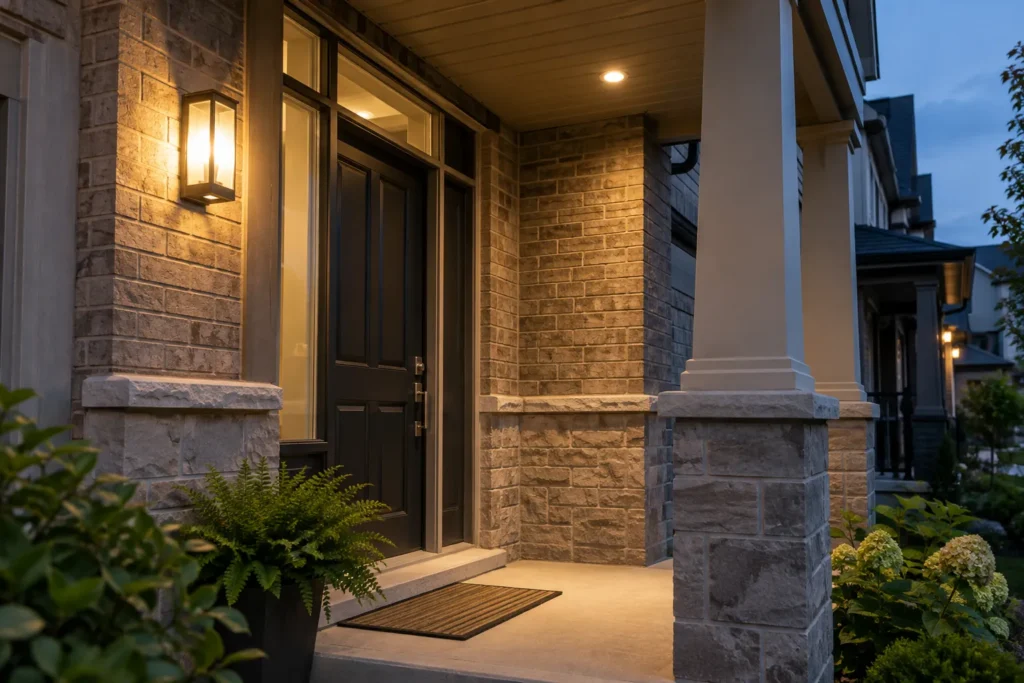
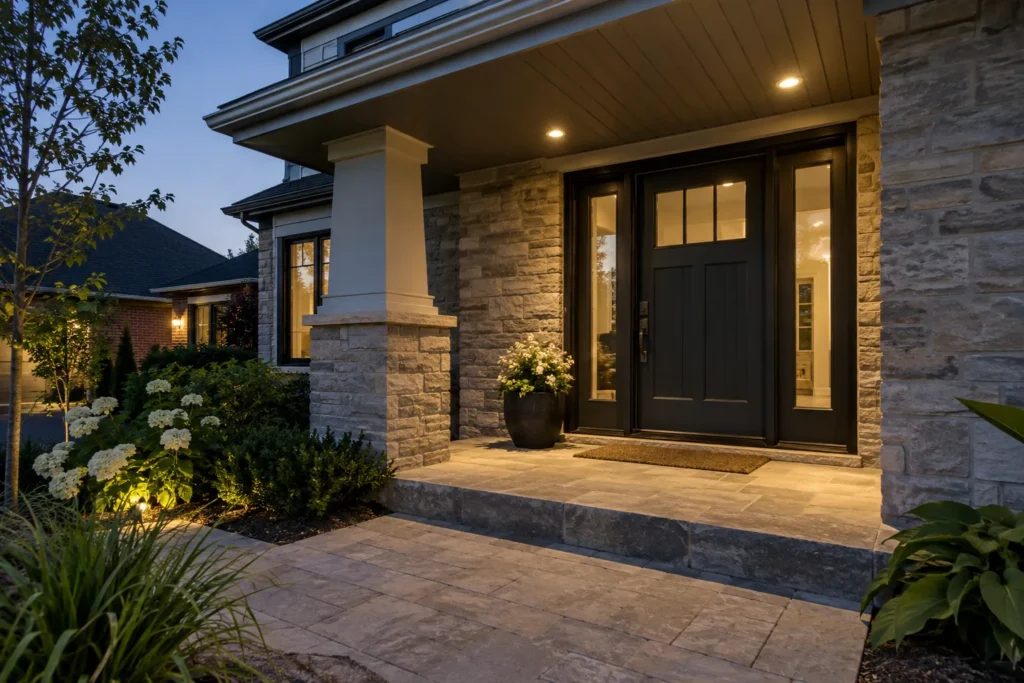
The front door benefits from a legible threshold, visible address and comfortable light on faces. A fixture directly overhead can create a strong downward shadow, while a porch sconce or other layer may help. Look at the porch roof and where people stand while unlocking the door. Multiple strong soffit lights close together can make the entrance feel like a storefront. Consider a controlled beam, appropriate output and switching that keeps the entry usable without running the whole perimeter.
Steps and changes of level should be easy to identify, but a bright emitter in the field of view can make that harder. Consider light landing on the walking surface and contrast with adjacent areas. Existing handrail, wall or landscape lighting may be a better supplement than moving every task to the soffit. Do not assume that more lumens always improve visibility. The exterior pot-light service covers installation context; this guide focuses on the night view.
Garage and driveway rhythm
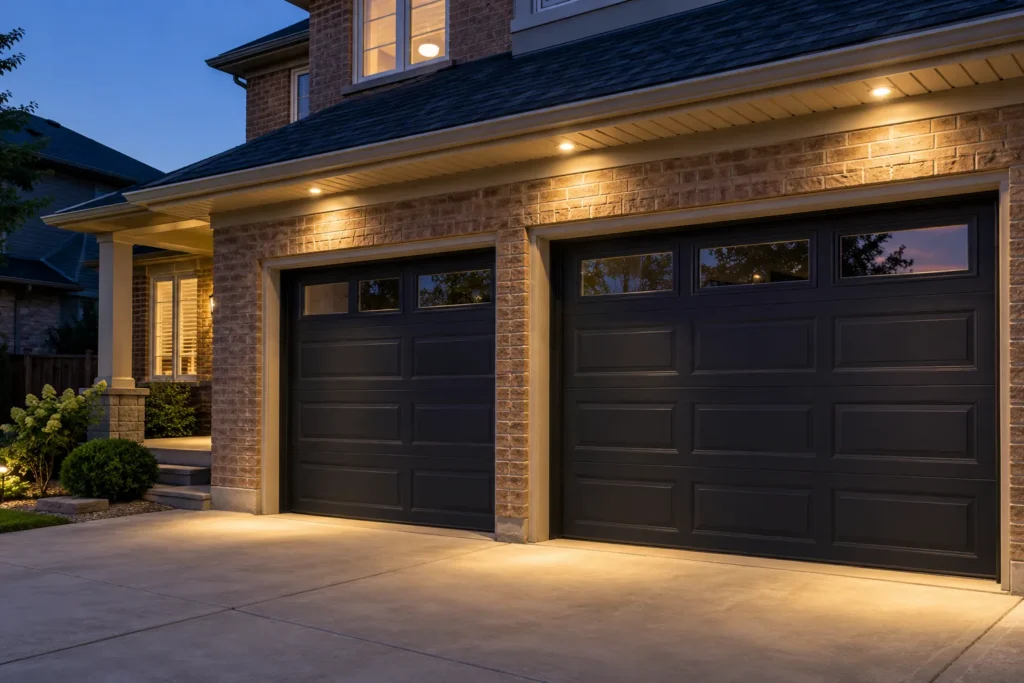
A garage creates a wide frontage where fixture spacing can appear especially tempting. Decide whether the lights should wash the doors, light a pedestrian route or support working near the driveway. These are different aims. A row directly above glossy garage doors may create repetitive bright patches. If the drive already has useful lighting, fewer well-controlled downlights may present the architecture more calmly. Check views from inside cars and from the sidewalk to avoid direct glare.
The garage soffit may have different construction and wiring access from the main eave. Confirm the actual assembly rather than extending an interior fixture specification outdoors. A large door opening, gutter, downspout or structural feature can interrupt symmetry; a modest adjustment or another lighting layer may look more intentional than forcing evenly spaced holes around every obstacle.
Corners, side yards and backyards
Lighting every corner to the same brightness can erase the natural hierarchy of the house. A dark gap may be acceptable where no path exists, while a side-yard route or gate needs useful light. Consider where the beam lands on a fence, neighbour’s window or planting. A fixture can be shielded and positioned to keep light on the property rather than spilling upward or across the lot. A narrow side yard often makes glare more noticeable because surfaces are close together.
At the back of the house, patio use, sliding doors and views from the living room matter. A bright row outside glass can make the interior view feel like a set of reflected bulbs. Separate controls for a rear seating area and a side path may make the system more useful. If a deck or landscape plan is forthcoming, coordinate fixtures with it before finalizing soffit openings. Outdoor life is not evenly distributed under every section of eave.
Beam, output and colour
The fixture’s rated output and beam shape determine whether the result is a soft wash or a series of hard cones. Ceiling height and wall colour change the appearance. Choose a product whose optical control suits the desired surface, then review a demonstration or manufacturer information where possible. A lower-output, well-positioned fixture can be more useful than a very bright product dimmed only after complaints. The spacing and layout guide offers general principles, but exterior viewing angles deserve their own night review.
Warm or neutral-white light is an aesthetic choice informed by masonry, cladding, landscape and existing fixtures. Warm white often appears welcoming, but a warm overlit roofline is still overlit. Compare colour options on actual exterior materials after dark. Keep visible rows consistent unless a distinct task zone calls for a deliberate contrast. The 3000K versus 4000K guide explains why a Kelvin label is not a brightness rating.
Controls and reasonable operating hours
Think about arrival, departure, entertaining and overnight needs. The front entrance, rear patio and side-yard path need not share one switch. Dimming, timers, suitable sensors or smart controls may help avoid leaving the whole perimeter at full brightness all night. Choose controls compatible with the actual LED driver and the home’s wiring. A motion-triggered scene can be helpful when it lights the route without surprising neighbours with a large wall of light.
Decide what should happen at dawn, dusk and during a power interruption if a smart system is proposed. A useful exterior design is understandable to household members without an app. The LED dimmer guide covers compatibility questions. If cameras are present, test the camera image at night; overly bright light near a lens can degrade visibility rather than improve it.
Weather suitability and installation
The selected fixture, driver and components must be suitable for their actual exposure. A protected soffit can still encounter condensation or wind-driven weather; do not equate an interior dry-location light with an exterior-rated product. Confirm the model’s location rating, instructions, approval mark and assembly requirements. ESA publishes recognized electrical product marks, while the manufacturer specifies intended application. The approved LED guide helps you check both.
Exterior electrical work should be scoped and handled under Ontario’s applicable ESA process. ESA says almost all electrical work requires a Notification of Work and explains that a hired Licensed Electrical Contractor files it. See our ESA guide and ESA’s official guidance. Access to eaves, existing wiring and finish repair can vary greatly; ask for those assumptions in the written estimate.
Review from several viewpoints
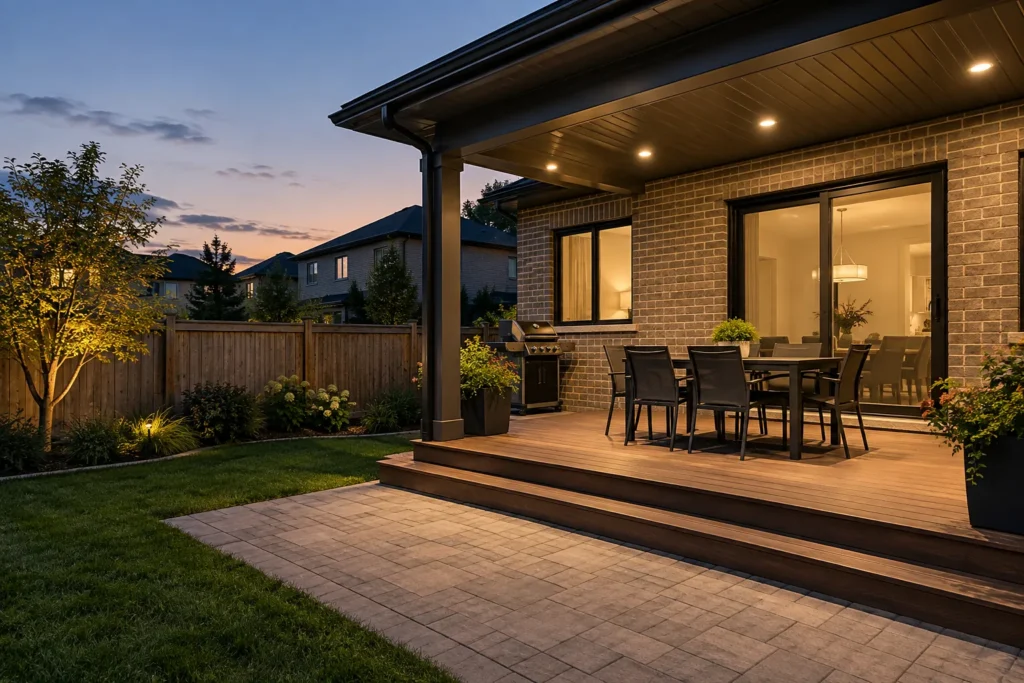
Before settling on a count, mark the desired surface of light at each façade section. Review a proposed fixture’s output and beam from the sidewalk, driveway, entrance and adjacent windows. Consider how the house looks when only essential zones are on. Then test after dark if possible and adjust controls so useful light is present without an excessively bright roofline. A deliberate gap can be part of the composition.
Should soffit lights be evenly spaced all around the house?
No. Use, geometry and neighbouring views differ. Consistent rhythm where visible can be valuable, but positions should serve entry, routes and architecture rather than follow a uniform perimeter rule.
Are brighter fixtures safer?
Visibility depends on light reaching the relevant surface without disabling glare or harsh contrast. Output, beam, position and controls all matter.
Do I need a wet-location fixture under a soffit?
The required suitability depends on the actual exposure and product instructions. Have the location assessed and specify a fixture approved for it. Send exterior photos when you request a soffit lighting estimate.