
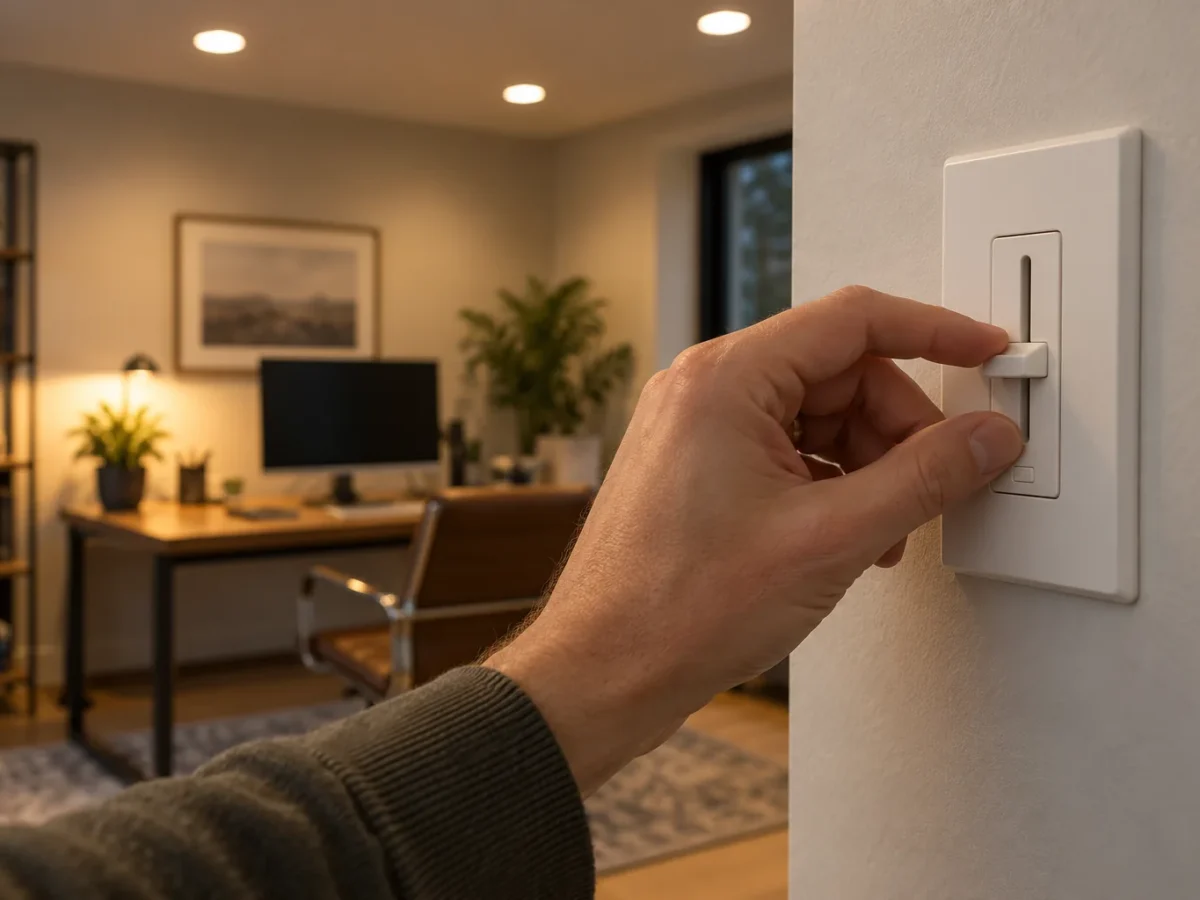
A pot light marked “dimmable” does not promise smooth performance with every wall control. The LED driver and dimmer operate as a pair, and the circuit’s number of fixtures, wiring arrangement and other controls affect the result. Mismatch can look like flicker at low settings, a sudden jump in brightness, buzzing or a fixture that never fully turns off. Plan the controls with the actual fixture models before buying a room’s worth of lights. Electrical assessment and installation belong to a qualified person, not an online rewiring tutorial.
Identify the actual LED product
Write down the manufacturer, exact model and driver information for the proposed pot light. Two products with the same aperture and colour temperature can use different electronics. A fixture’s datasheet may list compatible dimmer models or the supported control method. If it does not, ask the manufacturer or supplier for current guidance. Do not assume that a control which worked with old incandescent bulbs will work well with integrated LEDs.
The product’s dimming claim also may specify a certain range under test conditions. A homeowner who expects very low evening light should ask for that behaviour explicitly and see a demonstration if possible. Some lights fade smoothly to a modest minimum; others go lower with the right control. Dimming performance can vary across production batches and control models. A trial is especially useful in a living room or bedroom where the lowest setting matters daily.
Minimum and maximum load
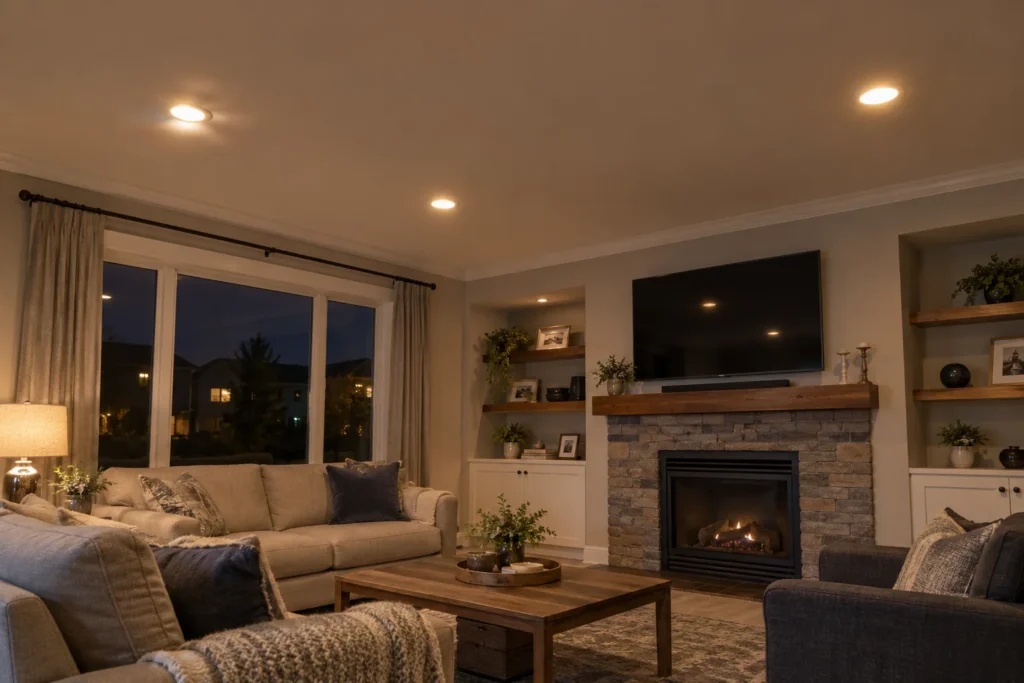
A dimmer may specify an operating load range. A small group of efficient LED fixtures can fall below the control’s minimum, while a larger group may exceed a rating or require another design. The LED load is not simply the old incandescent wattage written on a wall plate. Confirm the fixture’s electrical specifications and the dimmer’s stated LED capacity for the proposed number of units. The electrical contractor should evaluate the circuit, not guess from a “universal” label.
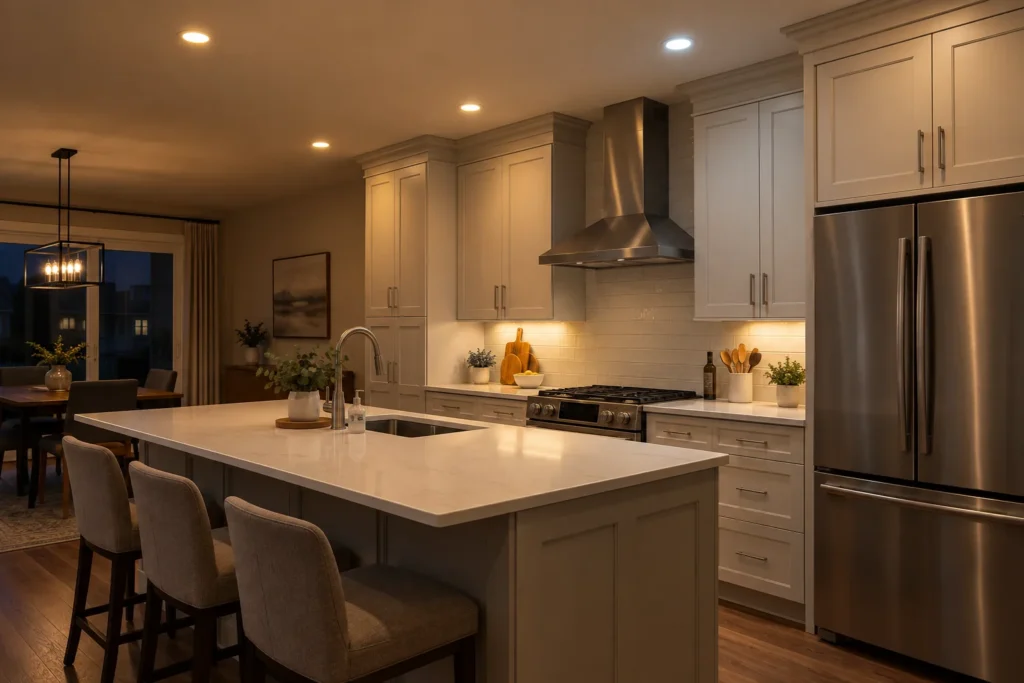
Different fixture models on one zone can complicate dimming because they may respond differently to the same control. A decorative chandelier with replaceable lamps and a bank of integrated pot lights may not fade evenly together. Separate zones might improve both performance and usability. The kitchen lighting layers guide shows why counter, island and general lighting often deserve distinct controls rather than one mixed load.
Control type and driver behaviour
Phase-cut, low-voltage, smart and other control descriptions are not interchangeable. The appropriate control depends on the specific fixture or driver and the intended electrical arrangement. The manufacturer may publish a compatibility chart; verify the exact model numbers and revision if available. Some LED products require a control method different from a familiar wall dimmer. Homeowners can ask what combination is being specified and what minimum level to expect without attempting to alter wiring themselves.
Flicker can have several causes, including an incompatible control, driver issues, a load outside the expected range or an electrical condition that needs diagnosis. Buzzing can originate from a control or fixture and may change with the dimming level. The visible symptom does not confirm the cause. If an existing lighting zone behaves unpredictably, describe when and how it happens and seek professional assessment. The flickering pot lights page covers that symptom more broadly.
Existing wiring and neutral requirements
Replacing a switch with a smart control is not always a simple product swap. Some controls need a neutral at the switch location; others have different installation requirements. A multi-way circuit controlled from several locations also needs a compatible arrangement. The electrical professional must inspect the actual wiring and select approved devices accordingly. A photo of a switch plate cannot confirm conductor availability behind it. Build uncertainty into the scope until the installation is assessed.
Do not solve a missing neutral or a flickering LED by improvising a wiring workaround. Ask whether the control can be supported by the existing arrangement, whether a suitable alternative control exists, or whether new electrical work is part of the project. If the answer changes, revise the quote and the expected wall-control layout. The smart lighting service discusses usability, while this guide focuses on compatibility planning.
Multi-way switching and scenes
Hallways, stairs and open-plan rooms may have controls at more than one entrance. A dimmer at one location and switches at others is not automatically compatible with every product family. Smart scenes can be convenient, but define what happens when someone uses the physical switch and when the network or hub is unavailable. Make a list of desired behaviour: entry light, evening setting, task mode and all-off. Then choose compatible devices and an installation plan that achieves it.
In a living room, separate controls can let a wall-lighting layer remain on while ceiling downlights are lowered for television. In a kitchen, counter work can be bright while the dining zone is softer. These are useful design choices, not merely gadget features. A well-chosen dimmer cannot repair a fixture whose beam reflects into a screen or misses the task surface; revisit pot-light spacing if the light distribution is wrong.
What to test at completion
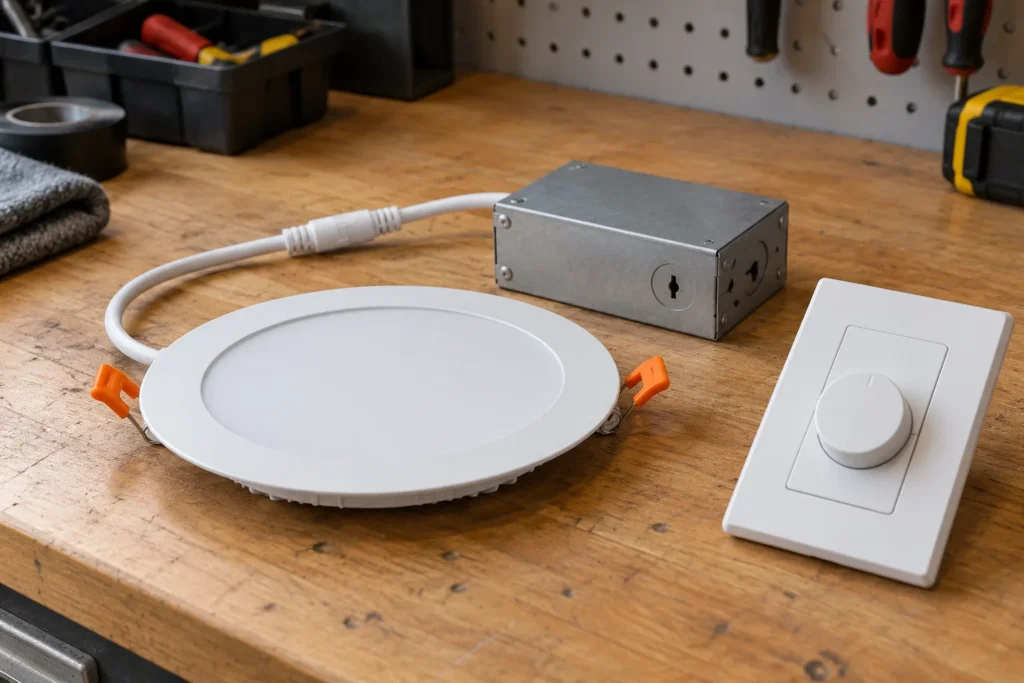
Ask for the installed zone to be checked at full output, intermediate levels and the lowest usable setting, with every fixture responding consistently. Observe startup, shutoff and any buzzing or flicker after the lights have operated for a while. Check all control locations on a multi-way arrangement and confirm that smart settings behave as agreed. If a device has an adjustable trim range, the contractor should set it appropriately under the product instructions. Record the final fixture and dimmer models for future replacement.
If a problem appears only after a fixture substitution, the compatibility check should be repeated. A lamp or driver change can alter a previously stable circuit. Do not interpret a working on/off switch as proof that all dimming behaviour is acceptable. In an occupied room, a meaningful final check occurs in the evening at the settings people will actually use.
Put the expected behaviour in the estimate
A control can be technically compatible but still disappoint if the household expected a much lower evening setting or a different response at the second doorway. Specify the desired low-light scene, which zones can dim independently and how the lights behave when first switched on. Ask whether an existing decorative fixture will share the zone and whether every lamp on it is compatible. Record who supplies the dimmer and who is responsible for demonstrating operation before sign-off. A written performance expectation helps distinguish a design change from a fault if the finished room does not feel as planned.
Approval and Ontario electrical process

The fixture and control should bear appropriate recognized approval marks for Ontario use and be suitable for the intended installation. ESA publishes the recognized marks. Electrical alterations can trigger the applicable Notification of Work; ESA says almost all electrical work requires one and explains that the hired Licensed Electrical Contractor files it. See the ESA requirements guide and ESA's official notification information for the current process.
Why do my LEDs flicker only when dimmed?
Compatibility and low-end behaviour are possibilities, but flicker has several possible causes. Note the fixture and dimmer models and the dimming level where it occurs; have the system assessed rather than assuming a single fix.
Can I keep my existing dimmer?
Only if it is appropriate for the new LED product, load and wiring arrangement. Have the exact combination checked before purchasing fixtures.
Will a smart dimmer improve any LED?
No. The control and driver still need to be compatible, and the existing wiring must support the chosen device. For a complete Milton pot-light and controls estimate, describe how each zone should work.