

Pot-light work can involve new wiring, changes to existing electrical equipment, fixture replacement and controls. In Ontario, the applicable requirements come from the Electrical Safety Authority (ESA) and the Ontario Electrical Safety Code. The precise scope matters. ESA says almost all electrical work requires a Notification of Work, while its guidance identifies limited situations in which a property owner living in an owner-occupied single-family dwelling may replace certain light fixtures or switches without one. Do not infer that an entire pot-light project qualifies for an exception. The person doing the electrical work should confirm the requirements for the actual work with ESA.
Before hiring for electrical work, ask the business to identify its ECRA/ESA licence and explain who will perform and notify the work. Regulatory terminology and process can change; check the official ESA links below when planning a project.
Who can be hired for electrical work?
ESA states that if you hire a person or company to do electrical work in your Ontario home, the work must be done by a Licensed Electrical Contractor (LEC). A general contractor or handyperson is not automatically authorized to do the electrical portion. If a larger renovation company coordinates the project, confirm that the electrical work is assigned to an LEC. A skilled electrician’s trade qualification and a business’s authorization to contract for electrical work are different qualifications; ESA describes the licensed contractor as holding an ECRA/ESA licence. Read ESA’s hiring guidance and LEC versus certified electrician explanation.
Ask for the contractor’s exact business name and licence number before work is agreed. Verify it using ESA’s public resources rather than relying on a logo or an unsupported “certified” badge. A quote for pot lights should identify who is responsible for electrical installation and the relevant paperwork. Check the business name and licence number through ESA’s public resources. A marketing badge alone does not establish that the business is authorized for the electrical work.
What is a Notification of Work?

ESA calls the application a Notification of Work, sometimes colloquially called an electrical “permit.” It creates a record of the work and initiates ESA’s review process. ESA’s homeowner guidance says almost all electrical work requires it and says the notification should be filed before the work starts. The person doing the electrical work files it; when you hire an LEC, the contractor files it. ESA expressly warns homeowners not to take out a notification on behalf of someone else. See the official notifications and inspections guide and who files FAQ.
A pot-light proposal might involve a new circuit or wiring route, new fixture locations, a switch change, or replacement in existing openings. These scopes are not identical. The contractor should determine the notification obligation for the actual electrical work rather than assert that all lighting changes are automatically exempt or all projects follow one inspection pattern. Homeowners can ask, “What work is described in the notification, who files it, and when will it be filed?” Keep the answer with the written scope.
How review and inspection work
Filing a notification does not itself mean the installation has passed review. ESA describes an inspection and review process, which can involve stages depending on the installation. Access to concealed work may be needed at the appropriate point before finishes are closed; the person responsible for the work should coordinate timing with ESA. ESA notes that an inspection does not remove the applicant’s responsibility to comply with the Ontario Electrical Safety Code in all aspects of the installation. A homeowner should not equate a clean ceiling or working light with verified code compliance.
Ask when electrical work will be ready for the relevant review and who schedules or requests it. During a kitchen or basement renovation, coordinate the electrical sequence with drywall and cabinetry so work is not concealed prematurely. In an occupied home, ask what access will be needed. Avoid promising a fixed inspection method from an online description; ESA decides how it reviews the notified scope. The official ESA notification and inspection page is the current public reference.
Certificate of Acceptance and records

ESA says that once the notified electrical work has been reviewed and passed, it issues a Certificate of Acceptance to the person who filed the notification. When an LEC filed it, ask that contractor for a copy to retain with property records. The certificate documents the reviewed electrical work; it should not be invented, predated or replaced by a contractor’s marketing statement. It can matter for future property questions. ESA explains the document and how to obtain a copy on its Certificate of Acceptance page.
Keep the quotation, final invoice, fixture and dimmer model numbers, product instructions, any change orders and the ESA documentation together. That record can help identify a compatible replacement fixture later and explain which areas were altered. If the project includes other trades, distinguish their warranties or completion papers from an ESA Certificate of Acceptance. A municipal building inspection record is also a different document.
ESA versus Town of Milton building approvals
An ESA electrical Notification of Work and a municipal building permit are separate approval systems. ESA’s homeowner guidance explicitly says a building permit is not the same as an electrical notification and a project may need both. A homeowner should not search for a generic “Milton pot-light permit” and assume the answer covers all situations. Ordinary lighting work and a larger renovation involving structural, occupancy or other building changes can have different municipal questions. Ask the Town about any building-permit question tied to your broader project; ask ESA or the LEC about electrical notification.
If a contractor says “permits included,” request the names of the processes and the party filing each one. The quote should not blur them into one fee. A municipal permit, where needed for other construction, does not replace ESA review of electrical work. Conversely, a Notification of Work is not evidence that all aspects of a renovation have met municipal building requirements. Keep the distinction clear when scheduling several trades.
Approved fixtures and controls
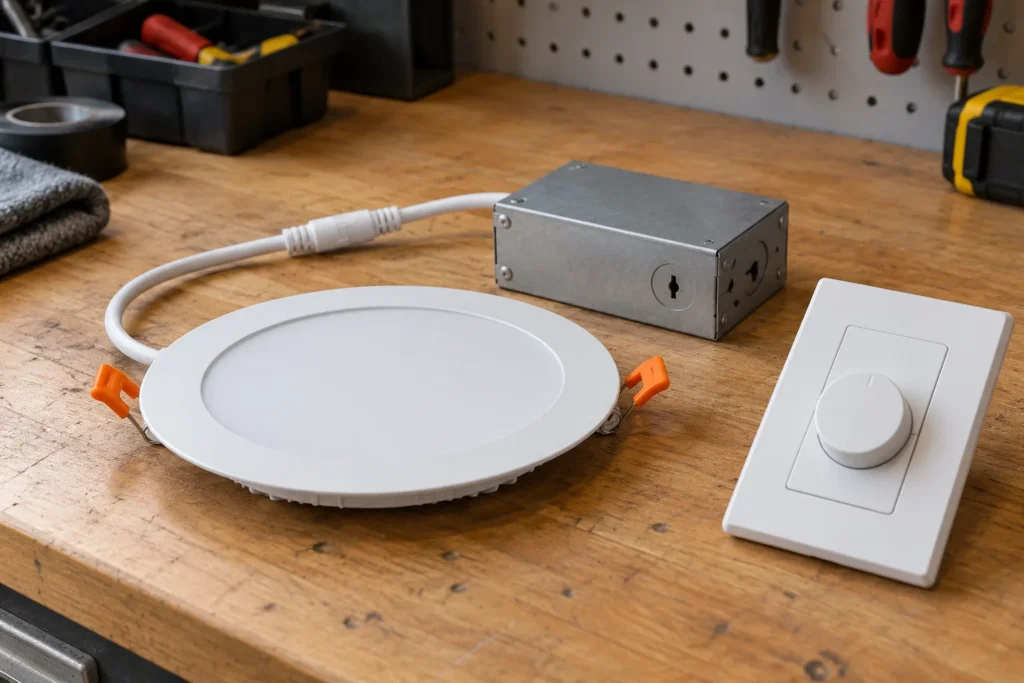
Ontario also regulates electrical products. ESA states that equipment used or sold in Ontario must be approved by an accredited certification or evaluation agency and carry its official recognized mark or label. This applies to the actual pot light and relevant components, not merely a website listing. ESA publishes the recognized certification marks and consumer product safety tips. An unfamiliar imported LED fixture with no recognized approval is not made acceptable by attractive specifications or a low price.
Approval is only one part of suitability. Check the product’s instructions and listing for the actual ceiling assembly, insulation conditions and damp or wet exposure. An exterior soffit or shower location may have conditions that differ from a dry bedroom. The driver and fixture form an installed system, and controls should be compatible with the specified LED product. See our approved LED pot lights guide and dimmer compatibility guide for practical questions that do not involve DIY electrical work.
Replacement, renovation and new work
It is tempting to treat replacing a single lamp, replacing a complete recessed fixture and adding a bank of new pot lights as the same kind of electrical work. They are not necessarily the same scope. Existing housing condition, wiring, controls, product compatibility and whether new openings or circuits are involved can change the work. ESA notes a narrow notification exception for certain fixture and switch replacements by qualifying owner-occupants; it is not a general permission for a hired unlicensed person to install pot lights or for any new wiring to proceed without review. Confirm a specific case with ESA.
For a renovation, decide the fixture locations early enough that a compliant wiring plan can be coordinated before the ceiling is finished. An open ceiling may make access clearer, while a finished ceiling may need investigation and repairs. Neither condition changes the need to use approved products and observe electrical requirements. See pot lights without attic access for the physical issues and pot light installation for the service scope.
Commercial and multi-unit settings

Commercial lighting and multi-unit properties can have different site conditions, occupants, access rules and review requirements from an owner-occupied detached home. Do not apply a homeowner replacement exception to a business or rental property. ESA’s property owner and manager guidance says most electrical work requires a notification regardless of building type and emphasizes use of an LEC when someone is hired. A commercial scope may also require coordination with a landlord, property manager or operating schedule; those arrangements do not replace ESA requirements.
Ask who owns the electrical work, who authorizes the project and how the tenant or property operator receives the final records. If new lighting changes a suspended ceiling, signage, emergency egress context or other building systems, coordinate the broader project with the relevant professionals. Avoid using a small residential pot-light estimate to predict the scope of a retail or office installation. Our commercial lighting content addresses the practical site planning separately.
A homeowner's conversation checklist
Before agreeing to work, ask the contractor for its ECRA/ESA licence details, a room-specific lighting scope, exact fixture and control models, and a clear description of access and finish repair. Ask who will file the Notification of Work when required, how ESA review is coordinated, and when you will receive the Certificate of Acceptance after a passing review. Confirm whether municipal approvals are relevant to the broader renovation, without labelling the ESA process a municipal permit. Keep all documents together after completion.
Does every simple fixture replacement need an ESA notification?
ESA identifies a limited exception for a qualifying owner-occupant replacing certain light fixtures and switches. The facts and work scope matter. New wiring or a hired installation should not be assumed exempt. Use the ESA notifications page or contact ESA for a specific case.
Can I file the notification for a contractor to save money?
ESA says the person doing the work files it and explicitly tells homeowners not to file on someone else’s behalf. If you hire an LEC, the contractor files the applicable notification.
Is ESA approval the same as a building permit?
No. ESA electrical notification and review are separate from municipal building-permit administration. Depending on a larger project, both systems could be relevant. For a Milton lighting plan, request a scope discussion and verify regulatory specifics with the actual LEC and ESA.