
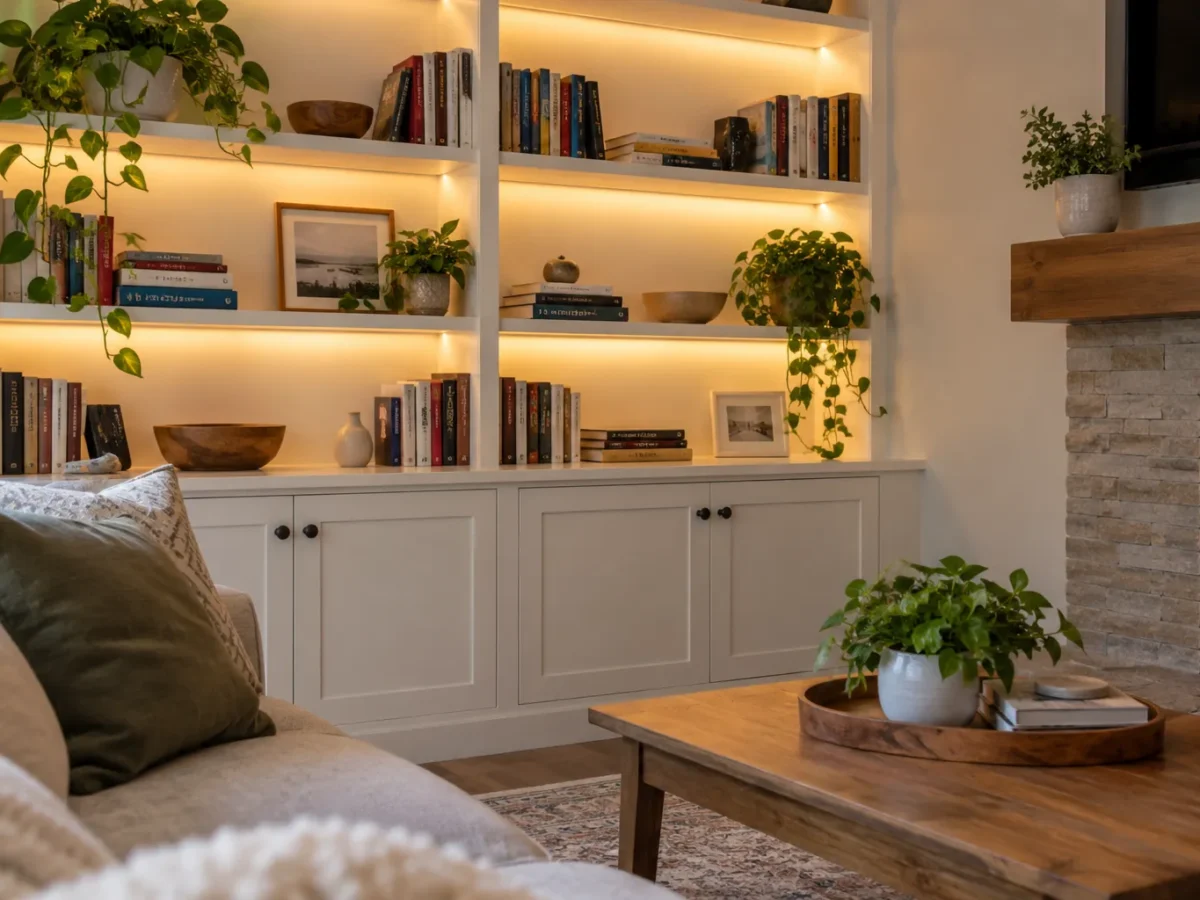
LED strips can trace a shelf, lift a cabinet from the floor or give a cove a quiet glow. Their flexibility is useful, but a bare tape run and a remote power supply do not automatically create a finished lighting detail. The quality depends on the surface being lit, concealment, diffusion, colour and controls. In a Milton home, accent light should reveal a meaningful material or add gentle wayfinding without turning every edge into a glowing outline. Begin with the room and the intended mood; then decide whether a linear LED detail has a clear job.
Cove lighting and indirect surfaces
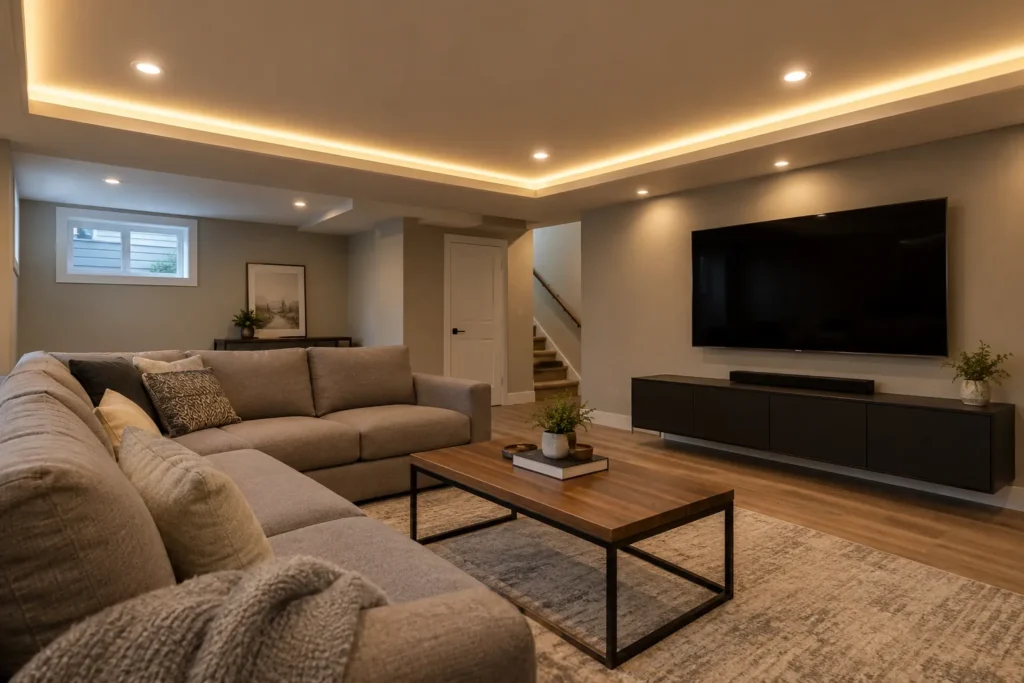
A cove works by throwing light onto a ceiling or wall, allowing the surface to become the visible source. Its depth, setback and finish affect whether the glow appears continuous or reveals hot spots. A shallow ledge can expose the strip from across the room; a dark or textured surface may absorb more light than expected. Plan the geometry before millwork or drywall closes the detail. A test of a short trial length can show whether the selected output and diffuser achieve the intended softness. Cove light is usually an ambient or decorative layer, not a substitute for task light where people read, cook or work.
Shelves, built-ins and cabinetry
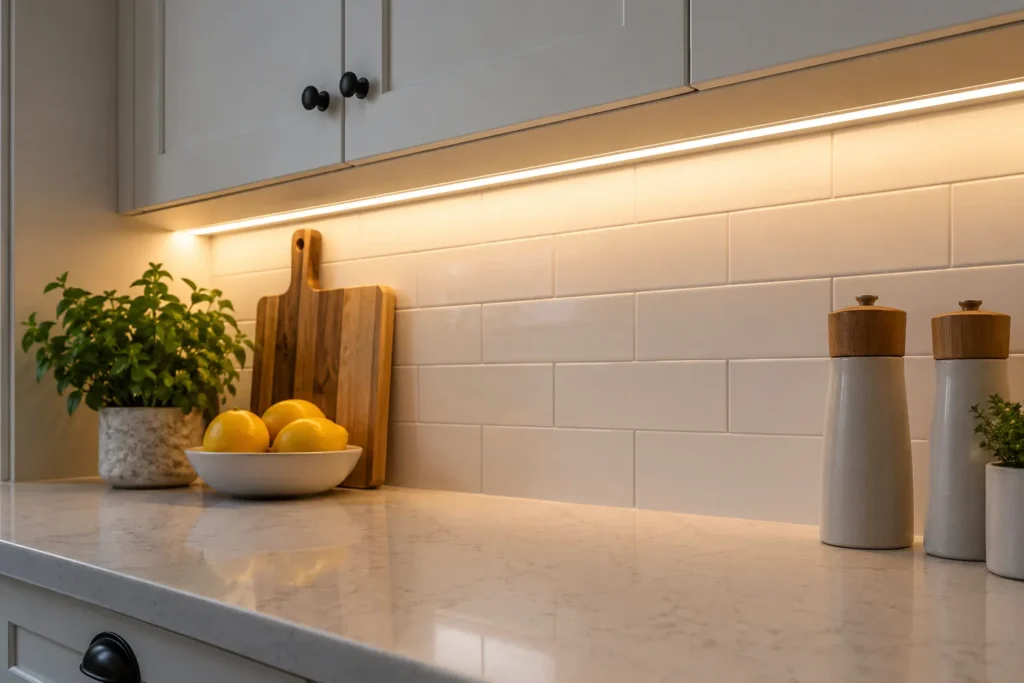
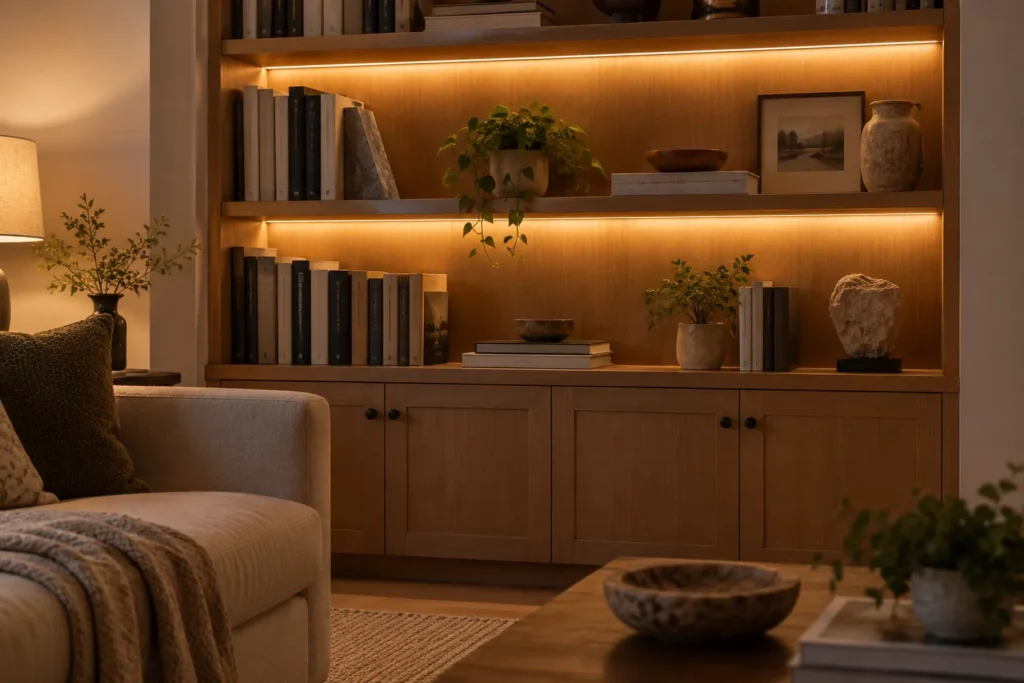
A lit shelf can make books or objects visible and add depth to a built-in. The strip’s position determines whether the front edge glows, the back panel washes or the objects cast strong shadows. Glass shelves, glossy lacquer and mirrors introduce reflections of visible LED points. Recessed channels and diffusers can help, subject to the millwork construction. Driver access must be planned before cabinetry is permanently installed. The appearance should remain coherent when one shelf is full and another is nearly empty. For counters beneath wall cabinets, the task-led under-cabinet lighting page covers a different distribution and mounting challenge.
Toe-kicks and low-level light
A restrained toe-kick line can define cabinetry and provide gentle movement through a kitchen or hall after dark. It should not spill so strongly across a glossy floor that it creates a row of glaring reflections. Recess depth, cabinet legs, floor finish and viewing angle shape the effect. A separate low-level control or schedule can be useful at night, while the main task lighting remains off. Consider cleaning, kicks and water exposure where the strip sits close to the floor. Product and profile suitability matter; an exposed adhesive strip in a vulnerable location is unlikely to remain a neat architectural detail.
Feature walls and textured materials
Linear light can graze a fluted panel, wash a wall or create a restrained edge around a niche. Each method produces a different pattern. Grazing emphasizes texture and therefore also shows irregularities; washing gives more even presence. A bright line that faces the viewer may distract from the feature rather than improve it. Mark the normal seating and entry viewpoints before fixing the channel. Wall colour and reflectance can change the apparent brightness and hue. If the wall has artwork, consider whether a directional fixture gives better control than a continuous strip. Our layout and design page discusses light aimed at vertical surfaces.
Stair accents and wayfinding
Low-level accent light can help someone recognize a stair edge or landing, but a decorative strip alone should not be assumed to provide every required circulation need. Its position should avoid shining into eyes from the lower or upper level. The routing through treads, stringers or adjacent walls depends on construction and the stage of the renovation. A motion response may be convenient at night, yet controls need to behave predictably when someone pauses. Think about cleaning, foot impact and replacement access. The hallway and stair lighting page covers the broader route, switching and visual rhythm.
Profiles, diffusers and visible dots
A suitable extrusion or profile can provide a consistent mounting line and help conceal individual emitters. A diffuser changes the look, but its opacity, channel depth and distance from a reflective surface all affect dot visibility. Test a short length of the intended system in the actual geometry where possible. A strip viewed directly at eye level needs more careful concealment than one aimed onto a ceiling. Joints and corners should be planned so the line does not have abrupt dark breaks or unexpected brightness. A clean detail is designed into millwork or trim; attaching a strip after all finishes are complete can limit what can be hidden.
Drivers, wiring and service access
LED strips operate as part of a system with a suitable driver, connections and control. The driver must match the load and be installed according to its instructions in an appropriate, serviceable location. Long runs and multiple branches require planning so brightness remains consistent and future repairs can be localized. A permanently sealed cove with an inaccessible power supply can turn a small failure into a disruptive repair. Decide where access panels, cabinets or ceiling openings will permit service before finishes are finalized. Retain the strip, driver and profile model information to avoid mismatched replacement sections later.
Colour temperature and restrained effects
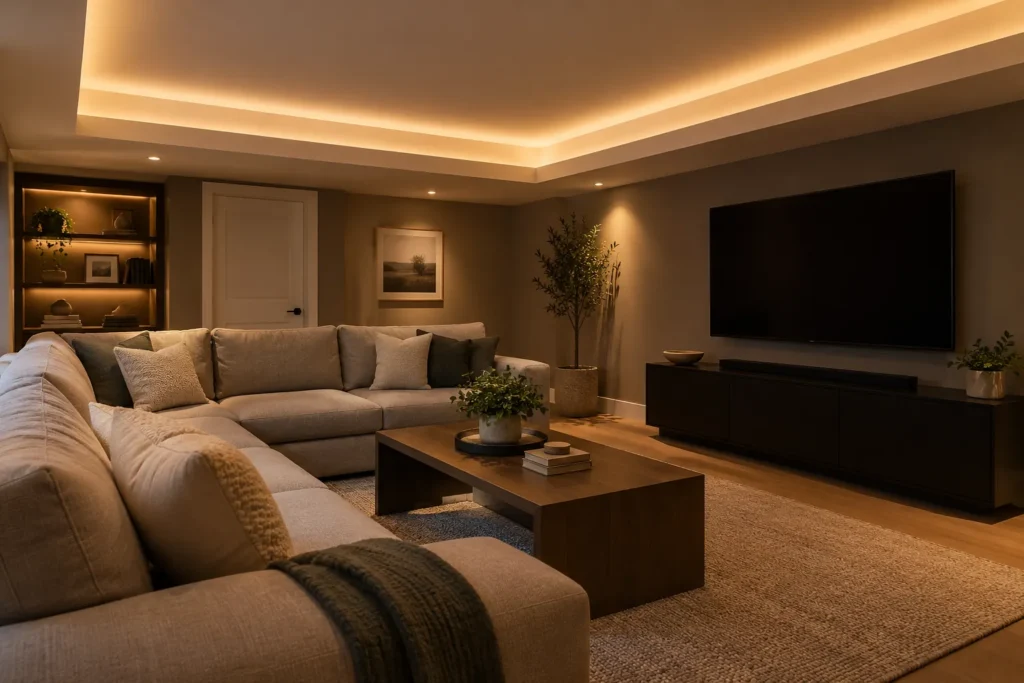
White-light accent work should harmonize with the room’s other lighting. A very cool shelf line under warm room lights can look accidental. Colour rendering matters where the strip illuminates material, books or objects. Tunable white or colour-changing systems have uses, but only if the intended daily scenes justify the extra controls and component compatibility. A vivid effect can overwhelm a normal living space when it is applied to every edge. Start with a useful low level and the surface you want to reveal. The colour temperature guide helps compare white-light choices, while a physical selected product can reveal how a finish changes the effect.
Controls and room layers
Accent lighting is most flexible on a separate control from main ambient and task sources. A cove can remain on at a lower level while pot lights are off, or a lit built-in can support a living room without putting glare on a television. Dimming requires a compatible driver and control. If a smart scene is desired, keep a simple wall way to reach the ordinary settings. A toe-kick night mode should not automatically switch on every shelf in the room. See smart lighting and dimmers for planning around actual LED loads and natural operation.
Scope, cost and Ontario requirements
Price depends on run length, profile and diffuser, millwork or drywall preparation, driver placement, cable routes, controls, access and finish restoration. A short visible shelf retrofit differs from a concealed continuous cove built during a renovation. Send photos, approximate run dimensions, materials and the construction stage. Clarify where drivers remain accessible and whether millwork, painting or trim changes are included. In Ontario, electrical work for hire must be performed by a Licensed Electrical Contractor, who handles required ESA notification of work and applicable review. Choose approved products and suitable components for the environment. The approved product guide gives more detail.
Frequently asked questions
Can LED strip be added after cabinetry is finished?
Often there are options, but concealment and wiring routes may be limited by finished backs, panels and tile. A profile may remain visible where an integrated channel could have been hidden during fabrication. Review the desired viewpoint and driver location before choosing a retrofit method. A smaller, clean result is preferable to a long run with conspicuous cables.
Why can I see individual LED dots?
The emitter spacing, strip position, channel depth, diffuser and reflective surroundings all contribute. A diffuser alone may not solve a very shallow detail viewed directly. Test the complete profile and strip combination where it will be installed. The aim is a continuous visible effect or controlled surface wash, according to the design.
Is colour-changing lighting necessary for an accent?
Usually the more important choices are where the light goes, how bright it is and how it relates to the room’s other lights. Colour control may serve a particular use, but it adds components and controls. A coherent white-light detail often provides a calmer everyday result. Define the scenes you will actually use before selecting a more complex system.
Can a strip replace stair lighting?
It can contribute to wayfinding but should not be assumed to satisfy all circulation lighting needs. Stair shape, viewpoints, controls and the rest of the lighting must be considered. An accent that looks impressive in a photograph may create glare from the landing or leave treads unclear. Plan the entire route.
For LED accent lighting in Milton, send the wall, cabinetry or stair detail you want to light. A considered line of light begins with the surface and a serviceable product plan.