
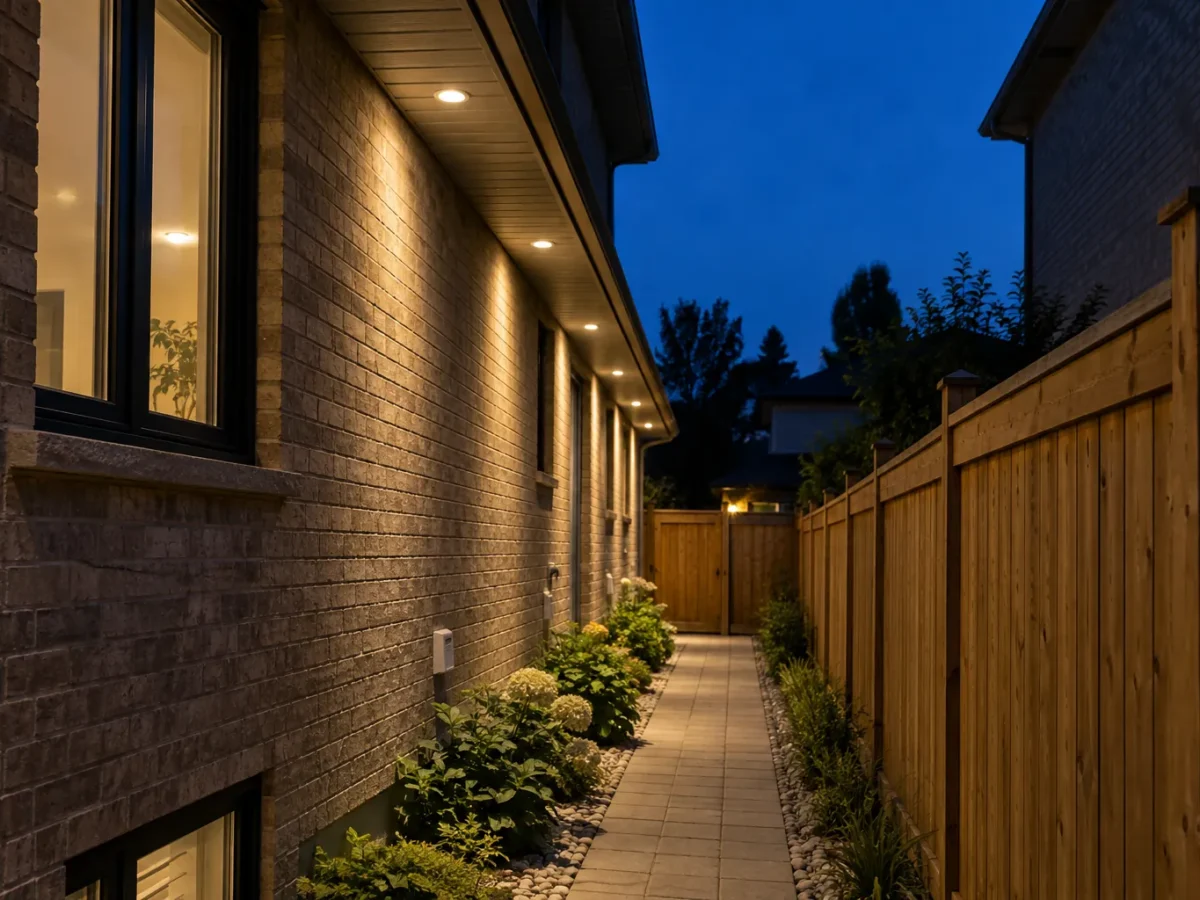
Outdoor light should make an approach comfortable and a property usable after dusk. It can show a step, help someone find the door and give a patio enough light for conversation. It can also create glare into a bedroom or a neighbour’s window when output and aim are not considered. In Milton, an outdoor lighting plan has to respond to the actual entrances, walks, rooflines, planting and seasonal use of a property. The fixture style matters, but what the light reaches matters more.
Begin with routes and destinations
Walk through the property as a visitor would. The route from driveway to front door may need a clear transition from the street; a side gate may need a short pool of light at the latch; a patio may need gentle light at seating and stronger light at a grill or task area. These are different requirements, and a single bright floodlight rarely serves all of them comfortably. Identify changes in level, turns and obstructions before deciding where a fixture belongs. A plan should also account for winter paths and snowbanks, since a small ground-level fitting that looks effective in summer may be obscured for part of the year.
Porch and entry fixtures
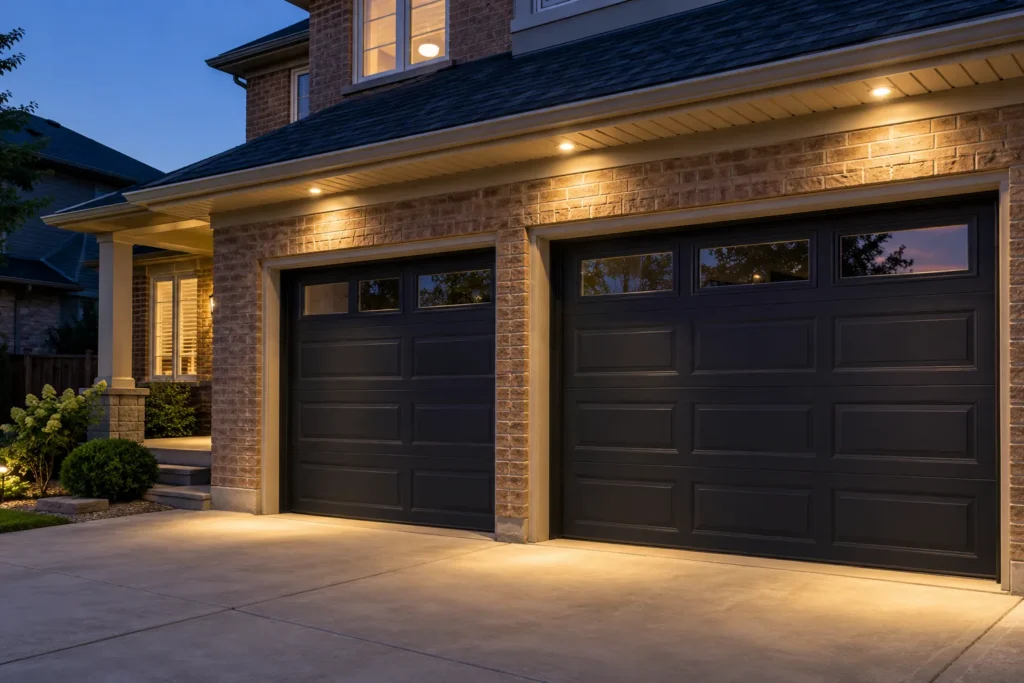
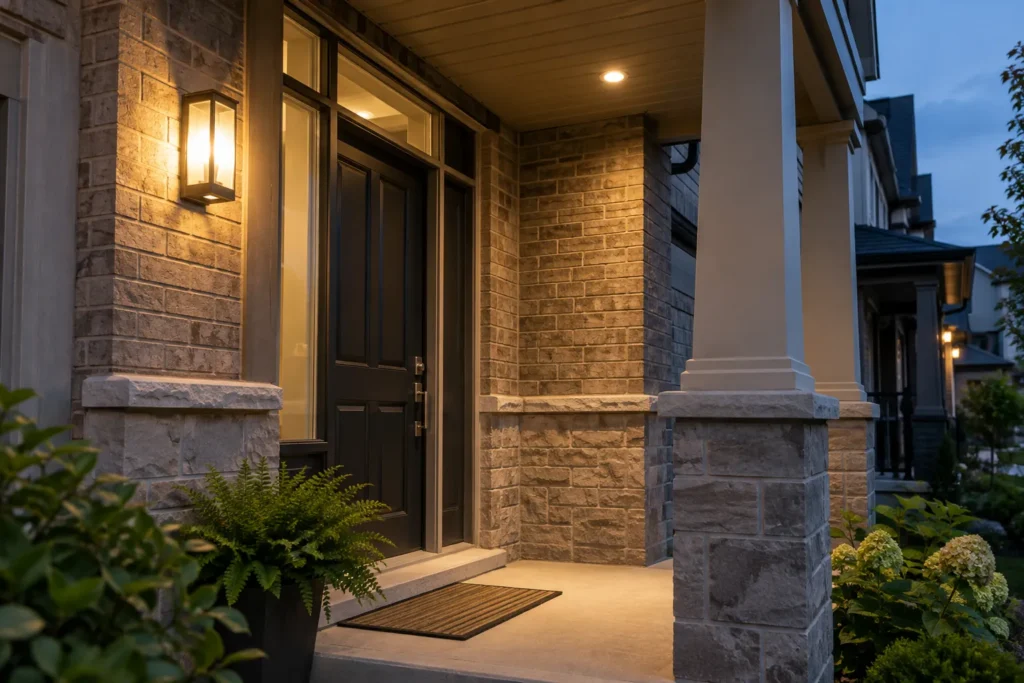
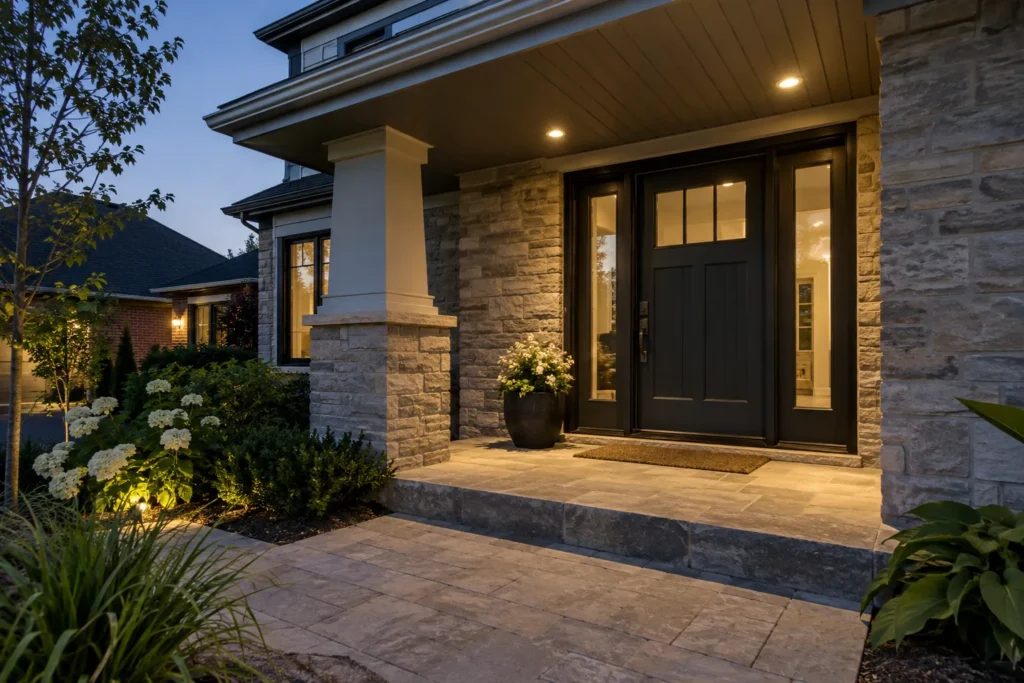
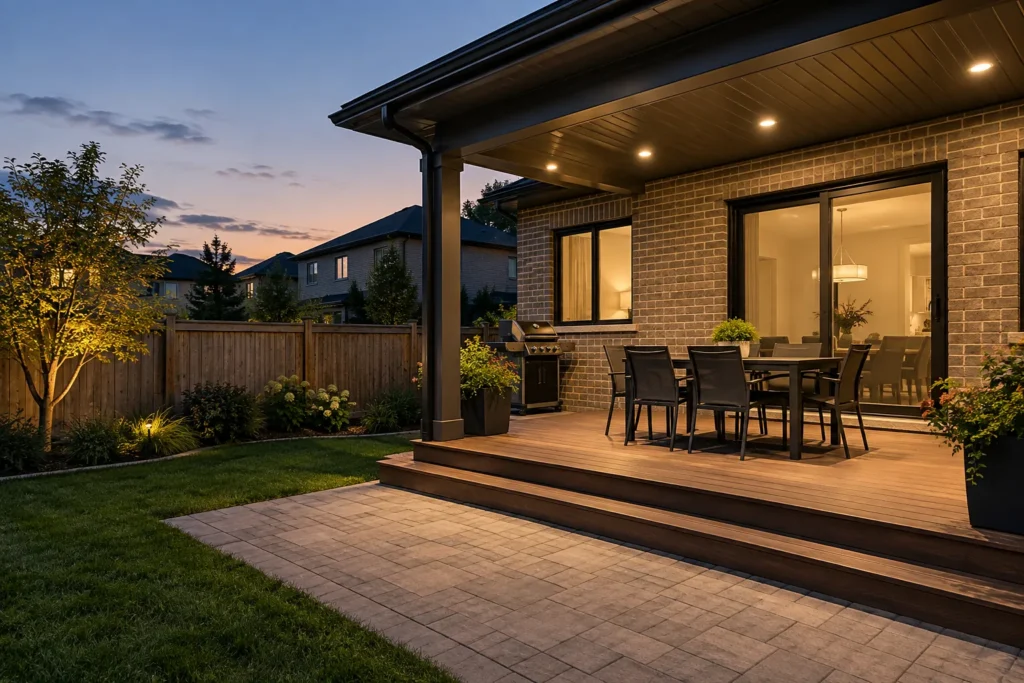
An entry benefits from light on the person and the door hardware, without a harsh source shining directly into arriving eyes. Wall sconces, ceiling-mounted porch fixtures and carefully selected recessed fixtures create different patterns. Fixture size should relate to the doorway and mounting height; a tiny decorative lamp may look lost and deliver little useful light. Check the effect from the public sidewalk and from inside the home as well as from the porch itself. More light at the door is not automatically more welcoming when the adjacent walk falls into deep shadow. For recessed fixtures under an overhang, see the distinct exterior and soffit pot light service.
Paths, steps and grade changes
Path lighting should help people read the route and its edges. A dense row of bright bollards can look like an airport runway and create unnecessary visual clutter. Fewer, better placed sources may be enough if the path is short and other fixtures contribute spill light. Steps deserve particular care: the nose, landing and direction of travel should be understandable, without the lamp itself becoming the dominant sight. Plant growth, snow removal equipment and foot traffic affect fixture protection and location. Consider what happens when shrubs mature or garden beds change, so the route does not depend on a temporary clear line through foliage.
Deck, patio and gazebo lighting
A deck or patio often needs two moods: enough light for an outdoor task and a softer level for sitting. Wall-mounted lights, overhead fixtures, subtle step lights and focused accent sources can be layered rather than switched all together. A gazebo or covered seating area has its own mounting and exposure conditions; a product suitable under one roof may not suit an exposed corner. Place light where a person can see a step, tabletop or cooking surface. Avoid locating a high-output source directly in the normal seated view. Dimming and separate switches can preserve the atmosphere without sacrificing useful light when the area is being cleaned or prepared.
Landscape accents with restraint
A mature tree, textured wall or garden feature may deserve a controlled accent, but lighting every shrub makes the whole yard flatten into brightness. Directional sources should be aimed with attention to nearby windows, roads and neighbouring property. Plants move and grow, so an effect that looks tidy on installation day may need adjustment after a season. Consider whether a chosen fixture can be reached for cleaning and service. Dark areas are also useful: contrast is what allows one feature to stand out. For built-in architectural strips at a bench, stair or feature wall, see LED strip and accent lighting.
Security and motion lighting
Security lighting is most useful when it illuminates the area a person needs to see, rather than simply reaching the highest possible brightness. Motion sensors can serve a garage approach or side passage, but aim, sensitivity, duration and nearby movement influence how often they trigger. A fixture that activates repeatedly from street traffic or wildlife may become a nuisance. A steady low-level porch light and a separate motion response at the side yard can be a better balance than one intense fixture covering the entire frontage. There is no promise of zero glare: output, mounting position and viewpoints should be reviewed on the property.
Timers, photocells and smart control
A photocell follows ambient daylight at its location, while a timer follows a clock or programmed sunset schedule. Smart controls can add remote adjustments and scenes, but a normal wall operation remains valuable. Decide whether the exterior lighting should be on for an evening window, respond only to motion or remain at a modest level for wayfinding. These choices affect fixture output, energy use and how the property looks from the street. Controls also need to suit the load and the installation environment. Learn how wall controls, schedules and compatible LED loads fit together on the smart lighting and dimmers page.
Weather suitability and product approval
Exterior fixtures face rain, condensation, temperature swings and sometimes direct snow exposure. A protected porch ceiling, exposed wall, ground location and open deck are not interchangeable product locations. Manufacturer ratings and installation instructions must suit the actual environment; a fixture described vaguely as decorative outdoor lighting may still have limitations. Electrical products used in Ontario need appropriate approval, with a recognized Canadian certification or field-evaluation mark. Connections, drivers and controls require the same care as the visible light. The approved product guide explains why packaging and approval markings should be checked before a fixture is chosen.
Renovation and access conditions
An open wall during construction offers different possibilities from finished brick, siding or a landscaped bed. Routes for wiring, mounting surfaces, existing boxes, access to the rear of a fixture and planned hardscaping all affect the installation. A seemingly small new light at a gate can require more disruption than replacing an existing porch fixture. Coordinate lighting before new paving, deck boards or siding close the intended route. If drywall, masonry, soffit or landscape restoration will be needed, define whether that work is included in the lighting scope. A plan can prioritize the most useful locations for a first phase and leave clear options for later additions.
Scope and cost considerations
Price depends on fixture type and quality, the number and spread of locations, existing power, switching changes, cable routes, access, surface restoration and the controls selected. A compact porch replacement differs substantially from a new path and patio plan crossing several finished surfaces. Provide a property sketch or photos showing the approach, entrances and gathering areas, plus any known existing fixtures. Describe the outcome you want rather than only a fixture count. A useful proposal should clarify product ratings, mounting locations, control operation, access assumptions and how the light will be checked after dark or adjusted where practical.
Electrical work and the Ontario process
In Ontario, electrical work for hire must be carried out by a Licensed Electrical Contractor. The person doing the electrical work handles required ESA notification of work and the applicable review process. This is separate from selecting attractive fixtures or arranging landscape construction. Never assume a low-voltage label removes all product, installation or site considerations. If you are coordinating a broader renovation, ask who is responsible for the electrical scope and the associated documentation. The Ontario electrical requirements guide offers further context.
Frequently asked questions
How many lights does a front walk need?
There is no useful number without the route, width, turns, steps and light from the porch or driveway. A short straight walk may need only a few carefully aimed points; a winding route with a grade change calls for a different treatment. Look at where people enter and how the route reads from each direction. The aim is comfortable navigation, not an evenly spaced line for its own sake.
Can exterior lighting be added to a finished property?
Often yes, but the method and disruption depend on access to suitable electrical supply, construction surfaces, landscaping and the desired locations. Reusing an existing fixture point is different from feeding a new garden or patio location. Share recent photos and identify any upcoming deck, siding or hardscape work so the scope can be coordinated.
Should outdoor lights be warm or cool white?
Many homes look comfortable with a restrained warm appearance, but the right selection depends on surrounding materials, task needs and existing lights. Avoid a patchwork of visibly different colours along one elevation. Colour temperature does not replace proper aiming or control of brightness. Compare product specifications and the view from inside the home before settling on a final scheme.
Are soffit lights part of this service?
They can be part of a coordinated exterior plan, but the dedicated soffit pot lights page covers roofline rhythm, beam selection and under-eave installation conditions in greater detail. Outdoor lighting also includes wall fixtures, paths, patios, decks, gazebos and landscape accents. A coherent plan can use both without lighting every available surface.
To discuss outdoor lighting in Milton, send the property areas you want to use after dark and any existing fixtures or planned exterior work.