
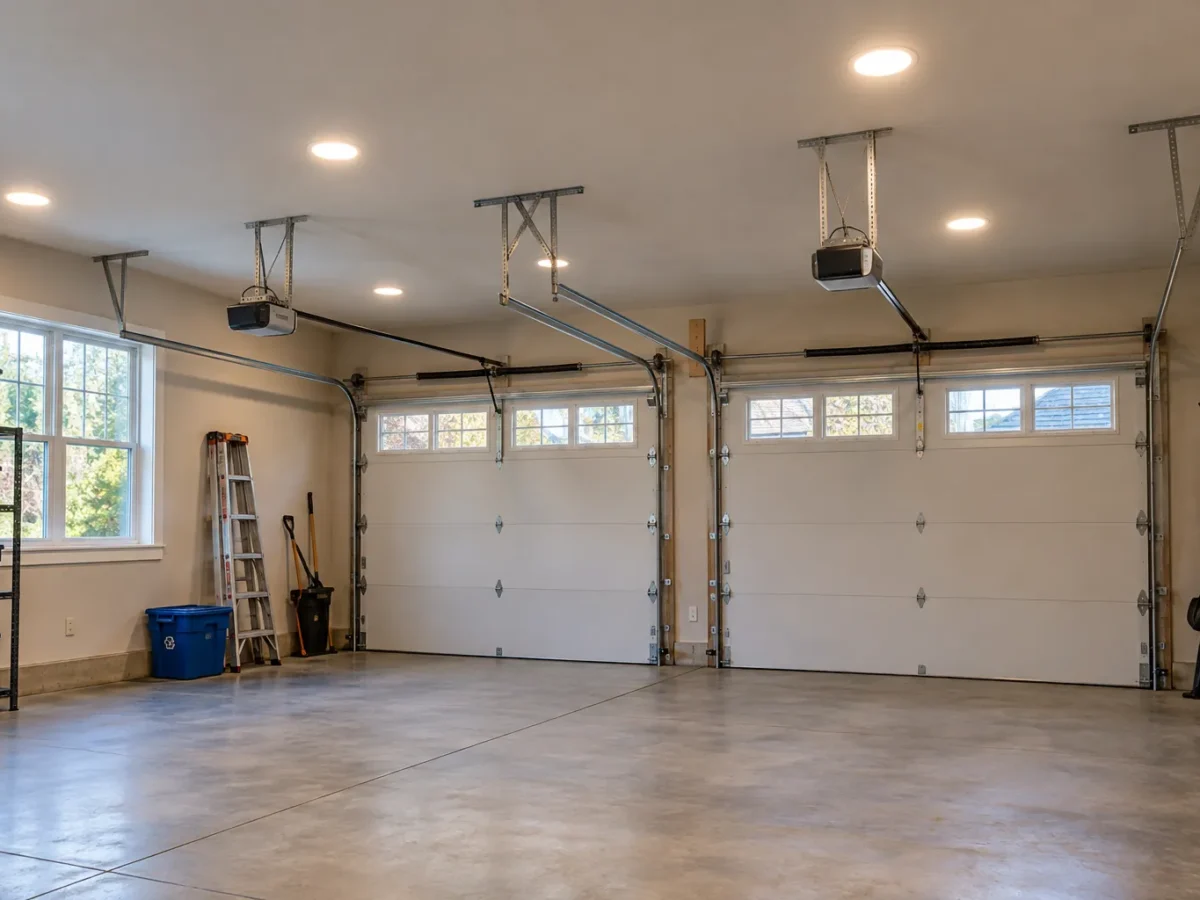
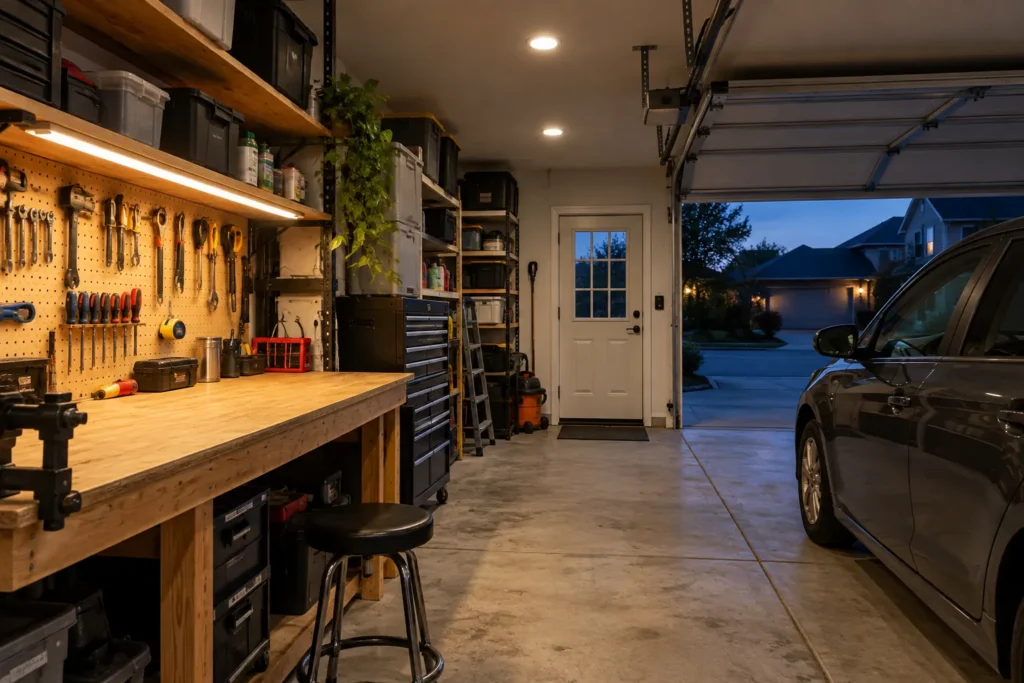
Garage lighting has to work around large moving objects. A parked vehicle can block a beam from reaching the floor; an open overhead door may sit beneath the ceiling fixtures; shelves can leave storage dark. A row of pot lights centred across the empty garage may look balanced and still be unhelpful when the space is actually in use. The plan should begin with the vehicle bays, workbench and storage that matter to you.
Some Milton garages are finished spaces used for organized storage and projects, while others have exposed framing or older central fixtures. Recessed lighting may suit a finished ceiling, but it is one option among suitable garage fixtures. We review ceiling conditions, door tracks, brightness needs and controls before deciding where pot lights add value. The scope stays focused on lighting, not general garage electrical work.
Map vehicles in their normal positions
A car occupies much of the floor and can shadow the area beside it. Mark where the vehicle parks, where doors open and where people walk from the house or driveway. Fixtures over a vehicle roof may make the roof bright while leaving the side and floor dim. A useful layout considers the working edges of the bay rather than a perfect grid over an empty rectangle.
If two cars use the garage, note their usual positions and storage between them. The light needed to unload groceries differs from the light needed to inspect a wheel or clean a vehicle. Recessed fixtures can support circulation, while another suitable layer may address detailed work.
Give the workbench dedicated task light
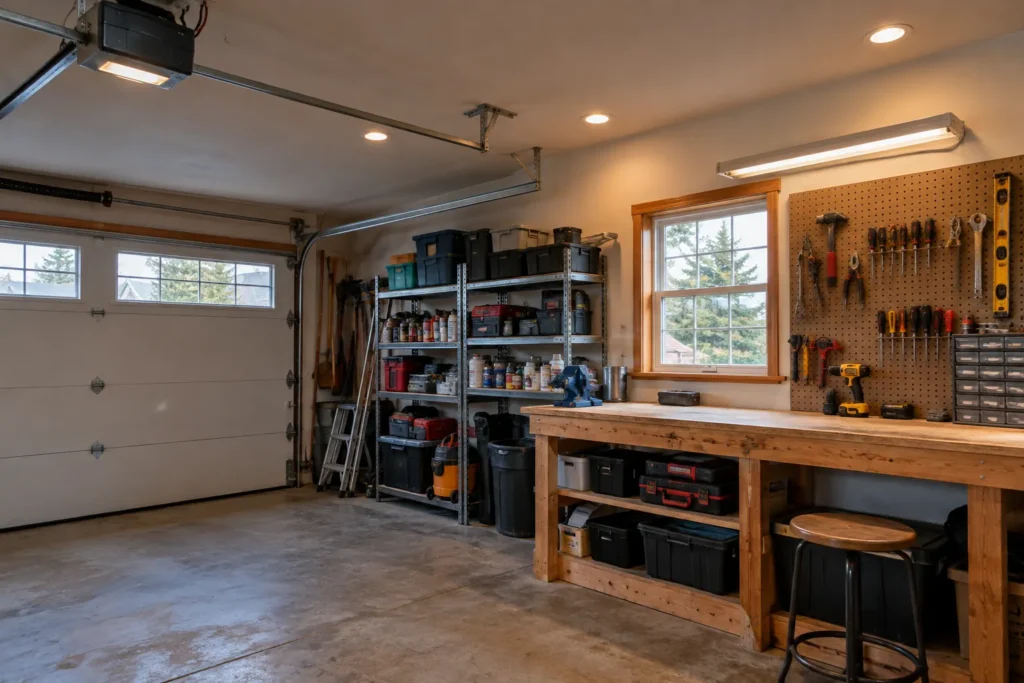
A workbench needs light on the actual work surface. A ceiling fixture placed behind the person standing there can cast a deep shadow. Shelves above the bench may block a broad beam, and tools with reflective finishes can produce glare. A dedicated task fixture or under-shelf light may be more effective than making every garage pot light brighter.
Identify where hands will work, whether projects involve small detail and whether the bench is fixed. The colour and clarity of light can matter for painting, sorting hardware or repair tasks. Pot lights can provide ambient support so the route remains visible, while a closer task source serves precision work.
Account for door tracks and the open door
The overhead door, its tracks and opener occupy valuable ceiling space. When open, the door can cover fixtures or change their light distribution. A position that appears ideal on a closed-garage photo may not work during everyday use. Framing and hardware also limit physical mounting and wiring routes.
Photograph the door both open and closed. Note the height of the tracks and any ceiling storage. A practical design coordinates lighting with these obstructions rather than installing a regular row and hoping the beam remains useful. A revised position or different fixture type may be appropriate in a crowded ceiling.
Light storage where items are handled
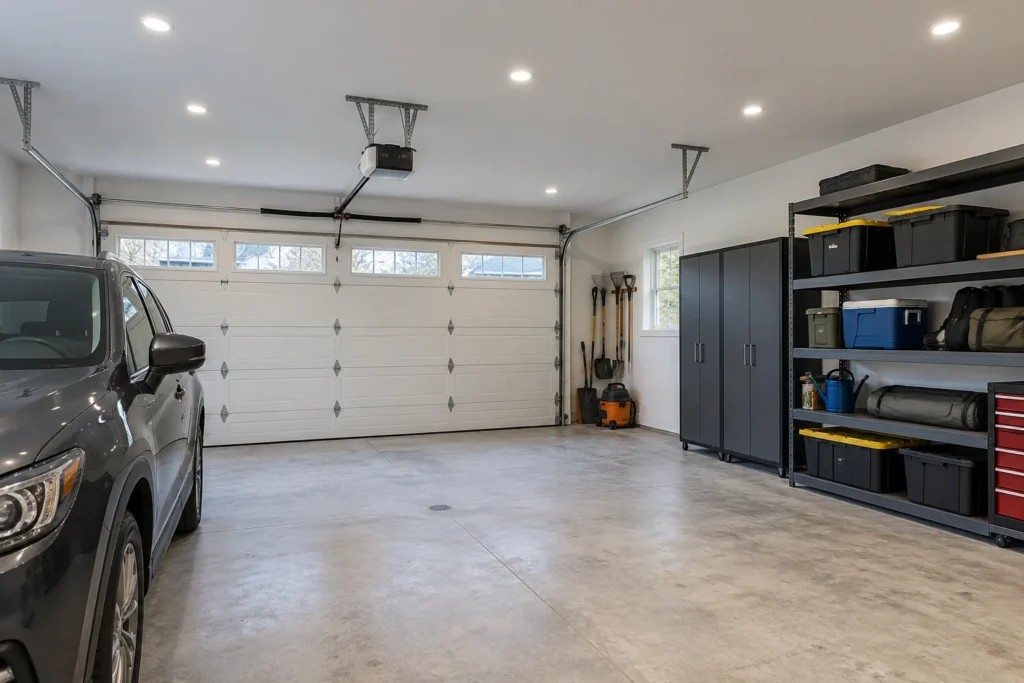
Tall shelving, wall cabinets and overhead racks create shadows. Rather than lighting the centre floor to a high level, identify the storage zones people actually use. A light near the front of a shelf can make labels and items easier to see; another may support the route to seasonal storage. The chosen beam should reach the target without shining unnecessarily into eyes at the garage entrance.
Garage use also changes seasonally. Winter gear may be by one door, gardening supplies in another corner and sports equipment along a wall. A flexible general layer combined with local lighting can serve these changes better than a highly focused grid tied to one arrangement.
Choose useful brightness and colour
Garage tasks often benefit from clear, even light, but maximum brightness everywhere can create discomfort and wasted output. Fixture output, beam spread and ceiling height shape coverage. A dark floor or wall absorbs more; a light-painted garage reflects more. Evaluate the space with vehicles and storage in place, not only when empty.
Colour temperature influences the appearance of finishes and objects, while colour rendering can matter for detailed work. Consistency across visible fixtures avoids a patchwork effect. If older strip or surface-mounted fixtures remain, consider how they will combine with the new recessed layer. Our colour guide</a can help compare options.
Use controls for arrival and projects
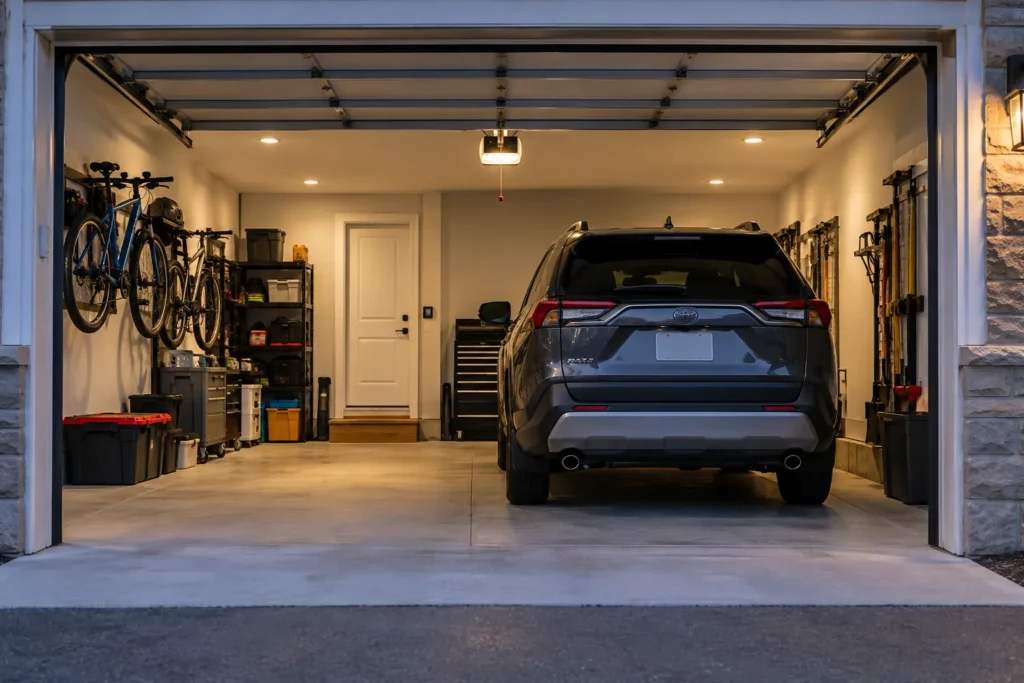
An arrival route from the vehicle to the house should be easy to light. A workbench or storage area might need independent control so the entire garage is not on during a small task. Sensors can be convenient when hands are full, but their timing, coverage and behaviour around an open door should be considered. Manual override may still be useful for a long project.
If the garage connects directly to the house, note existing switch positions and the places people enter. Smart schedules may support regular use, but a straightforward switching plan should remain intuitive. The chosen fixtures and controls must be compatible if dimming or automation is planned.
Assess the ceiling and environment
A finished garage ceiling can conceal insulation, framing and ducts; an unfinished ceiling exposes different routing choices. The product must be suitable for its actual location and installation conditions, and approved for use in Ontario. A shallow recessed product is not automatically appropriate in every insulated cavity, nor is a decorative indoor fixture automatically suitable for a garage.
The position of door hardware, racks and existing electrical equipment can alter the plan. Access and possible drywall repairs should be discussed if the ceiling is complete. A quotation that includes fixture selection and actual ceiling conditions is more useful than a generic per-light price.
Coordinate installation and review
Existing garage lighting may be a single central fixture, a strip light or several older products. Adding new positions, changing controls and replacing a fixture are different scopes. The existing circuit and route should be assessed with the proposed layout. ESA says almost all electrical work requires notification before work begins; the person doing the work files, and a hired Licensed Electrical Contractor files for its work.
The applicable review and documentation depend on the work. Describe the tasks you do in the garage and what stays installed on the ceiling. This gives the electrical and product discussion a clear lighting purpose, without expanding the project into unrelated outlet or equipment work.
Consider the garage in winter and summer
The lighting you need on a dark winter evening while unloading a vehicle differs from the daylight available through an open door in summer. Snow-covered gear may be stored near the house entrance; seasonal supplies may move to wall racks. A plan that gives clear arrival light and separately useful task light adapts to those changes without leaving everything at maximum output.
Also consider how often the overhead door stays open during work. A light hidden by the raised door cannot be counted on for a workbench or storage task at that time. Observing the real positions of door, vehicles and stored items helps determine whether recessed fixtures, a surface-mounted task fixture or a combination best serves the room.
Questions about garage pot lights
Are pot lights good for a garage?
They can suit a finished ceiling and provide clean general coverage, but the beam, output and location must account for parked vehicles, open doors and storage. Task fixtures may still be useful.
Where should lights go over a workbench?
Position and fixture type should put light on the bench without the user casting a strong shadow. Shelving and bench depth matter; a closer task layer may be better than an overhead source alone.
Will the garage door block the lights?
It can when open. Review the door’s open position, tracks and opener before choosing ceiling locations.
Can garage lights use a sensor?
A suitable sensor can help with arrival, but timing, coverage and manual control should match how the garage is used for longer tasks.
Plan your lighting
Send photos with vehicles parked and the overhead door open. Mark the workbench and storage you use most. A Milton garage pot light plan can then put the right light on those tasks and accommodate the ceiling hardware.