

Bedrooms need more than one level of light. You may want enough clarity to choose clothes and clean the room, but a soft setting when getting ready to sleep. Pot lights can support both if their positions, output and controls are planned around the bed and wardrobe. A bright source directly above a pillow can be uncomfortable when someone looks upward, even though the ceiling layout appears symmetrical on a drawing.
We start by locating the bed, night tables, dressing area, closet doors and any ceiling fan. Then we decide what recessed lighting should do and what belongs to a lamp or bedside fixture. In Milton homes with connected ensuites or walk-in closets, the transitions between those spaces matter too. The result should be calm enough for evening use and practical enough for everyday tasks.
Look at the room from the bed
A person lying down sees the ceiling more directly than in most other rooms. A recessed LED over the pillow or near the main line of sight can create glare, especially with a shallow exposed source. Place fixtures with that view in mind and consider the beam, trim shielding and how the light reaches walls instead of simply brightening the bedspread.
The bed may be centred under a fan or shifted toward one wall to accommodate furniture. Those details can change the layout substantially. Photos from the headboard and doorway reveal more than a top-down room dimension alone. We seek a comfortable view at both full and dimmed settings.
Give wardrobes useful light
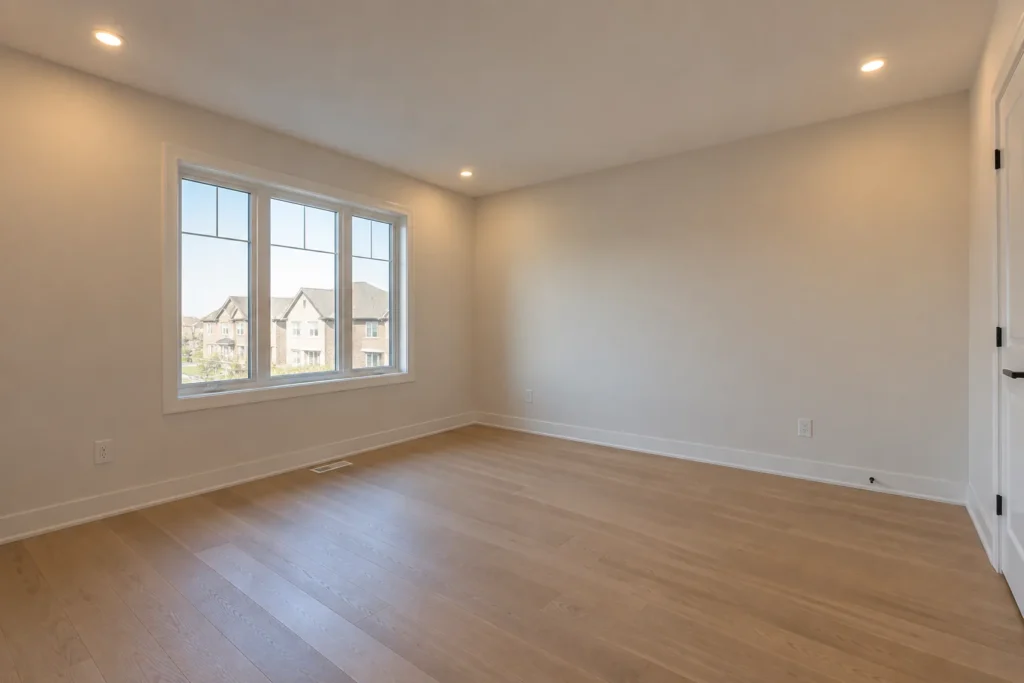
A wardrobe or closet can remain dark when the ceiling lights are behind the person standing at the doors. Identify hanging storage, drawers, mirrors and dressing spots. A recessed fixture can help illuminate cabinet fronts or the floor nearby, but its beam and position must avoid casting the user’s shadow over the clothes.
Walk-in closets may need a separate task plan and an appropriate product for their actual conditions. In a standard bedroom, the dressing zone can have a distinct control or a brighter layer than the bedside area. Consider the colour appearance of clothing and finishes rather than evaluating a fixture only by its maximum brightness.
Layer bedside and reading light
Pot lights are good for general coverage but a bedside lamp or wall-mounted reading fixture gives personal control. Partners can use separate reading sources without lighting the whole room. A downlight near a chair may support occasional reading, but the angle should be considered from the page and the person’s view.
Decide how the room functions after lights-out: a route to the door or ensuite may benefit from a gentle low level, while bedside fixtures handle local tasks. The best arrangement may use fewer ceiling lights and better task layers. That can also keep the ceiling visually quiet.
Coordinate with a ceiling fan
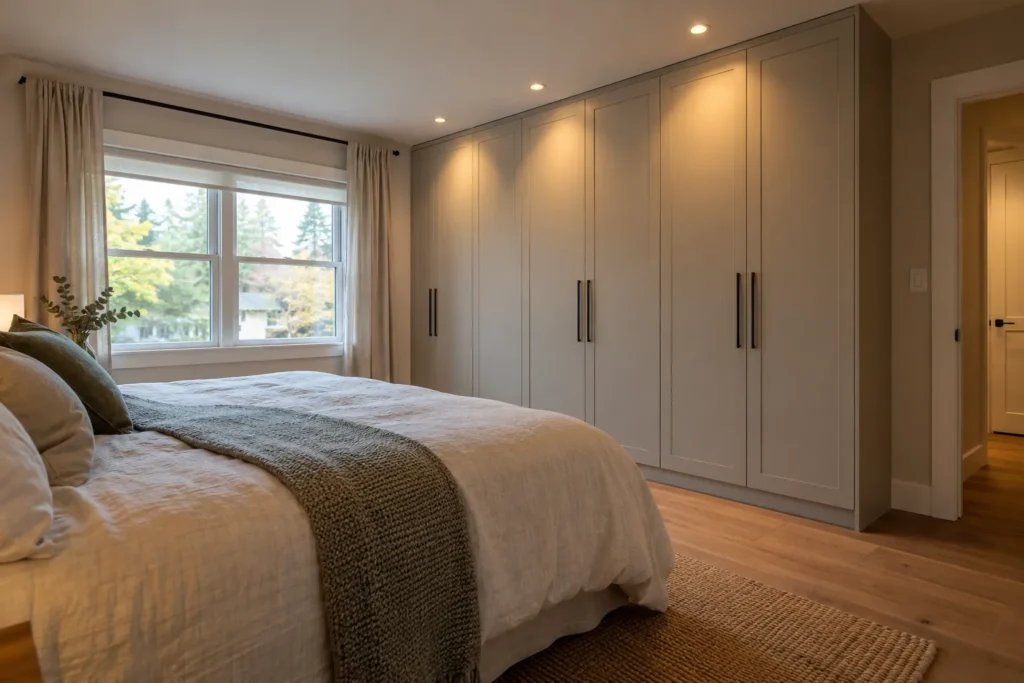
A fan can interrupt a downlight beam and create moving shadows or flicker-like effects as blades pass through it. Its central position also changes where fixtures can look orderly and useful. Plan the fan and pot lights together rather than installing one system and discovering the conflict after the other is complete.
The solution depends on blade diameter, ceiling height, furniture and beam spread. Rows should be judged by their effect in the room, not just their apparent symmetry around the fan. If the fan includes a light kit, decide whether it remains a useful layer or becomes redundant alongside the recessed plan.
Choose a warm, controllable atmosphere
Many bedrooms benefit from a warmer colour appearance and a smooth dimming range for evening. The precise choice should be compared with bedside lamps and adjacent spaces. A mismatched cool overhead light and warm bedside light can make surfaces look inconsistent. Dimming changes intensity, while some specific products also shift colour as they dim; those are separate features.
Fixture and dimmer compatibility is important for low-light use. A system that jumps abruptly from off to a bright minimum defeats the desired gentle scene. Review the proposed LED and control combination rather than assuming every dimmer behaves the same. Our colour temperature guide adds context.
Manage transition to closets and ensuite

A bedroom may connect to a brighter bathroom and a windowless closet. If every space is controlled and lit independently, you can use the dressing area without making the sleeping area bright. A gentle route between bed and ensuite can be more comfortable at night than switching on the full ceiling.
Notice where door swings and mirrors affect light. A vanity needs face lighting, while a bedroom wardrobe needs clothing visibility; the same row of recessed fixtures is unlikely to do both well. The bathroom page addresses the moisture and mirror considerations separately.
Review finished-ceiling constraints
An occupied, finished bedroom can hide joists, insulation, ducts and earlier wiring. The intended fixture locations must be checked against those conditions, and openings or patching may be needed. A bedroom renovation with an open ceiling provides more routing flexibility but still requires coordination with the final furniture and fan plan.
Product suitability for the ceiling and approval for use in Ontario should be verified. A shallow fixture is not an automatic solution to every cavity constraint. A clear estimate identifies any expected finishing work and the control arrangement as well as the number of openings.
Plan the electrical scope with the lighting
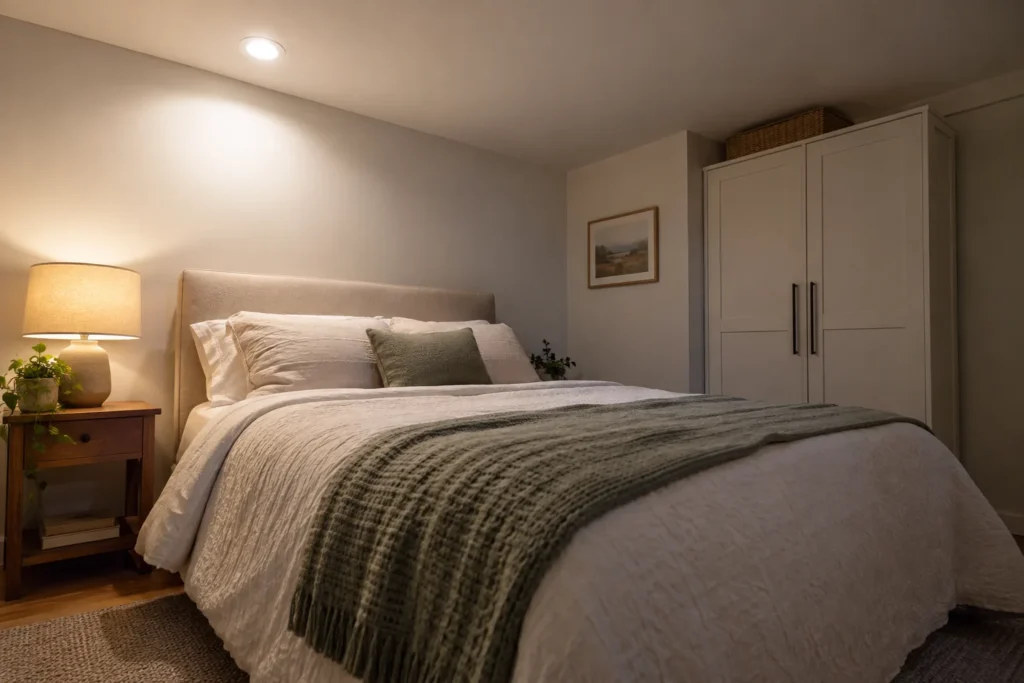
An older central fixture may already have a switch, but adding zones, dimming or new positions can change the electrical scope. Existing wiring and circuit conditions should be reviewed rather than assumed from the switch plate. ESA explains that almost all electrical work requires notification before it begins; the person doing the work files, and a hired Licensed Electrical Contractor files for its work.
The exact documentation and review depend on the work undertaken. For the homeowner, the practical planning step is to describe the desired scenes: dressing, reading, cleaning and a softer nighttime route. That gives the installation and control discussion a purpose beyond simply replacing the central fixture.
Plan the morning and evening sequence
Morning dressing may require broad visibility at wardrobes and a mirror, while the first light used on waking should not be an intense source over the bed. In the evening, one partner may read while the other sleeps. The route to an ensuite may need a gentle level that is easy to reach. Describing those sequences makes the control plan more specific than requesting a dimmer for the entire room.
If daylight enters strongly at one side, a separate zone may help in darker corners during the day. Include bedside lamps or wall lights in the plan so their colour and output work with the recessed layer. The goal is not to maximize the number of ceiling openings, but to provide the right light at each moment without unnecessary glare.
Questions about bedroom pot lights
Should pot lights go above the bed?
Consider the lying-down view before putting a bright source near the pillow. Other positions, optics and layers can provide room light with less direct glare.
Are bedside lamps still useful with pot lights?
Yes. They provide local personal light for reading and a soft evening scene. Recessed lights can handle general room and dressing needs.
Can a ceiling fan and pot lights work together?
They can when the beam positions account for the fan blades and the viewing angles. Planning them independently can create moving shadows.
What colour temperature suits a bedroom?
Many households prefer a warm appearance, but compare it with lamps, finishes and adjoining rooms. Product colour quality and dimming performance matter too.
Plan your lighting
Show us the bed, fan and wardrobe positions, along with photos taken while lying or sitting at the headboard. A bedroom pot light layout for your Milton home should feel comfortable from the viewpoints you use most.