
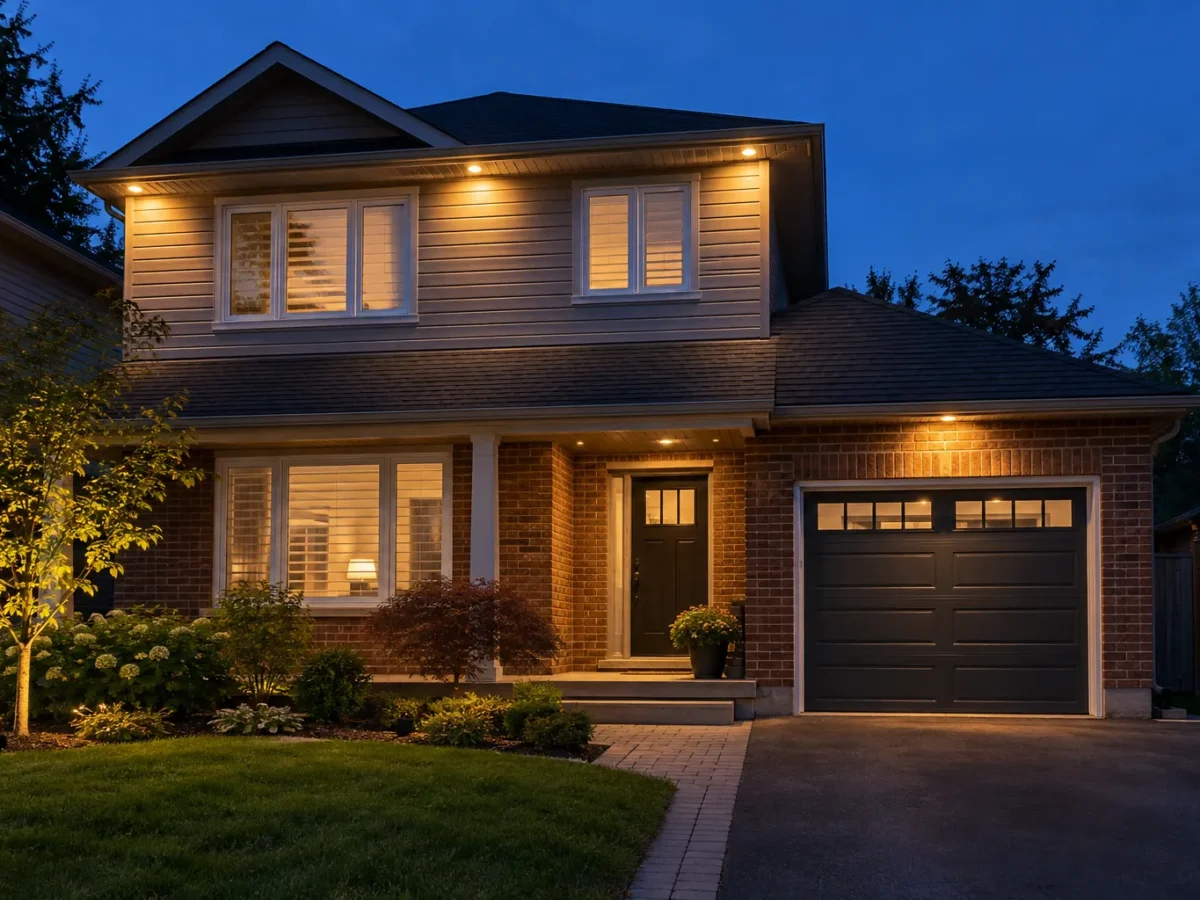
Exterior soffit lights work best when they reveal the entrance, route and architecture without making the roofline itself the brightest feature. A perfectly even row around every eave can create glowing dots, harsh wall patches and spill into windows. Instead, walk the property after dark, identify the surfaces and routes that need light, and choose a fixture with suitable beam and output. This approach often leads to a more restrained and useful layout than ordering one pot light at every standard interval.
Start with a night walk, not a roof drawing
Approach the house as a visitor would. Can you read the front door and steps? Is the route from driveway to entrance clear? Which existing porch, garage and landscape lights already help? Then stand across the street and view the façade as a whole. Finally, look outward from the living and bedroom windows and toward neighbouring windows. These views reveal glare and light trespass that a roofline plan cannot show.
Take daylight photos too. Soffit width, downspouts, garage projection, gables and adjacent trees affect fixture locations. A high second-storey eave may mainly wash a wall rather than light a walkway. A low porch ceiling may put the bright aperture near eye level. A useful plan responds to each condition. Our soffit layout guide gives a full property checklist; this article focuses on controlling excess brightness and uncomfortable views.
Use the front entrance as the first test
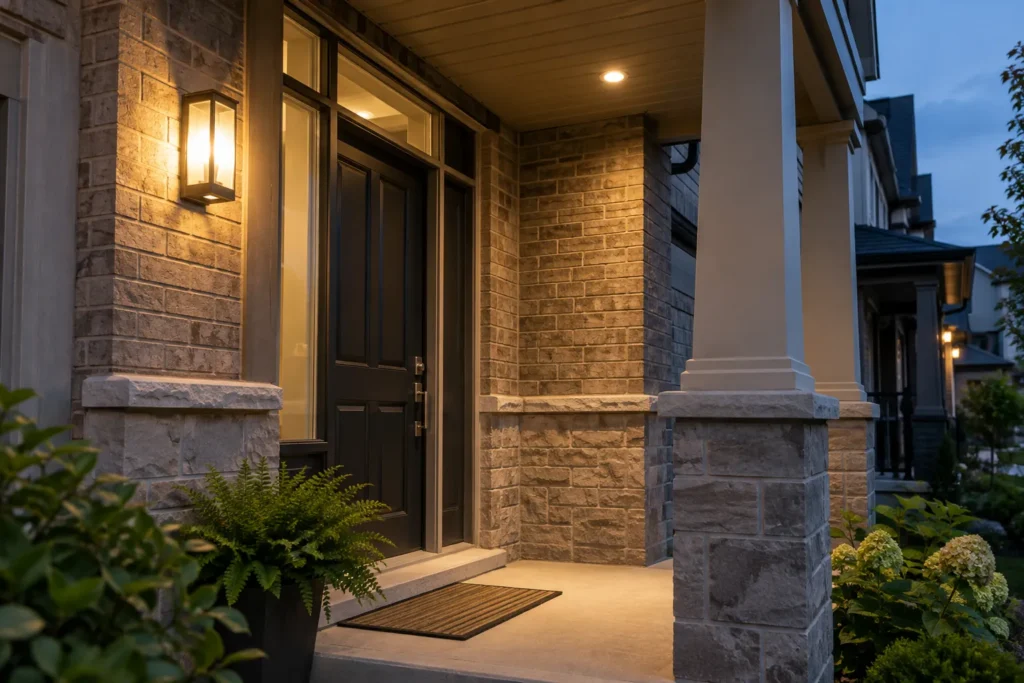
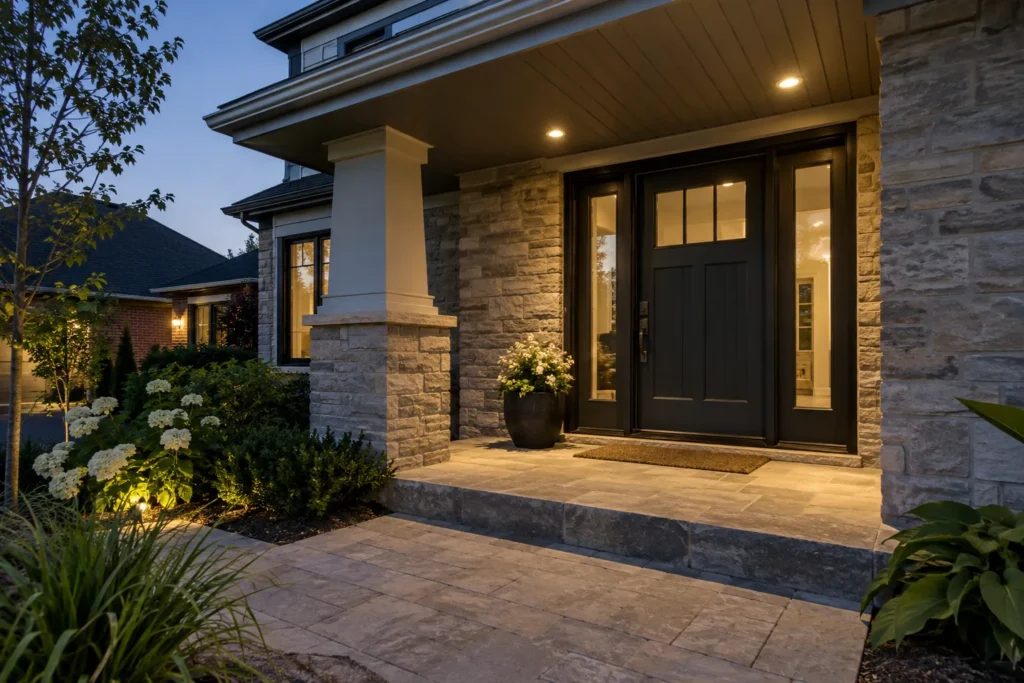
An entrance needs people to see the threshold, address, door hardware and one another’s faces. A powerful point directly above the door can create deep facial shadows while making the soffit glaring. A shielded downlight combined with a porch sconce may be more comfortable. Check the position where someone actually stands to unlock the door and where a person inside looks through the glass. The goal is a legible arrival, not a spotlight performance.
If there are steps, observe whether a proposed beam makes the change in level easier to see or creates a bright patch beyond a dark step. Existing handrail or wall lighting might play a better role. Consider a separate entrance zone from the remainder of the exterior. A useful porch light can remain on while garage or façade accents are off, reducing both energy use and visual noise.
Garage lights need a specific job
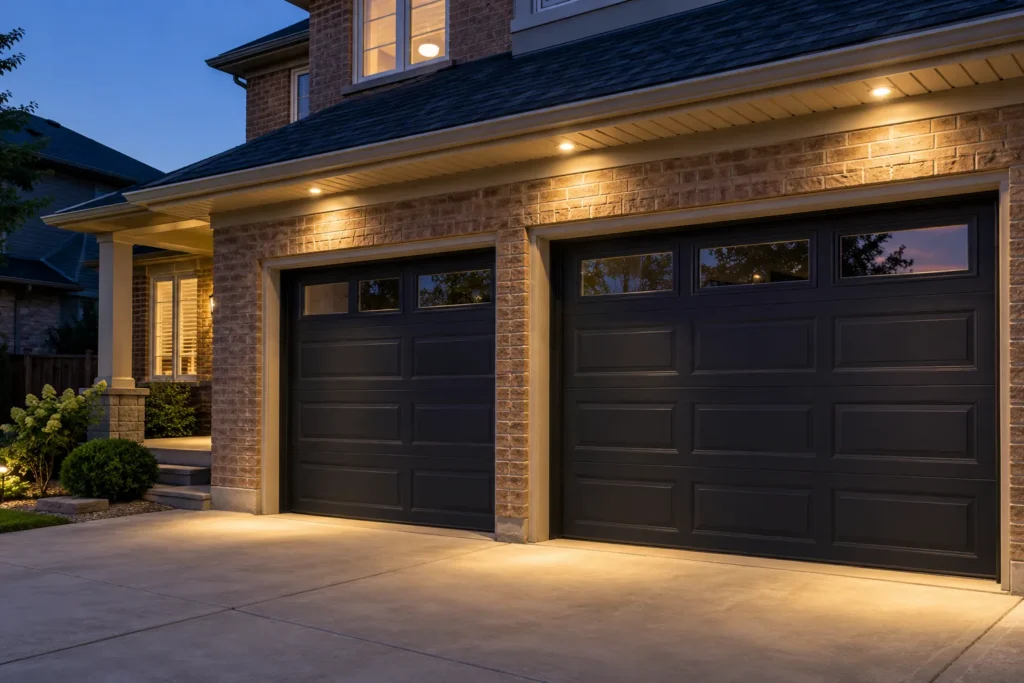
A broad garage face can tempt a row of evenly spaced soffit lights. Decide whether you want light on a pedestrian path, the driveway near parked cars, the door surface or an architectural detail. These targets call for different positions and beams. A bright fixture aimed at a glossy garage door can create repetitive pools and reflections. From a driver’s seat, direct view of a soffit lamp can be distracting.
Try a restrained sequence that serves the chosen route and balances the façade. A visually regular rhythm can still be valuable where the architecture supports it, but forcing equal spacing around downspouts and garage projections can look less intentional. Test the pattern at night. More points do not guarantee even useful illumination; the product’s beam and mounting height determine where light actually lands.
Side-yard and backyard priorities differ
A side yard may need a clear route to a gate or bin storage, but not continuous bright wall wash. In a narrow passage, a small amount of spill onto a fence or neighbouring window can become very noticeable. Direct the light to your useful route and choose switching or sensors that operate only when needed. Avoid treating every corner as equally important merely because the roofline continues.
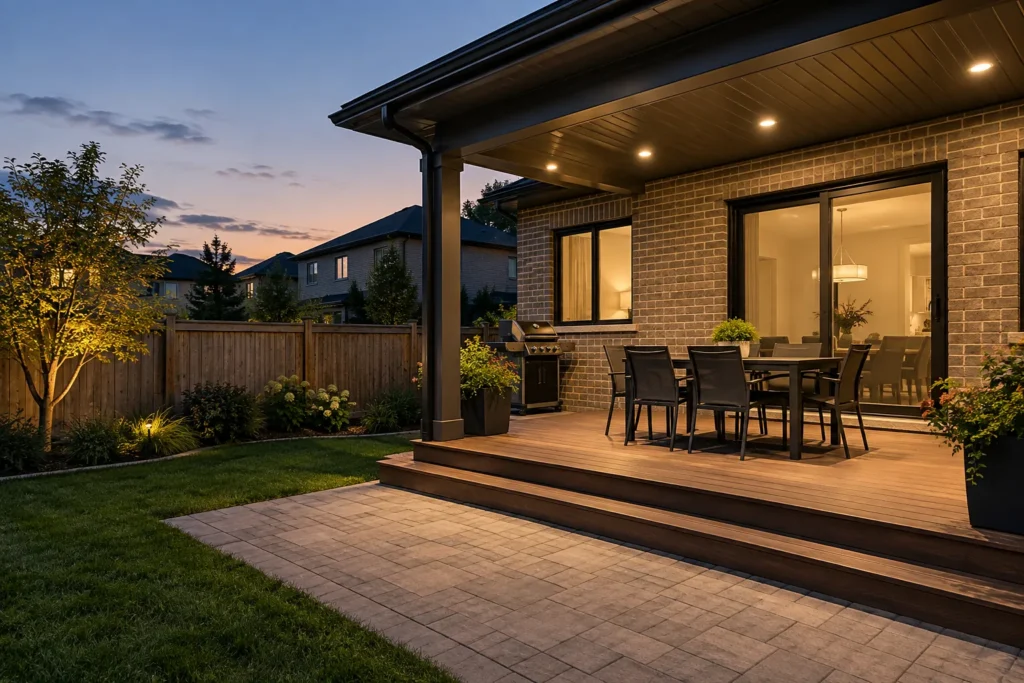
A backyard might have a seating area, sliding doors and a view from inside. A bright line of soffit fixtures can reflect in the glass and make the outdoor scene harder to see from the living room. Separate patio and path zones allow entertaining light without illuminating the entire perimeter. If landscaping or a deck will change, coordinate before cutting permanent openings. A well-lit place to sit can be more useful than an evenly glowing back wall.
Beam shape affects glare more than a count alone
Two exterior lights with the same lumen rating can look very different. A broad exposed diffuser may be visible from afar, while a deeper or more controlled optic can direct light toward the intended surface. A narrow beam may create dramatic pools and dark gaps; a wider beam can smooth coverage but increase spill if it is poorly positioned. Compare actual product data and a fixture demonstration if possible. Do not select by a generic “brightest” claim.
Consider mounting height. A beam from an upper-storey soffit reaches the ground differently from one under a porch. The perceived brightness of the aperture also changes with viewing angle. Use pot-light spacing principles for beam overlap, but review outdoor sight lines independently. The installation should look calm from the sidewalk as well as functional immediately beneath it.
Colour does not cure over-lighting
Many homeowners like warmer exterior white on brick, stone or siding, but a long row at excessive output can still resemble a commercial façade. A neutral 4000K fixture may have a different architectural effect, but neither Kelvin number is a substitute for restraint. Test colour on the actual materials after dark. If front entry, garage and rear zones use different fixtures, compare them where sight lines overlap so the house does not look unintentionally patchy.
The 3000K versus 4000K guide explains the difference between white appearance and actual output. Ask for lumen and beam specifications and confirm dimming performance where that is part of the design. A lower-output fixture with good positioning may be more effective than a powerful product run permanently at a small fraction of its range.
Controls make the night view adaptable
An entry can need regular evening operation; a side path may only need light occasionally; a rear patio may be used for short periods. Put those needs on separate controls where practical. Timers, dusk sensors, motion activation or smart scenes can reduce unnecessary hours at full brightness. A sensor should illuminate a useful area without flooding neighbour-facing windows each time it activates. Choose a control scheme that household members can understand at the wall.
If LED dimming is proposed, check driver and dimmer compatibility, minimum load and the intended low setting. Smart controls may have requirements for existing wiring and multi-way positions. The dimmer compatibility guide offers questions for the electrical installer. Also ask what happens after a power outage or lost network connection. Outdoor lighting should remain manageable without a complicated app routine.
Product rating and Canadian approval
Exterior soffits can be subject to condensation, wind-driven rain, temperature swings and other exposure even when a fixture appears sheltered. The actual location determines whether a particular product is suitable. Check the manufacturer’s instructions and the approved fixture/driver assembly. An interior product that looks identical to an exterior variant should not be assumed interchangeable. ESA’s recognized electrical approval marks are the public reference for Ontario product approval; our approved LED guide discusses the product checklist.
The installer also needs to assess access, existing wiring, soffit material and how an opening affects the assembly. Do not assume that every roofline has the same cavity or that the driver’s location will be easy to service later. Specify the exact product and confirm any substitutions before openings are made. A bad replacement may alter both appearance and weather suitability.
Electrical and project process
Ontario ESA says almost all electrical work requires a Notification of Work, and a hired Licensed Electrical Contractor files it. Ask the provider handling exterior lights how the applicable notification, review and documentation are managed. See ESA’s notifications guide and our ESA requirements guide. An electrical notification is distinct from any municipal building approval that might relate to a larger property project.
The quote should identify fixtures, zones, access method, wiring and control scope, soffit repair expectations and weather suitability. A simple count times a unit price hides too much. If there is landscaping, siding or gutter work at the same time, coordinate access and timing, but do not let those trades substitute for the authorized electrical work.
Test the lighting in scenes
Describe a normal arrival scene, a guest evening, a backyard gathering and a quiet overnight scene. Which zones are active in each? From the sidewalk, does the façade read clearly without every aperture dominating? From the bedroom, is light kept out of windows? From the path, can someone see changes in level? These tests reveal whether a proposed fixture is useful or just completing a pattern. Adjust output, aiming or switching before adding more lights.
Should every soffit light use the same spacing?
No. A consistent rhythm can be desirable within a visible façade section, but entry, garage, path and rear patio need different light. Let the target surfaces and architecture lead.
Will dimming fix glare from too many fixtures?
It can reduce intensity, but it cannot fully correct poor position, visible emitters in a direct sight line or unnecessary openings. Choose beam and layout carefully first.
What should I send for an exterior estimate?
Send daylight photos of all elevations, night photos showing existing lighting, the routes you use, neighbouring window locations and desired control behaviour. Request an exterior lighting estimate for a layout that serves the property without excessive glare.
Share the space, current lighting and the result you want.
Request a Lighting Quote